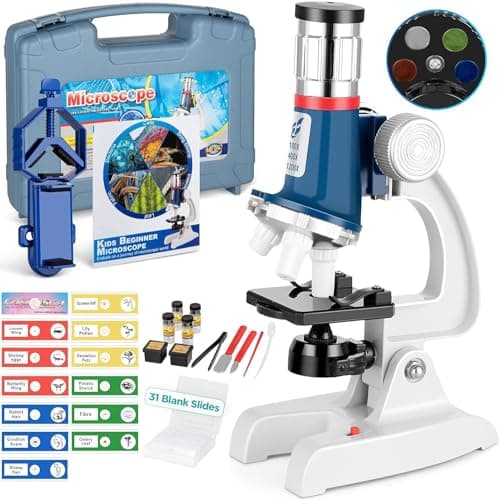
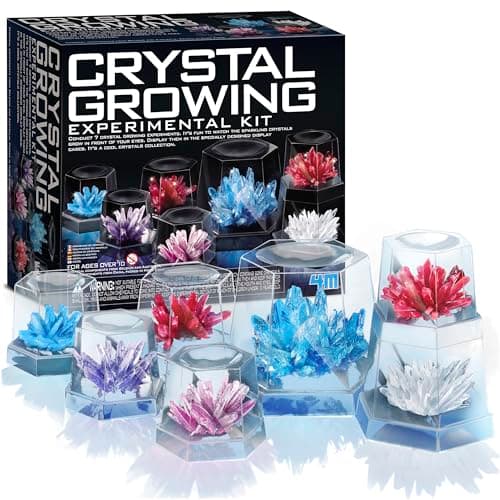
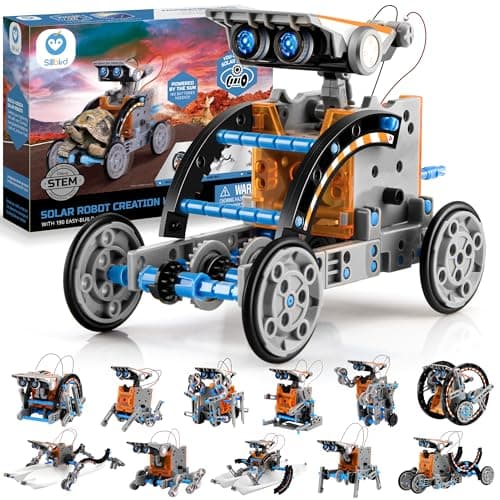
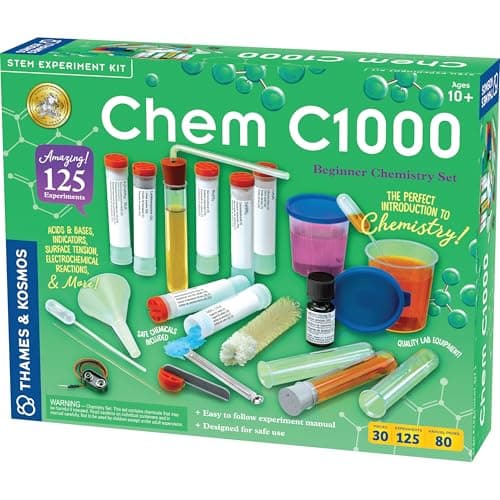
The verdict: the top pick is the Thames & Kosmos Chem C1000, because it is the only box on this page that treats the subject as the subject — 125 published experiments, graded 10+, with a manual written to be worked through rather than looked at. The budget pick is the 12-in-1 solar robot kit, graded 8 to 13, which costs a fraction of everything else here and has no battery to buy, ever.
Every age grade on this page is the manufacturer’s own published wording, and every price comes live from the price layer with the date it was checked printed under the table. We have not used these kits; our method is published in full, including what would disqualify a pick.
What changes at ten
Between about nine and eleven most children stop being impressed by a demonstration. A baking-soda volcano, a color-change reaction, a slime kit — these work beautifully at six because the result is the point. At ten the question shifts to why did that happen, and what happens if I change it, and a kit that cannot answer the second half gets one session and then a shelf.
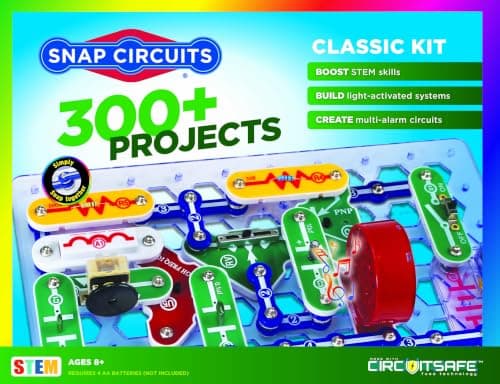
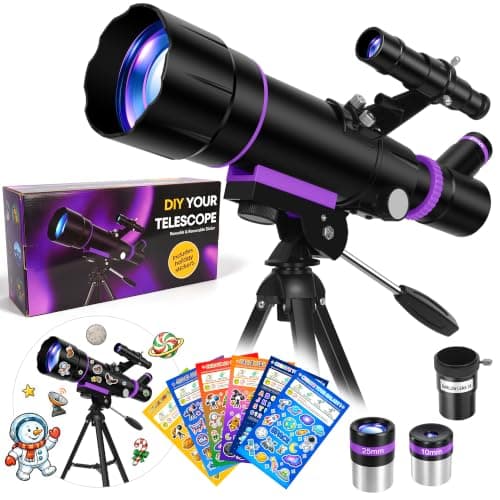
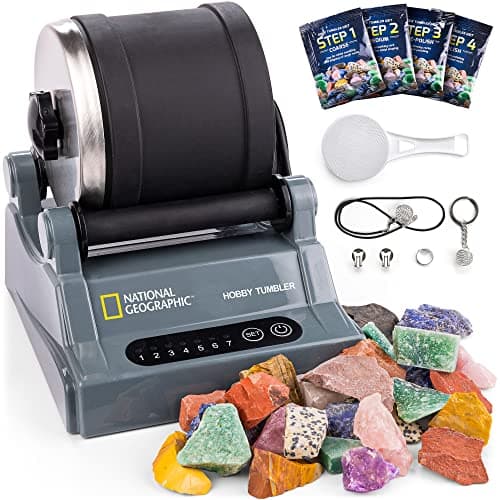
That is the single criterion that sorted this page. Every pick here has a knob the child can turn: a sequence of 125 experiments rather than six, three hundred circuit projects rather than thirty, a magnification you choose, a batch you can run again with different stones. The kits that did not make it are not bad toys — several are excellent at eight — they simply have one setting.
The four things we checked
- A published grade that reaches the band. Nothing here is graded below 8, and the two chemistry-adjacent kits are graded 10+ by their makers for reasons involving boiling water and reagents. We never recommend below a published grade — the build fails if a page tries — and at this end of the range the grade is about handling real materials rather than about ability.
- Depth, measured in published activities. Not “hours of fun”, which is marketing, but a countable number printed by the manufacturer: 125 experiments, 300+ projects, 12 builds, 60 challenges, four magnifications.
- What it costs after the box. Chemicals are consumed. Grit is consumed. Two of these need AA batteries that are not supplied. One needs nothing at all, ever, which is why it is the budget pick rather than just the cheapest.
- Where it can physically live. A rock tumbler is a weeks-long noise source. A chemistry set wants a wipeable bench. A telescope needs a table outdoors. These are not drawbacks so much as facts you should know before the box arrives, and the product cards below print them.
Chemistry, electronics or optics: picking one
Three of the picks here are the flagship of their discipline and a household realistically buys one. The deciding question is not which science the child likes — at eleven that is often unformed — but what the household can supervise.
Chemistry needs an adult present for every session, a surface you do not mind, and a willingness to reorder chemicals. In return it is the only one that maps directly onto school science. Electronics needs almost no supervision after the first evening and tidies into a tray, which makes it the one a child does alone on a Tuesday — the strongest argument for it. Optics needs clear skies and a parent willing to stand outside in the cold, and it produces the single biggest moment of the three on the night Saturn is up.
If none of that resolves it, the honest default is electronics, because it is the one most likely to be used unsupervised, and unsupervised use is what separates a kit that gets finished from one that gets started.
What we left off, and why
We did not include a coding robot. The ones in our registry are graded from four and are genuinely good there, but a floor robot that follows arrow buttons is solved by a ten-year-old in an afternoon, and recommending one here would be padding a page with something we have already placed correctly on the coding toys page.
We also left off every kit whose maker publishes no age grade at all. Three good telescopes in our registry are in exactly that position — real, in stock, decent optics, and no published grade anywhere in the listing. On a toy site that is a disqualification rather than a detail, and the reasoning is in age grades explained.
Is a STEM toy actually educational?
Sometimes, and the honest version is narrower than the marketing. A kit does not teach chemistry; a child working through a sequenced manual with an adult nearby learns chemistry, and the kit is what makes that session possible on a Sunday afternoon. The label “STEM” is unregulated and appears on plenty of boxes containing one activity and a lot of cardboard.
What we can check, and did, is whether the published activity count is real, whether the grade is published, and whether the thing can be run more than once. If you want the longer argument about which toys hold up over years rather than weeks, it is on toys worth the money, and the build-it-yourself end of this age range continues on building toys under $25.