The short answer
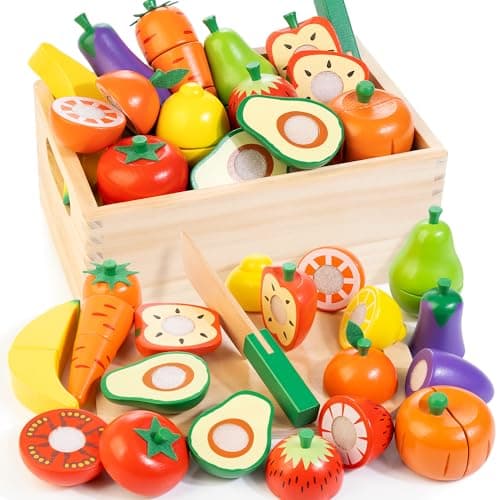
Buy the wooden cutting food set first. It is graded 3+, it costs a fraction of the furniture, and it is the part of kitchen play children actually do -- the halving, the serving, the taking of your order. If pretend play sticks, the kitchen is a sensible second purchase a year later; if it does not, you are out twenty dollars rather than a hundred and fifty.
That is the one piece of advice on this page that saves real money, and it is the opposite of how the category is sold. Everything below is graded by its maker for the age it is recommended at, and the prices come live from Amazon.
What pretend play actually is, and when it arrives
It starts at about two with imitation -- a child puts a phone to their ear, stirs an empty cup, feeds a toy. By three it is a story with roles in it. By four or five it has rules, cast members and a plot that carries over to the next day, and by six it is starting to be replaced by games with written rules.
That trajectory is why this category is the best value in the toy shop: a plate of wooden food bought for a two-year-old is still in use at six, which almost nothing else in a toy box can claim. It is also why the toys that work are deliberately unfinished. A set of plates and food can be a restaurant, a hospital, a shop or a picnic; a toy that plays a jingle when you press the burger is one thing, forever. The underlying property is the same one we argue for everywhere on this site -- what open-ended actually means.
The order to buy in
- Food and plates. Twenty dollars, works anywhere, used from three to six.
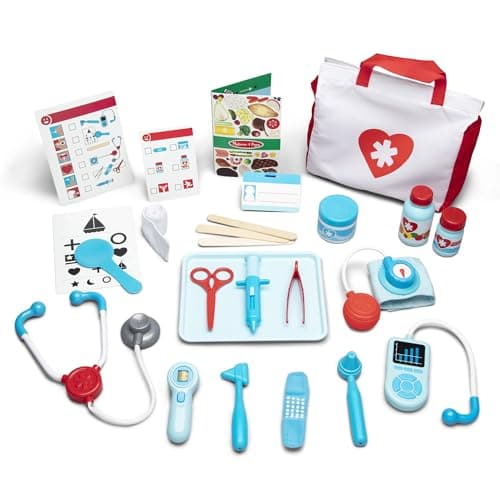
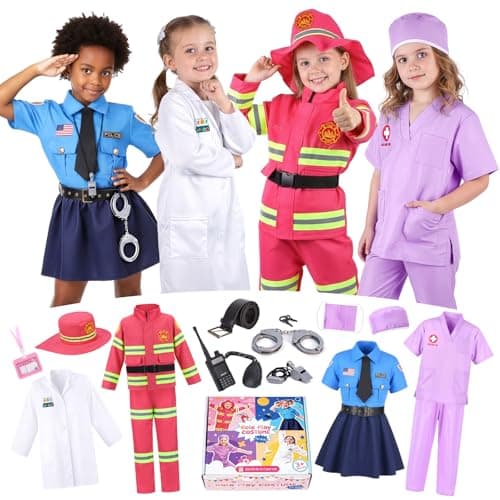
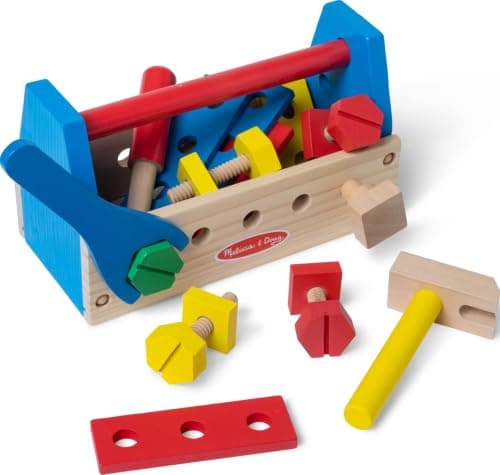
- One costume or one role kit. Doctor, tools, a cape -- whichever the child is currently announcing they are.
- One piece of furniture, if the room allows. A kitchen or a dollhouse, but not both, and not until the first two have been used for months.
- Nothing else. Pretend play expands into whatever is in the house: a cardboard box, a laundry basket, three cushions and a sheet. Buying the fourth role-play set is the point at which this category starts producing clutter instead of play.
The honest problem with role-play sets
They stack. A doctor kit, a tool kit, a vet kit, a shop till, a tea set and a toolbox all arrive from different relatives across two Christmases, and the result is a corner of the room that looks busy and gets used less than any single one of them did on its own. The mechanism is simple: each set defines its own game, so none of them combines, and the child ends up choosing between six prescriptions instead of inventing one.
Two sets is the right number at any one time. Rotate the rest out of sight and bring them back in six weeks, which works better here than in any other category -- toy rotation, properly done has the method.
Kitchen, dollhouse, or neither
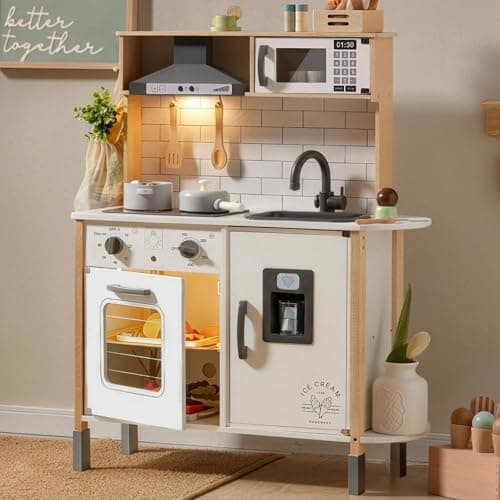
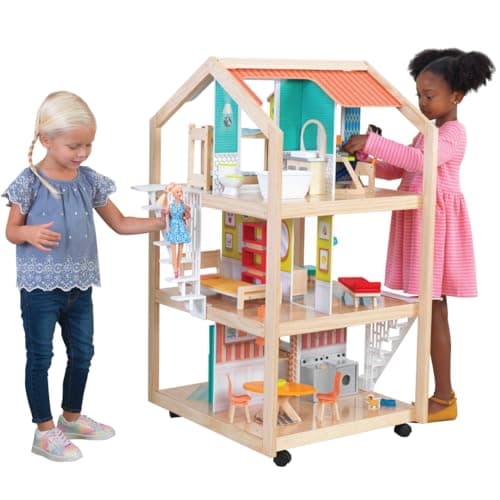
The one big-ticket decision in pretend play. A kitchen gets more total hours in most households and is the better buy for a child who performs -- it needs an audience and a visitor. A dollhouse suits a child who narrates, is quieter, and takes up less floor than it looks like it will. Neither is necessary at three.
If you are buying a kitchen, two things decide it and neither is the look: whether it makes noise by itself, and what it is made of. We compare five of them on exactly those terms on play kitchens, compared, including the one with a published three-year warranty and the silent outdoor option.
What to skip
Skip anything with a screen pretending to be a toy till or a tablet. Skip the licensed playset built around one television property, which dates the moment the child moves on. Skip electronic kitchens if the house is small -- a unit whose headline feature is lights and sounds with no published mute is a different proposition in an apartment, and loud toys, named explains why we are strict about that.
And skip buying a role-play set as a surprise for a specific obsession you have heard about secondhand. Three-year-old obsessions have a half-life of about six weeks. The cheap take-along version of a thing is the right way to test one; the workbench is the right way to regret it. For the broader version of that argument, see what is actually worth the money.