The short verdict
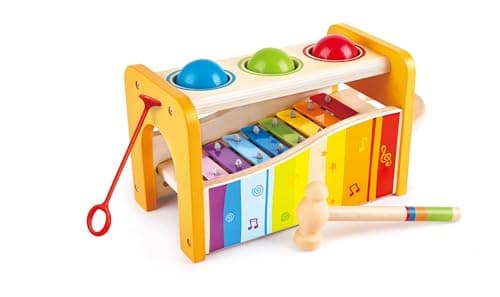
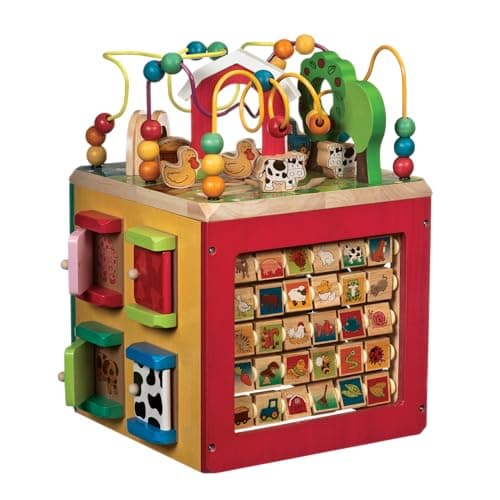
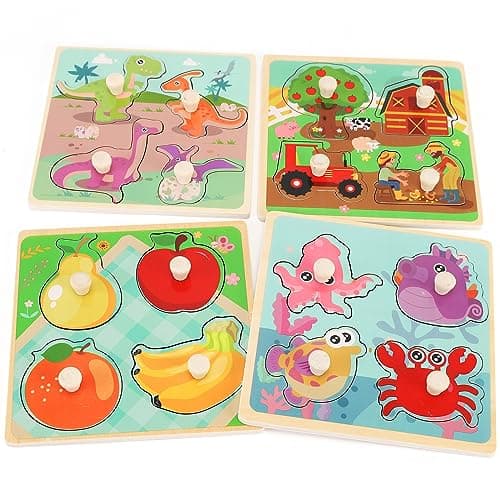
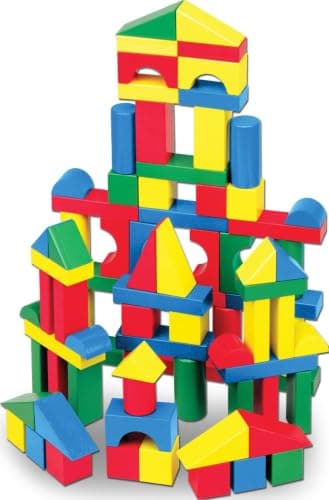
Buy the Melissa & Doug 100-piece block set: graded 2+, FSC-certified, no end state, and the only pick here that is still in use at seven. If the child is between twelve and eighteen months, the Hape Pound & Tap bench is the better first purchase because it works a full year earlier — accepting that hammering is the point and it is loud. For a child who wants to stand at something, the Battat wooden activity cube is the one toy that does not slide away when leaned on. And if the toy has to go in a bag, buy the wooden peg puzzles and nothing else on this page.
The real case for wood at this age — three reasons, not the usual ones
Wood is usually sold on aesthetics and a vague gesture at being natural. Neither is a reason. These three are.
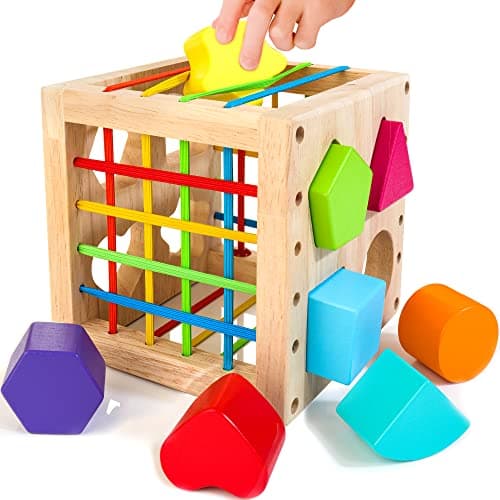
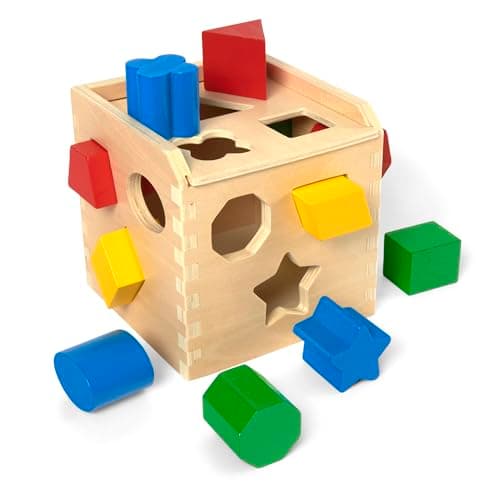
- It survives being thrown, and it will be thrown. Between one and two, throwing is a developmental stage rather than a behaviour problem. A solid wooden sorter hits a wall and is fine. A battery toy hits a wall and the battery door breaks, which ends the toy.
- It does nothing by itself, so the child has to. A wooden block has one affordance and no reward loop. That is the whole argument for open-ended play, and it is strongest at the age when a toy that sings every time a button is pressed teaches the button rather than the toy.
- It has no battery to die. Not one pick on this page needs a cell, which means not one of them can fail on Christmas morning or at bedtime. Toys that need no batteries is the whole-site version of this list.
The three places wood is the worse buy
We sell nothing, so we can say this plainly. There are situations where a wooden toy is the wrong answer and the plastic one is right.
Noise, in a flat or a shared bedroom
This is the big one and almost nobody mentions it. Wood is hard, and hard things on a hard floor are loud. A hundred wooden blocks collapsing is louder than any electronic toy on this site, and it travels through a ceiling. Soft blocks or large plastic bricks are genuinely quieter. Quiet toys that are not boring is built for exactly this constraint, and several of its picks are not wooden for this reason.
Water, sand and mouths full of food
Wood and water are a bad long-term pair: a soaked and re-dried wooden toy splits and splinters, and a splintered toy at this age is a disposal, not a repair. Bath, paddling pool and sand tray are all plastic’s territory, and we do not list wooden picks for them.
Anything that needs to be big and light
A hundred large plastic bricks weigh almost nothing and a child can carry the bag. The wooden equivalent is heavy enough that an adult moves it, and a toy an adult has to fetch is a toy that gets played with less. Wood against plastic blocks runs this comparison properly, with both sets side by side.
What “non-toxic” and “natural” do and do not tell you
These two words drive a lot of searches in this category, so here is the honest position. In the United States every toy sold for children under twelve has to meet the federal toy safety standard (ASTM F963), which covers surface coatings, heavy metals and small parts, and that applies to a plastic toy exactly as much as to a wooden one. “Non-toxic” on a listing is therefore usually a restatement of a legal requirement rather than a differentiator.
What IS a real, checkable differentiator is FSC certification, which two picks on this page carry and which is a claim about the forest the wood came from, not about the child. We print it where the maker publishes it and we do not infer it where they do not. We also do not publish any claim about finishes, varnishes or paint composition, because almost no listing specifies them — and a page that told you a toy’s paint was food-safe on the strength of a product bullet would be inventing the most important part.
Under three: the one rule we never bend
Every pick above is graded by its own maker for two years or under, and we never list a toy below the age the manufacturer set. At this end of the range that grade is a safety line rather than a difficulty line — it is about small parts and choking, which is why the federal small-parts regulation is cited in the sources below and why the warning block at the top of this page renders automatically on any page written for under-threes. A wooden toy is not exempt from any of it: a wooden bead is exactly as much of a hazard as a plastic one.
For the complete age-filtered lists rather than the material-filtered one, use toys for babies 0 to 12 months, toys for a 1-year-old and toys for a 2-year-old, each of which is filtered against the published grade by the build itself.