Honest · The Honest List
The toys we would not buy
This page costs us money and it is the reason to believe the rest of the site. Nine categories we would not buy at any price, and what to buy instead of each.
We earn a commission if you buy through our links. It does not change the price you pay and it does not decide our picks — our method is published in full, including the part where we say we have not played with these toys. How this works.
Every product page on this site carries a mandatory “skip this if” line, because a list where everything is excellent is a catalog rather than a recommendation. This page is the category-level version: whole classes of toy we would not buy, regardless of brand, price or how good the reviews are.
1. Anything that needs an app to work
The app is discontinued in two to three years; the plastic lasts twenty. What is left is an object that cannot do the thing it was bought for, and no amount of care preserves it. This is a durability argument rather than a screen-time one — it would be equally true if the app were wonderful.
Buy instead: a physical toy that works alone. If the appeal was programming, screen-free coding toys and electronics kits teach the same structure with no dependency.
2. Toys with demonstration batteries and no volume control
Two failure modes in one product: it stops working within the hour, and when it does work it cannot be turned down. Almost every toy that ends up in a cupboard after a fortnight is in this category.
Buy instead: the unpowered equivalent, which is usually the better toy anyway — see the battery-free list.
3. Blind boxes and mystery bags
A sealed package where the buyer cannot see what they are getting, sold to children, with rare variants and duplicates as the expected outcome. The mechanic is a lottery, the disappointment is the product working as designed, and the collection is engineered never to be complete.
Buy instead: an open collectible where every piece is sold individually and visibly. See toys for the collector.
4. Kits whose entire value is one spectacular result
The volcano that erupts once. A fortnight of anticipation, two minutes of payoff, and a box of used sachets. Older children feel the let-down more sharply than younger ones, and it sours the whole category for them.
Buy instead: a kit with a repeatable output — circuits that can be rewired, a tumbler that takes another batch, a robot with twelve configurations.
5. “200 experiments” and other headline numbers
The number counts variations, not activities, and no child completes 200 of anything. Twenty well-sequenced projects that build on each other are worth more than 200 that do not, and cost less.
Buy instead: the kit with the smaller number and the better sequence.
6. Licensed versions of toys the child already owns
Roughly double the price for the same object with a character on it, and it gets played with for less time, because the character has already decided who the figure is and what the story is. The generic set requires the child to supply both.
Buy instead: the generic version plus one small licensed figure, if the brand attachment is real. Cheaper, and it produces more play.
7. Toys with a sealed water cavity
Bath and water toys with a pinhole fill with water, never dry, and grow mold inside where it cannot be cleaned. It is a design flaw that has been known for decades and is still everywhere.
Buy instead: bath toys with no enclosed cavity, or ones that come apart for cleaning.
8. Large outdoor plastic bought without measuring
It arrives, it does not fit, and returning it costs more than it is worth. This is the single most expensive mistake in the toy category and it is entirely avoidable with a tape measure and five minutes.
Buy instead: the same thing, measured first. Also check where it will live in winter — see outdoor toys.
9. Anything graded above the child’s age “to grow into”
Under three this is a safety issue and there is no discussion to have. Above three it is a practical one: a set that is too hard gets built by an adult while the child watches, which is not the present anyone intended, and the child concludes they are bad at it.
Buy instead: at the grade, and buy the next one next year. Our age pages exist for exactly this.
What is not on this list
Screens, in general. Plastic, in general. Battery toys, in general. Cheap toys, in general. None of those are categories worth a blanket rule, and pretending otherwise would be posturing rather than advice. The nine above are on the list because each has a specific, statable failure that money does not fix.
The toys
The toys this guide is about
Every one of these carries its manufacturer’s published age grade and a live Amazon price, read October 23, 2026. Full rankings live in the roundups linked above.
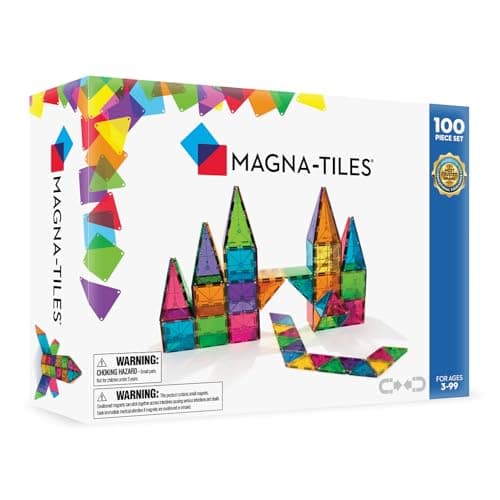
Instead of an app toy
Magna-Tiles Classic 100-Piece Set
Age grade 3+
Immediate feedback, nothing to be discontinued, and it works identically in fifteen years.
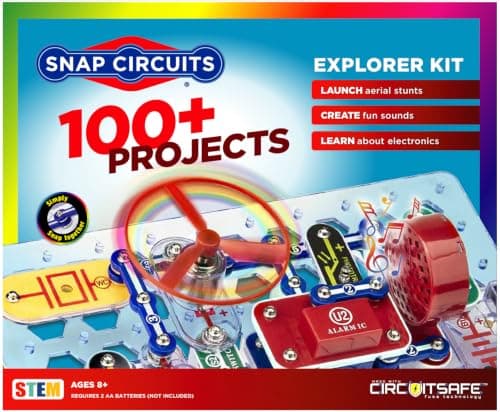
Instead of a one-result science kit
Snap Circuits Jr. SC-100 Electronics Kit
Age grade 8+
The circuit can be rewired a hundred times; the failure state teaches something.
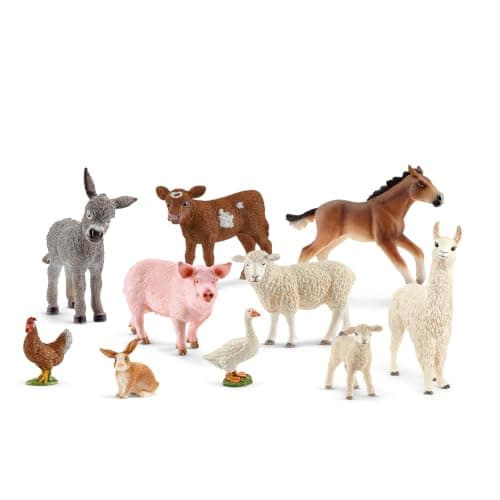
Instead of a blind box
Schleich Farm World Animal Bundle, 10 Pieces
Age grade 3+
Sold individually and visibly, so a collection can actually be finished.
#ad · As an Amazon Associate we earn from qualifying purchases. How this works.
Questions
Questions people actually ask
What toys are a waste of money?
Are app-connected toys bad?
Should I buy a toy for the age above so it lasts longer?
Are licensed character toys worth it?
Do you refuse to recommend anything you earn from?
Keep reading
Related
Receipts
Sources
- US Consumer Product Safety Commission — Toy Safety business guidance
- American Academy of Pediatrics — “Selecting Appropriate Toys for Young Children in the Digital Era” (clinical report)
- FTC — Endorsement Guides: what people are asking
We do not run a playroom test lab and we do not pretend to. Age grades, battery requirements and assembly notes are quoted from each manufacturer’s own product listing, read on September 7, 2026; prices come live from Amazon’s API and are stamped with the date they were checked. Where a maker publishes nothing, the page says “manufacturer does not publish this” rather than guessing. Read the full method.