Guides · Guides
Toy safety standards, explained
What a toy sold in the US has actually been tested for, who enforces it, and the two checks worth doing yourself — one of which takes thirty seconds and almost nobody does it.
We earn a commission if you buy through our links. It does not change the price you pay and it does not decide our picks — our method is published in full, including the part where we say we have not played with these toys. How this works.
The three things worth knowing
- ASTM F963 is the Standard Consumer Safety Specification for Toy Safety. It sets the requirements a toy must meet — mechanical, flammability, chemical and labeling — and the CPSC has made it a mandatory standard rather than a voluntary one.
- The CPSC is the federal agency that enforces it, publishes guidance for manufacturers, and issues recalls.
- CPSIA is the legislation that tightened all of this considerably in 2008, most visibly by imposing strict limits on lead and phthalates in children’s products and requiring third-party testing at accredited laboratories.
What testing actually covers
The mechanical requirements are the ones that produce the age grades most people notice: small parts, sharp points and edges, the strength of seams and joins under expected use and abuse, cords and strings, and projectile energy. Chemical requirements cover lead in paint and substrate, and phthalates in plastics. Flammability requirements cover fabrics and soft toys.
Testing is done by accredited third-party laboratories rather than by the manufacturer alone, and the results support a certificate of compliance. This is a genuinely strong system, and it is worth knowing that a mainstream toy on sale in the US has been through it.
What it does not cover
Three things people reasonably assume are covered and are not:
- Noise. There is no requirement to publish a sound level, and almost no manufacturer does. See how we rate noise.
- Durability in the ordinary sense. Testing establishes that a toy does not become hazardous when it breaks, not that it will not break.
- Whether it is any good. Compliance is a floor, not a recommendation. A fully compliant toy can still be a poor purchase.
The two checks worth doing yourself
- Search the recall database. The CPSC publishes every recall publicly and it is searchable by product or brand in under a minute. It is worth doing for anything secondhand, anything that has been in a loft for a decade, and anything where a component has been replaced. Almost nobody does this, and it is the single highest-value thirty seconds available to a toy buyer. How to check a toy recall sets out the search order that actually finds things, and what a notice entitles you to.
- Read the age grade, and take it literally. Under three it is a small-parts test result rather than a suggestion. Art materials carry a second labeling regime of their own — non-toxic art supplies covers what the ASTM D-4236 line and the AP seal each certify.
Marketplaces and imported toys
The standards apply to toys sold in the US regardless of where they are made. The practical gap is with third-party marketplace sellers, where enforcement is harder and where products occasionally appear without proper compliance documentation. Buying from established brands or from sellers with a real presence is a reasonable mitigation, and a listing with no brand name, no manufacturer and no age grade at all is worth avoiding on principle.
On this site, a product whose manufacturer publishes no age grade cannot be recommended at all — the build fails rather than the page publishing. That rule exists partly for this reason.
Older and secondhand toys
A toy from before 2008 predates CPSIA’s lead and phthalate limits and was not tested against them. That is not a reason to avoid all vintage toys, but it is a reason to be cautious with painted items intended for a child who still mouths things. Check the recall database, check battery compartments still close with a screw, and prefer unpainted wood or plain plastic for the youngest children. See buying secondhand.
The toys
The toys this guide is about
Every one of these carries its manufacturer’s published age grade and a live Amazon price, read October 23, 2026. Full rankings live in the roundups linked above.
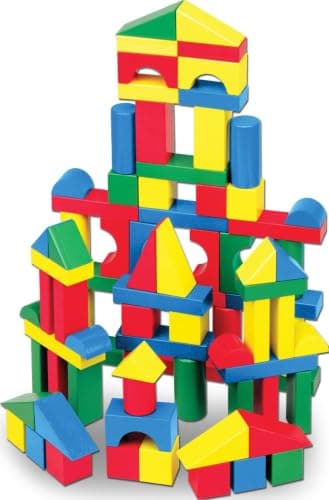
The kind of toy that ages safely
Melissa & Doug Wooden Building Blocks, 100 Pieces
Age grade 2+
Unpainted or simply finished wood with no small parts and nothing electronic — the least to go wrong over decades.
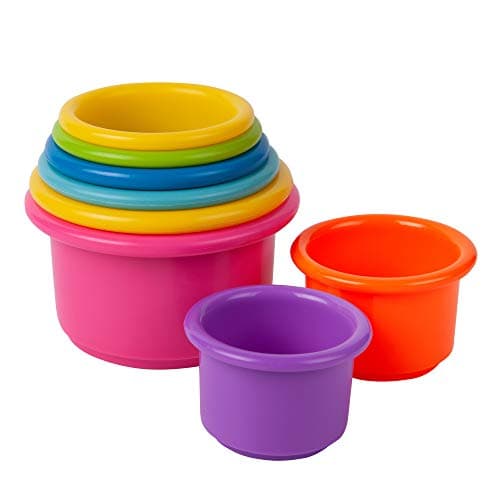
Graded 9 months+
The First Years Stack & Count Cups
Age grade 9 months+
A toy designed for the mouthing stage, which is where the chemical and small-parts requirements do the most work.
#ad · As an Amazon Associate we earn from qualifying purchases. How this works.
Questions
Questions people actually ask
What is ASTM F963?
Are toys tested before they are sold?
How do I check if a toy has been recalled?
Are toys from online marketplaces safe?
Are old toys safe for children?
Keep reading
Related
Receipts
Sources
- ASTM F963 — Standard Consumer Safety Specification for Toy Safety
- US Consumer Product Safety Commission — Toy Safety business guidance
- US Consumer Product Safety Commission — recall database
- 16 CFR Part 1501 — the federal small-parts regulation behind the “not for children under 3” warning (eCFR)
- CPSC — button cell and coin battery safety information
We do not run a playroom test lab and we do not pretend to. Age grades, battery requirements and assembly notes are quoted from each manufacturer’s own product listing, read on September 7, 2026; prices come live from Amazon’s API and are stamped with the date they were checked. Where a maker publishes nothing, the page says “manufacturer does not publish this” rather than guessing. Read the full method.