Honest · The Honest List
Loud toys, named — and what to buy instead
We put a noise rating on every pick on this site, which is only worth something if we are willing to print the unflattering half. These are the categories we rate loud, the ones among our own recommendations, and the quieter thing that does the same job for the child.
We earn a commission if you buy through our links. It does not change the price you pay and it does not decide our picks — our method is published in full, including the part where we say we have not played with these toys. How this works.
What “loud” means on this site, and what it does not
It is our judgment, read off the manufacturer’s own listing, and it is not a measurement. We do not own these toys and we own no sound meter. What we look at is whether there is anything electronic in the box, whether the listing advertises sounds, music or voice as a feature, and whether a decibel figure is published — and almost none is. That absence is the actual finding, and the noise ratings page is where we explain it at length, including what NIOSH does and does not say about exposure.
The distinction that matters most is not volume, it is source. A toy is loud in one of two ways: because the child is making the noise, or because the toy is. The first is play, and the fix is a rug and a closed door. The second is a design decision somebody made in a meeting, and it is the one worth avoiding.
The loud categories, and the quieter swap
1. The light-and-sound baby toy
The classic: a handle, a screen of buttons, ten melodies and a voice. We cover several, and we rate them loud because the sound is the product — press, noise, repeat. The problem is not the decibels, it is that the toy does the interesting part, so the baby learns which button rather than what their hands can do.
Swap: a quiet cause-and-effect object where the feedback is physical — a bubble that pops back, a ring that sits or does not. The first pick below is that, and fine motor toys explains why the hand doing the work is the whole point.
2. The electronic activity center
A large plastic frame with lights, songs and several modes. These are genuinely useful objects for the twenty minutes an adult needs to cook, and we say so on the pages they appear on — but they are loud, and the sound generally has two settings: on, and off with a child who has found the switch.
Swap: a fastener board or a wooden activity cube. The child still gets repeatable cause and effect; nobody else in the room gets the melody. Several are on quiet toys that are not boring.
3. The karaoke microphone
There is no quiet version of this and we are not going to pretend otherwise. A microphone is an amplifier: it exists to make a child louder than a child. If the child wants to sing, that is a good thing and the honest answer is not a swap at all.
Swap: if what the child actually wants is audio rather than amplification, a card-based audio player with a volume limit and a headphone socket does the job in a shared house. Note the limit is a setting rather than a hardware ceiling, and children find settings.
4. The remote-control stunt car
Motor noise, on a hard floor, indoors, for as long as the battery lasts — and the battery is also the reason it stops mid-game. It is loud in the way a power tool is loud: constant rather than punctuated.
Swap: something kid-powered and outdoors. A rocket you jump on or a kite both put the energy in the child rather than in a motor, and neither needs a battery — the no-batteries list is full of this trade.
5. The pound-and-tap toy and the xylophone
We rate these loud and we still recommend one, because hitting something with a mallet at eighteen months is a legitimate and important activity. Be clear-eyed about it: this is a toy bought for the child at the expense of everyone within earshot.
Swap: nothing, if the child is at that stage — but put it on a rug, and keep it out of the room where an adult works. Wooden blocks on a hard floor are also loud, which is the honest note we print on them too.
6. The rock tumbler
The unusual one. A tumbler is not a noisy toy in the burst sense; it is a low hum that runs continuously for days per stage, and no figure is published for it. It is an excellent gift and it cannot live in a bedroom. That is a room problem rather than a toy problem, which is a category of complaint no product listing has ever helped anybody with.
Swap: nothing — buy it and put it in the garage, the basement or the utility room.
7. The crash at the end of the block game
Fifty-four hardwood blocks hitting a table at once is the loudest single event in our registry, and it is also the entire appeal of the game. It is the wrong purchase for an apartment with a sleeping baby next door, and exactly the right one for a family kitchen at six in the evening.
Swap: a card game, which is the only genuinely silent family game format. Several are compared by age on the board game page.
The three questions to ask before buying anything that makes a noise
- Is there a volume control, and does the lowest setting help? A two-stage switch usually means “loud” and “slightly less loud”. A dial is a better sign than a switch.
- Can the sound be turned off without removing the batteries? If the only way to silence a toy is a screwdriver, somebody has already decided this argument for you.
- Does the noise come from the play, or replace it? This is the one that matters. A toy that makes noise because the child hit it is fine. A toy that makes noise so the child does not have to do anything is the one that ends up in a cupboard, loudly.
Where the toy lives is half the decision
Almost every noise complaint is really a room complaint. The same toy is fine in a house with a garden and unbearable in a one-bedroom apartment with a baby asleep; the same block set is quiet on a rug and deafening on laminate. If the constraint is the building rather than the child, toys for small spaces is the list written for it, and quiet toys is the positive version of this whole page.
One thing we will not do
Print a decibel number we did not measure. You can find toy noise figures quoted widely online, and we cannot verify a single one of them for these products, so they are not going on this page. If a manufacturer publishes a level, we print it and credit them; where they do not, we say so. That is the same rule that governs every other fact on this site, and how we pick sets it out in full.
The safety footnote, which is separate
Hearing risk is about level and duration together, not annoyance, and a toy held against an ear is a different situation from the same toy across a room. NIOSH publishes the general guidance on exposure and it is linked below. Nothing on this page is a claim about any specific product’s safety — it is a claim about whether you will want it in your house.
The toys
The toys this guide is about
Every one of these carries its manufacturer’s published age grade and a live Amazon price. Full rankings live in the roundups linked above.
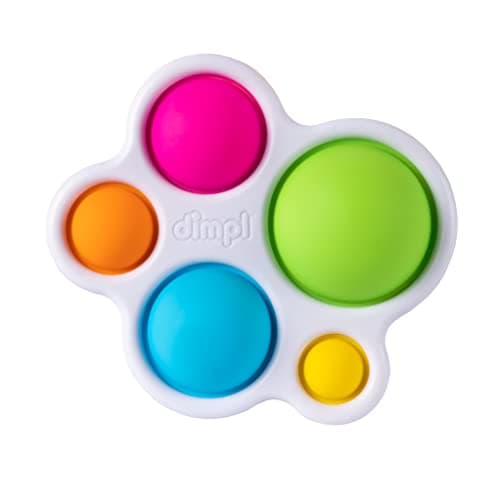
The swap for a light-and-sound baby toy
Fat Brain Toys Dimpl
Age grade 10 months+
Graded from 10 months. Five silicone bubbles in a frame that pop back and forth — repeatable cause and effect where the feedback is physical rather than electronic, and a genuinely soft sound for something this satisfying. It is a baby toy and honest about it: past two, a child pops it twice and hands it back.
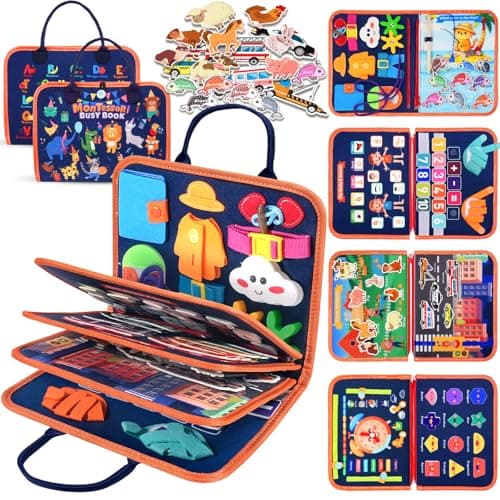
The swap for an electronic activity center
Montessori Busy Board for Toddlers
Age grade 1–3
Graded 1 to 3: buckles, zips, laces and snaps, and nothing in the box that can make a sound on its own. It is dressing practice disguised as a toy and it is the best thing here for a plane. Skip it if the child already dresses themselves — the whole toy is fastener practice.
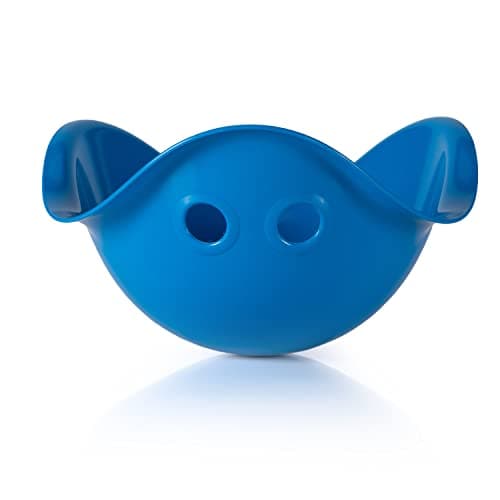
Quiet and physical at the same time
Bilibo by Moluk
Age grade 2–4
Graded 2 to 4. A plastic shell that is a seat, a helmet, a bucket and a spinning top depending on the day, with nothing electronic anywhere in it. It needs a child who invents; handed to one who waits to be told what a toy does, it sits in a corner.

The swap for a motorized toy
Easy-Fly Butterfly Kite for Kids
Age grade 4+
Graded 4+, and the only sound it makes is wind. It puts the energy in the child rather than in a motor and it packs back into its own sleeve. It needs a field, a park or a beach — in a garden with trees it lasts about ninety seconds.
#ad · As an Amazon Associate we earn from qualifying purchases. How this works.
Questions
Questions people actually ask
What are the loudest kids' toys?
How loud is too loud for a toy?
Is a loud toy bad for a child's hearing?
How do I quiet down a toy we already own?
Are quiet toys boring?
Keep reading
Related
- Quiet toys that are not boringThe positive version of this page, with picks.
- How we rate noiseWhat our ratings are, and why nobody publishes decibels.
- Toys that need no batteriesMost of the loud ones are on the other side of this line.
- Toys for small spacesIf the constraint is the building rather than the child.
- Best board games for kidsIncluding the quiet formats.
Receipts
Sources
- NIOSH — Noise and Hearing Loss Prevention, on exposure levels and duration
- ASTM F963 — Standard Consumer Safety Specification for Toy Safety
- US Consumer Product Safety Commission — Toy Safety business guidance
- CPSC — button cell and coin battery safety information
We do not run a playroom test lab and we do not pretend to. Age grades, battery requirements and assembly notes are quoted from each manufacturer’s own product listing, read on September 7, 2026; prices come live from Amazon’s API and are stamped with the date they were checked. Where a maker publishes nothing, the page says “manufacturer does not publish this” rather than guessing. Read the full method.