The short answer
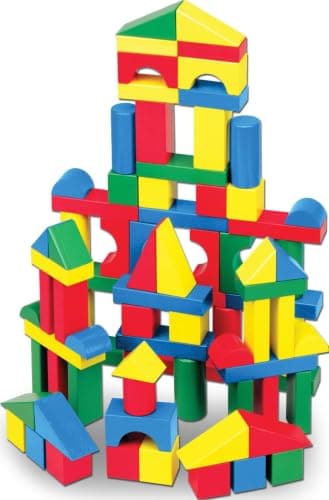
If the child is under two, neither one: buy large interlocking bricks graded 1+ and come back to this page in a year. If the child is two or three, buy DUPLO — it is graded 2+, tiles are graded 3+, and the year is not negotiable. If the child is three or over and you are choosing fresh, buy magnetic tiles: they are faster to start, faster to tidy, and they do not age out. If the house already owns a tub of DUPLO, the best purchase is usually more DUPLO or the step up to standard bricks, not a second system.
Every age grade on this page is the manufacturer’s own published wording, and this site never recommends a toy below the grade its maker set. We have not played with these toys; our method is published in full.
The age grades decide it more often than anything else
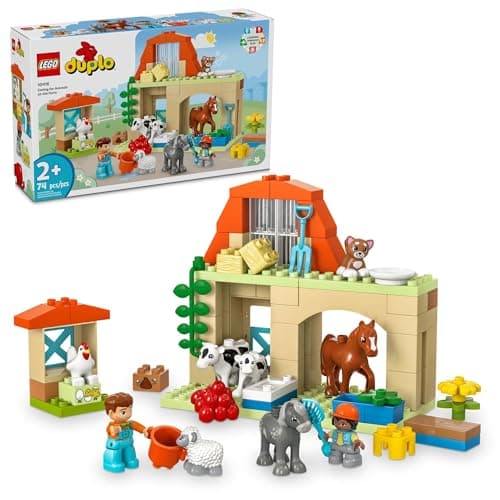
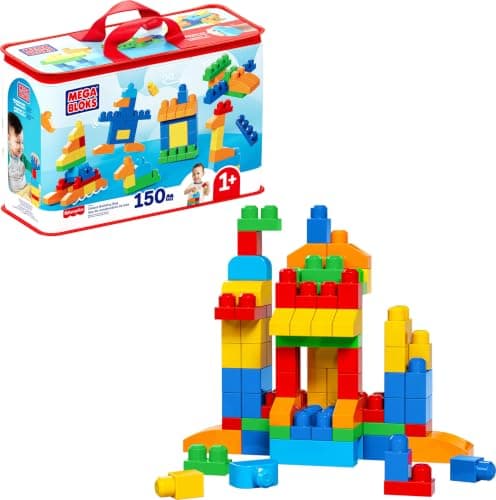
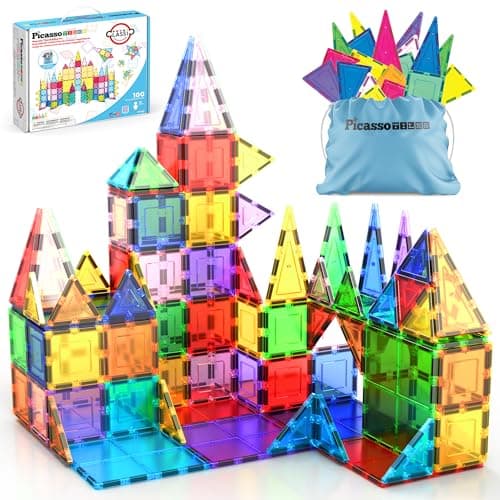
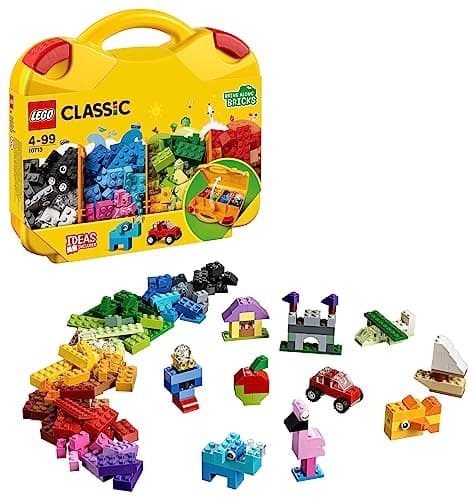
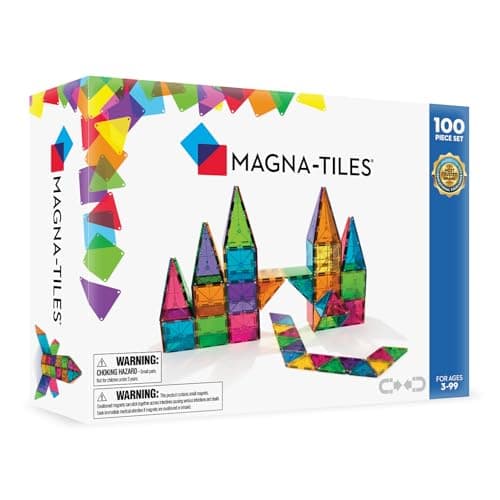
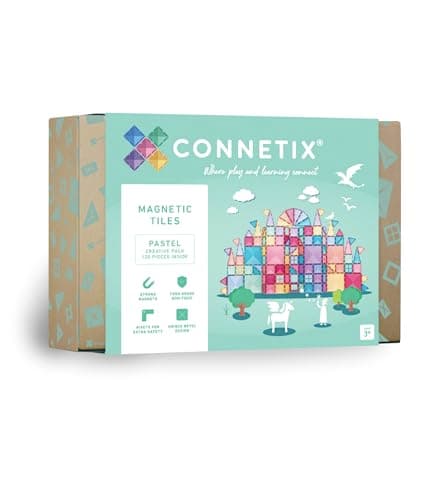
Before any argument about play value, there is one hard number. LEGO grades DUPLO 2+. Magna-Tiles, PicassoTiles and Connetix are all graded 3+. Large interlocking bricks are graded 1+. Standard LEGO bricks start at 4+.
Those grades are set against the federal small-parts regulation and the ASTM F963 toy safety standard, so they describe a hazard profile as much as a difficulty level. A magnetic tile is not a small part — it is large and flat — but the published grade is the published grade, and the magnets inside are the reason it exists. This site does not recommend below a maker’s grade under any circumstances, and the build fails if a page tries to. More on what those grades mean is in age grades explained.
The practical consequence is that for a very large share of the people asking this question — the ones with a child between one and three — the answer is decided before the comparison starts.
What each system actually teaches
Magnets teach shape. Studs teach structure.
A magnetic tile is a flat two-dimensional shape that becomes three-dimensional when it meets another one. The child is working with squares, triangles and the relationships between them: which shapes make a roof, how many triangles close a dome, why a tall wall needs a wider base. The learning is geometric, and it happens in seconds.
A stud brick is the opposite. Nothing is revealed by one brick; everything comes from stacking, offsetting and bridging. A child building with DUPLO learns that a wall is stronger when the joins do not line up, that a roof needs something underneath it, and that a thing they made can be picked up. The learning is structural, and it is slower.
One comes apart in a pull. The other has to be taken apart.
This sounds like a tidying detail and it is actually the biggest behavioral difference between the two. A magnetic build collapses the moment it is knocked, which is forgiving for a three-year-old and infuriating for a six-year-old trying to build something ambitious. A DUPLO build survives a knock, a carry and a car journey — and has to be dismantled brick by brick, which is why DUPLO ends up on the floor for days and tiles do not.
One is a building toy. The other is often a pretend-play toy.
Most DUPLO sets ship with animals, figures and a scenario. That is not a flaw; for a two-year-old, building in service of a story is how building starts. Tiles ship with nothing but tiles, so the story has to be imported — which is why households often end up with cars, animals or figures parked inside tile buildings. If the child is more interested in the story than the structure, pretend play toys is the better shortlist.
The practical differences, side by side
| | Magnetic tiles | LEGO DUPLO |
|---|
| Published age grade | 3+ (maker says 3 to 99) | 2+ |
| Time to first build | Seconds | Minutes |
| Does the build survive being carried? | No | Yes |
| Cleanup | About two minutes into one bin | Longer; pieces separate and scatter |
| Comes with a story | No — tiles only | Usually: animals, figures, a scenario |
| Noise | Quiet; a click and a collapse | Quiet; plastic in a tub is the loud part |
| Where it leads next | More tiles, bigger builds | Standard LEGO bricks at 4+ |
| Cross-brand compatibility | Yes, in practice, across tile brands | Yes with LEGO; no with Mega Bloks |
The noise column is our reading of what each listing describes rather than a measurement; almost nobody in this category publishes a decibel figure, which is itself the finding on how loud is that toy, actually.
Cost, and the number that actually matters
Headline prices mislead here, because the two systems are bought differently. Tiles are one purchase that is rarely repeated — a hundred pieces is a complete toy, and most households never buy a second set. DUPLO is bought in sets, repeatedly, at birthdays and Christmas, and the per-brick price of a themed set is considerably worse than a plain tub. Over five years the two often land in a similar place, with the tile budget spent on day one and the brick budget spread out.
Two things genuinely lower the cost. On the tiles side, the copy brands are compatible in practice, so a cheap 100-piece set is both a legitimate way to start and a legitimate way to double an existing set — the brand-by-brand version of that argument is on Magna-Tiles vs Connetix vs PicassoTiles. On the brick side, a plain tub beats a themed set per brick every time, and secondhand DUPLO is abundant, washable and effectively indestructible — see buying toys secondhand.
Safety, and the one thing specific to magnets
Both systems are safe when they are used at or above their published grades. The difference worth knowing is what happens when a tile breaks. Magnetic tiles are sealed plastic shells around magnets, and a cracked tile can release one — swallowed magnets are a serious medical emergency rather than an ordinary choking risk, because two of them can attract through tissue. The practical rule is simple: inspect tiles occasionally and retire any that are cracked, rather than taping them. Reputable brands publish warranties partly for this reason.
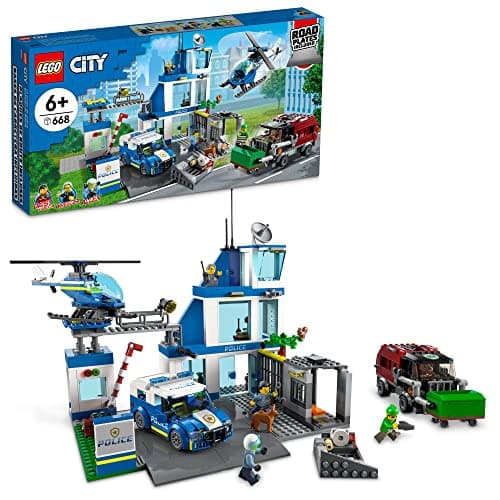
On the brick side, the risk is not DUPLO, which is deliberately oversized. It is the standard LEGO that arrives at four or five into a house that still has a toddler in it. That transition is the actual hazard moment in a building-toy household, and it is worth planning for before it happens. What the under-3 warning means in practice is on what “not for children under 3” actually means.
So which one, for which child
Buy tiles if cleanup is the thing that decides whether a toy gets out of the cupboard, if the child likes immediate results, if floor space is tight, or if you want one purchase to cover ages three to eight without buying anything else.
Buy DUPLO if the child is two, if they want to keep what they made, if they narrate while they play, or if you intend to end up at standard LEGO anyway and would rather the path be continuous.
Buy both, eventually — most households with a builder do, and they coexist fine because they are used for different things. Just do not buy both at once. Buying two systems in the same month is the reliable way to end up with two half-used tubs. If the child turns out to be a builder first and everything else second, toys for the builder is the shortlist written around that, and at six the science end of the same shelf is on STEM toys for 6-year-olds.