The short answer
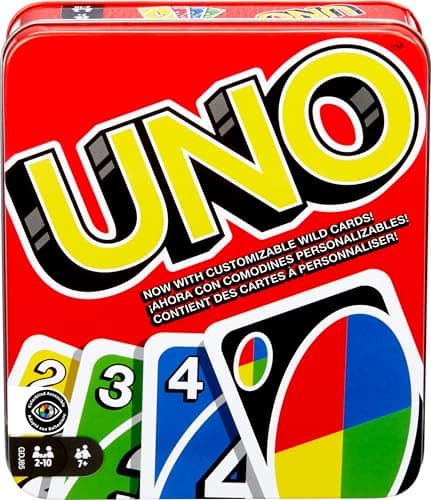
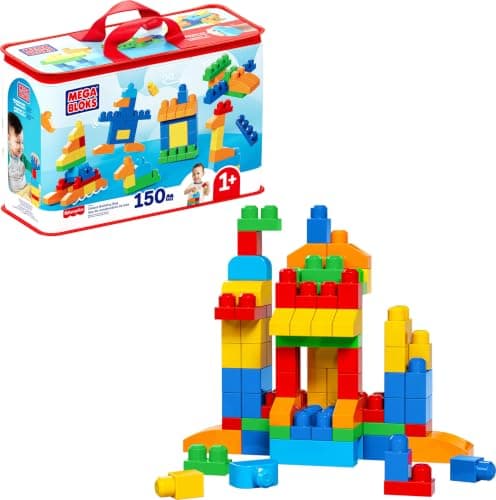
Start with the Mega Bloks big bag: graded 1+, usable by every grandchild you are likely to have at once, and it packs away in a minute. Add a deck of Uno for the older ones, and you have covered a four-year age spread for well under fifty dollars. Everything else on this page is a refinement of those two.
This is not the same list as a present list. A gift is chosen for one child and then lives at their house; a cupboard at your house has to work for whoever walks in, with no notice, on a wet afternoon. If what you want is the present version, that is grandparent-proof gifts -- written for buying into a household you do not live in.
The four constraints nobody tells you about
1. The age spread is the problem, not the ages
A toy for a four-year-old is easy to buy. A cupboard that serves a one-year-old and a nine-year-old at the same table is hard, and it is the actual situation most grandparents are in. The toys that solve it are the ones with no single correct way to use them -- bricks, trains, blocks, cards -- because each child uses them at their own level and nobody is excluded. Anything with one outcome serves one child and bores the others.
2. It has to pack away into adult space
The toys live in a house that is not organised around children, which means the test is not just whether a toy is good but whether it disappears in sixty seconds. A bag of bricks and a flat box of cards pass. A play kitchen does not, however much a three-year-old would love it -- and that is a judgment about your living room, not about the toy. There is a longer version of this on toys for a small home.
3. No batteries, for a different reason than usual
Everywhere else on this site we argue against batteries because they run out at the wrong moment. Here it is simpler: a toy that has sat in a cupboard for four months with cells in it is a toy with corroded cells in it. Every pick on this page publishes no battery requirement at all, which is why the cupboard still works after a gap.
4. Nobody is reading the instructions
Not the grandparents, not the children, not the parents who have just driven two hours. A toy for this cupboard has to be legible on sight. That rules out most kits, most app-connected anything, and any board game whose rules run past one side of a card.
What a complete cupboard looks like
Six things, and you are done:
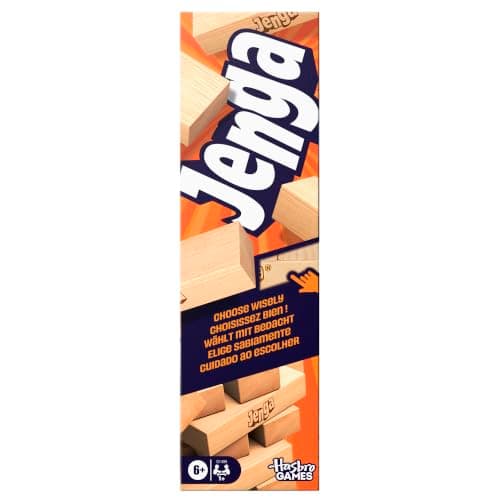
- One open-ended building thing. Bricks or blocks, graded for the youngest grandchild.
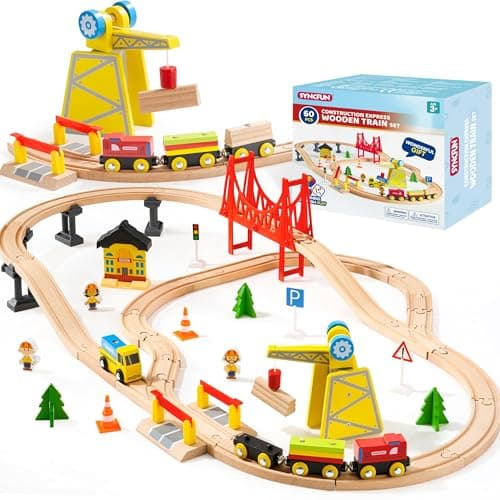
- One thing that stays set up. A train layout, a marble run -- the activity is the building.
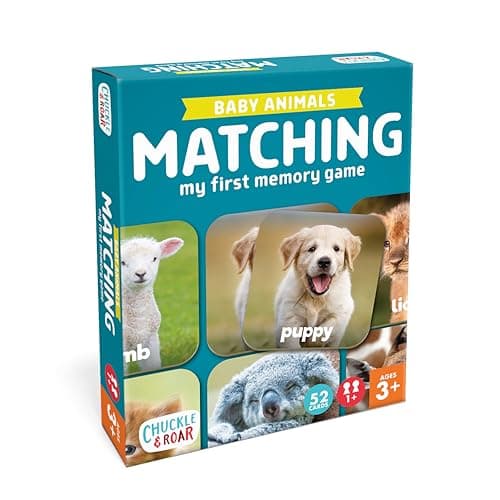
- One game the youngest can win. Matching or memory, five-minute rounds.
- One game the whole table plays. No reading, no long rules.
- One deck of cards. For the oldest grandchild, and for the journey home.
- One quiet two-hour thing. A jigsaw, for the afternoon with a single child.
Add a drawer of paper and pencils, which is not a toy and does more work than most of them. You do not need an art set: paper, a pot of markers and somewhere to put the results on display is the whole thing.
The safety bit, because the ages are mixed
This is the one real hazard in a grandparent’s cupboard, and it is not the toys themselves -- it is the combination. The moment a nine-year-old’s LEGO is on the same rug as a one-year-old, you have a choking risk that neither toy has on its own. The small-parts rule behind the “not for children under 3” warning is the test; what “not for children under 3” actually means has it in plain words.
The practical fix is physical, not vigilance: the small-piece toys live in a box on a high shelf and come down only when the youngest is asleep or in another room. Every grandparent who has done this for a few years has arrived at the same system, usually the hard way. And if hand-me-downs from an older generation are involved, two minutes on checking whether a toy has been recalled is worth it -- recalls are the one thing a cupboard assembled over twenty years is likely to contain.
What to skip
Skip the big plastic thing bought for one grandchild’s current obsession: it dates within a year and then occupies a corner for a decade. Skip anything with a screen, which is the one thing the parents may actually mind. Skip noisy electronic toys, which in a grandparent’s small, hard-floored living room are louder than they are anywhere else -- loud toys, named is the specific list.
And skip buying more. A cupboard with six good things in it gets used harder than a spare room with forty, for the same reason a toy box with everything in it produces a child who plays with nothing: how many toys does a child actually need.