By age
Toys by age, with the age grade actually printed
Every pick on every age page carries the manufacturer's own published age grade. We never list a toy below the age its maker set — not because it is a rule we were given, but because it is the one mistake in this category you cannot undo.
We earn a commission if you buy through our links. It does not change the price you pay and it does not decide our picks — our method is published in full, including the part where we say we have not played with these toys. How this works.
Start here
Toys for babies, 0 to 12 months
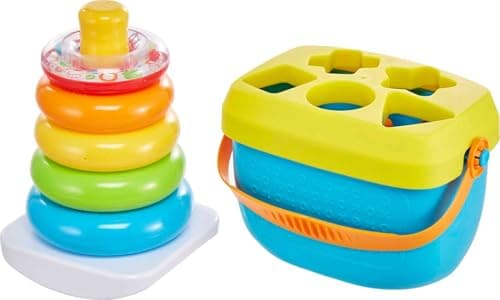
Our top pick: Fisher-Price Baby's First Blocks & Rock-a-Stack Set — Fisher-Price now sells its two oldest baby toys in one box, both graded for babies six months and older: the Rock-a-Stack — five rings on a bat-at rocker base — and Baby's First Blocks, ten blocks and a bucket with a shape-sorter lid. Neither has been meaningfully changed in decades because there is nothing to improve.
Fisher-Price grades it 6 months+. Facts read from the manufacturer’s listing on September 7, 2026.
The age on the box is not a suggestion
Every toy sold in the United States carries a manufacturer’s age grade, and most people treat it as marketing. It is not. For anything aimed below three, that grade is tied to a federal regulation: 16 CFR 1501 defines a small part as one that fits entirely inside a cylinder 1.25 inches across and up to 2.25 inches deep — roughly the dimensions of a young child’s throat — and a toy containing one cannot be graded for under-threes.
That is why every pick on every page in this section prints its age grade in the manufacturer’s own words, and why we never list a toy on a page for a younger child than its maker graded it for. It is the one rule on this site we will not bend for a good product. If a magnetic tile set is graded 3+, it does not appear on the two-year-old page, however many gift guides put it there.
Above three the grade stops being a safety line and starts being a difficulty line. A game graded 8+ is graded that way because of reading, arithmetic or patience, not because the pieces are dangerous. Going a year early there produces a different failure: a child who plays it once, loses, and never asks for it again. That is a wasted gift rather than a hazard, but it is still a wasted gift.
What actually changes, year by year
The useful thing about shopping by age is not the safety line — it is that what a child can do with a toy changes faster than anything else about them. A nine-month-old is working out that objects still exist when they are hidden. A two-year-old is testing what happens when they let go of something. A five-year-old is inventing rules, and a nine-year-old wants a rule they can beat.
Roughly: under a year, the toy is a texture and a sound. From one to two, it is cause and effect — press this and that happens. From two to four, it is imitation: the play kitchen, the toy tools, the doctor kit. From four to seven, it is construction and story together. From seven upward, it is mastery, competition and collection, in whatever proportions that particular child prefers.
Buy against the stage rather than the birthday and you buy fewer things. That is the whole argument for this section, and it is also why the pages link sideways to their neighbors — most children sit somewhere between two of them.
The mistake almost everybody makes
The most common expensive error is buying up: getting the four-year-old set for the three-year-old because they seem advanced. Children usually are advanced in one dimension and exactly their age in every other. A three-year-old with terrific vocabulary still has a three-year-old’s hands, and a construction set that needs a pinch grip they do not have yet will sit in a cupboard until they do.
The second most common error is buying for the age the child is about to be. A toy given three months early is a toy given to a child who cannot use it, and by the time they can, the novelty of unwrapping it has gone. If you are shopping in November for a March birthday, buy for the March child.
And a note for anyone buying for someone else’s child, which is most people reading this: you almost certainly do not know what is already in the toy box, and neither do we. The two categories that are safest to duplicate are consumables — paper, dough, sand, beads — and things that combine with what is already there, like more blocks or another wooden train carriage. The riskiest is a big plastic centerpiece, because if they already own one, there is nowhere to put a second.
Every page below carries its picks, the manufacturer age grade for each, a live price, and one thing we would skip. Start with the age, then read the honest list if noise or batteries matter in that house.
Everything in this section
All of toys by age
Best for babies
Toys for babies, 0 to 12 months
Eleven baby toys from 3 months up, sorted by the manufacturer's own published age grade rather than by what looks cute.
Top pick: Fisher-Price Baby's First Blocks & Rock-a-Stack Set · age grade 6 months+
$18.35See it on Amazon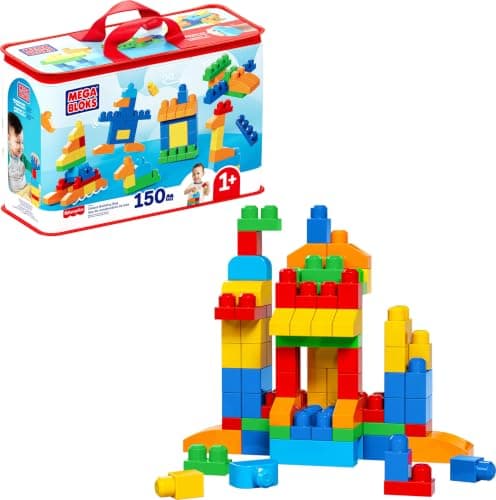
Best for a 1-year-old
Toys for a 1-year-old
Eleven toys every one of which carries a manufacturer age grade of 12 months or younger, with prices checked live.
Top pick: MEGA BLOKS First Builders Deluxe Building Bag · age grade 1+
$38.98See it on Amazon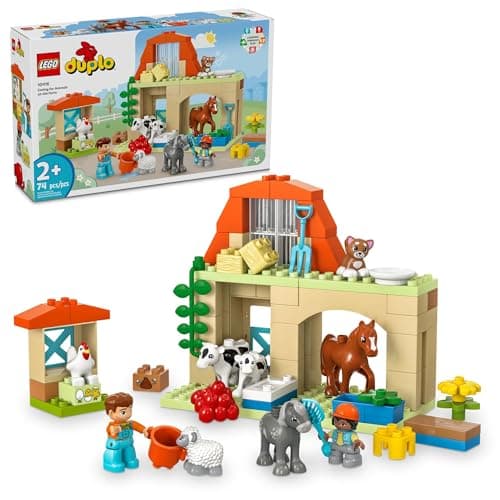
Best for a 2-year-old
Toys for a 2-year-old
Twelve toys graded 2+ or lower by their own makers — including the two-year-old classics and the water table that buys you a summer.
Top pick: LEGO DUPLO Caring for Animals at the Farm · age grade 2+
$49.99See it on Amazon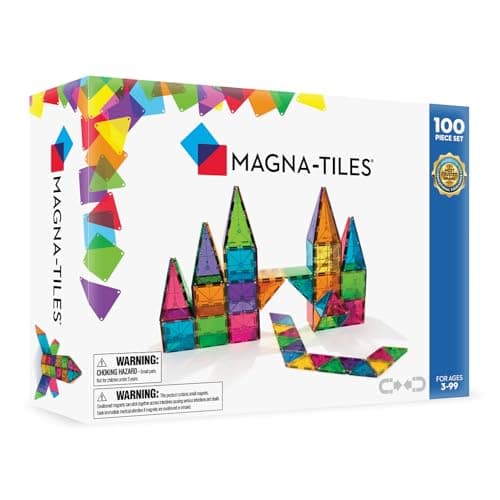
Best for a 3-year-old
Toys for a 3-year-old
Twelve picks for the year the good toys unlock, from magnetic tiles to the play kitchen that gets used for the next five years.
Top pick: Magna-Tiles Classic 100-Piece Set · age grade 3+
$117.52See it on AmazonBest for a 4-year-old
Toys for a 4-year-old
Ten picks for four-year-olds, all graded 4+ or below by their makers, weighted heavily toward open-ended sets that survive into six.
Top pick: Magna-Tiles Classic 100-Piece Set · age grade 3+
$117.52See it on Amazon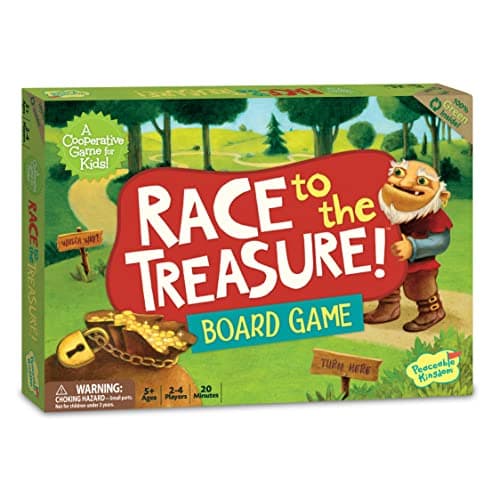
Best for a 5-year-old
Toys for a 5-year-old
Ten picks for five-year-olds — the first proper games year, the first real wheels year, and the year art materials start being used rather than explored.
Top pick: Peaceable Kingdom Race to the Treasure! · age grade 5+
$19.95See it on Amazon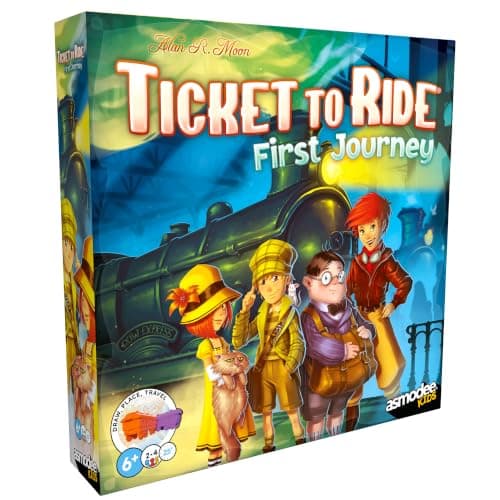
Best for a 6-year-old
Toys for a 6-year-old
Eleven picks for six-year-olds, weighted toward the games and instruction-led builds that reading suddenly makes possible.
Top pick: Ticket to Ride: First Journey · age grade 6+
$29.99See it on Amazon
Best for a 7-year-old
Toys for a 7-year-old
Nine picks for seven-year-olds: multi-session builds, the card games that get played for years, and the first real strategy game.
Top pick: LEGO Creator 3-in-1 Wild Animals · age grade 7+
$7.19See it on Amazon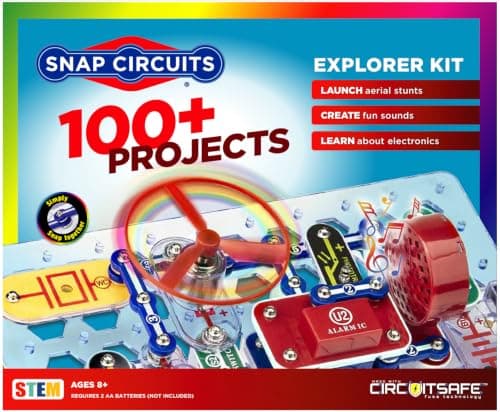
Best for an 8-year-old
Toys for an 8-year-old
Eleven picks for eight-year-olds — electronics kits, single-player logic games, and the gear that gets them outside.
Top pick: Snap Circuits Jr. SC-100 Electronics Kit · age grade 8+
$39.99See it on Amazon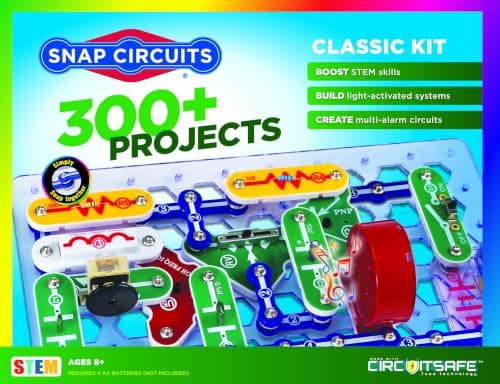
Best for a 9-year-old
Toys for a 9-year-old
Ten picks for nine-year-olds: multi-week projects, harder logic games and the equipment that supports a real interest.
Top pick: Snap Circuits Classic SC-300 Electronics Kit · age grade 8+
$66.98See it on Amazon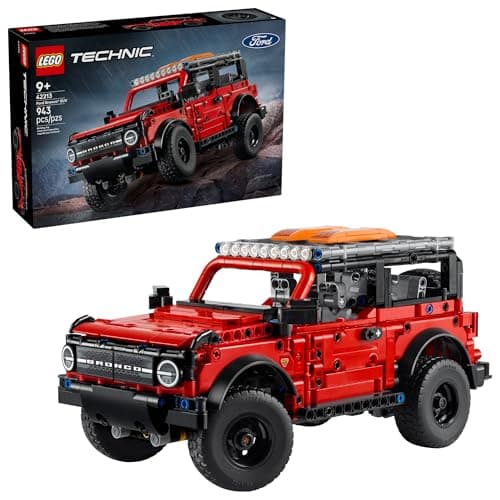
Best for a 10-year-old
Gifts for a 10-year-old
Ten picks for ten-year-olds, including the first sets genuinely graded 10+ — chemistry, Technic and crystal growing.
Top pick: LEGO Technic Ford Bronco · age grade 10+
$51.99See it on AmazonBest for 11 and 12
Gifts for 11 and 12-year-olds
Nine picks for 11 and 12-year-olds — equipment, adult-grade games and projects with an output, chosen to avoid reading as a toy.
Top pick: LEGO Technic Ford Bronco · age grade 10+
$51.99See it on AmazonBest for teenagers
Gifts for teenagers, 13 and up
Eight picks for teenagers — adult-grade games, real equipment and long projects, none of which read as a toy.
Top pick: LEGO Technic Ford Bronco · age grade 10+
$51.99See it on Amazon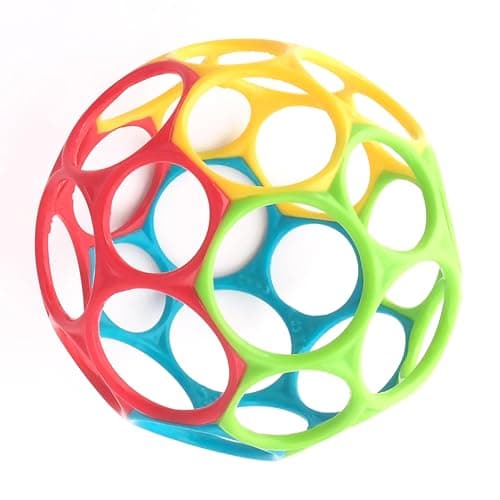
Best from birth
Toys for a newborn, and how few you need
Five toys whose manufacturers publish an age grade of nought months, the four we would not rank, and what a baby under three months can actually do with any of them.
Top pick: Bright Starts Oball Easy Grasp Classic Ball · age grade 0 months+
$4.74See it on Amazon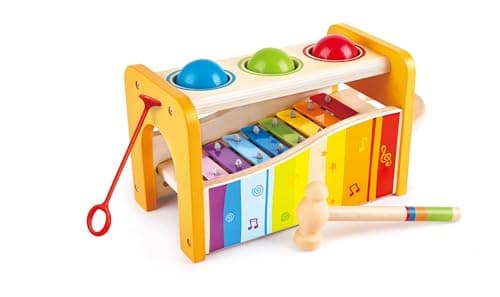
Best at 18 months
Toys for an 18-month-old
Nine picks graded 18 months or below for the stage between the one-year and two-year lists, sorted by what an 18-month-old can actually do.
Top pick: Hape Pound & Tap Bench with Xylophone · age grade 12 months–3 years
$32.53See it on AmazonBest toy for a 6-month-old
Toys for a 6-month-old
Six toys graded for six months or younger, plus the floor-time, crawling and car-seat cases, and the honest answer on how few a baby needs.
Top pick: Fisher-Price Baby's First Blocks & Rock-a-Stack Set · age grade 6 months+
$18.35See it on Amazon