Guides · Guides
Toy rotation, properly done
The cheapest intervention available: box most of the toys, bring a few back every few weeks, and a boxed toy returns as effectively a new one. Here is the version that survives contact with a real household.
We earn a commission if you buy through our links. It does not change the price you pay and it does not decide our picks — our method is published in full, including the part where we say we have not played with these toys. How this works.
Why it works
A toy that has been out of sight for six weeks is, to a four-year-old, a new toy. That is the entire mechanism, and it is free. Rotation gets the benefit of owning fewer toys — longer, deeper play with each one — without getting rid of anything and without spending money.
It also has a second effect people notice more: tidying becomes tractable. A room with a third of the toys in it can be cleared in five minutes, which means it actually gets cleared.
The system, in four steps
- Three or four boxes. Opaque, lidded, stackable, stored anywhere out of sight. Not clear ones — the point is that the contents are forgotten.
- Split by type, not at random. Each box should contain a mix — something to build, something for pretend, something physical, a puzzle — so that whatever comes out is a balanced set rather than four vehicles.
- Swap every two to four weeks. Not weekly, which is too fast for a child to get deep into anything, and not quarterly, which is slow enough that the toys are genuinely forgotten rather than pleasantly rediscovered.
- Do it while they are out or asleep. Rotating in front of a child turns it into a negotiation about every individual item, which is how the whole system dies.
What never goes in a box
- Books. All of them, always out.
- The main construction system. Bricks, tiles or blocks — the thing they build with daily. Rotating this is disruptive rather than refreshing.
- Art materials. Available on demand, in a container the child can open.
- The comfort object and the current obsession. Non-negotiable, and trying to negotiate is not worth what it costs.
The signals to watch
A toy comes back and is ignored twice. That is a toy the child has finished with, and it can leave the rotation permanently — sold, passed on or donated. Rotation is a useful way to find out what is genuinely done without having to guess.
A toy is asked for from the box. That is a keeper and it should probably be out permanently. Children asking for a specific absent toy is the strongest signal available about what they actually value.
The child stops noticing swaps. Usually means the intervals are too short. Slow down rather than adding more toys.
When rotation stops being the answer
Around six or seven, children start having sustained projects and specific interests, and boxing a half-finished build is actively unhelpful. From that point rotation applies to the long tail of older toys rather than to the whole collection, and it gradually turns into ordinary decluttering.
It also stops working if the total is simply too large. If four boxes are not enough, the honest answer is that the household has more toys than any system will fix — see how many toys a child needs.
The birthday and Christmas version
The highest-value moment for rotation is the day after a birthday. Most of the pile goes straight into boxes unopened by the child’s attention, and re-emerges over the following year. Nothing is wasted, nothing is refused, and the child gets a year of small rediscoveries instead of one overwhelming afternoon.
The toys
The toys this guide is about
Every one of these carries its manufacturer’s published age grade and a live Amazon price, read October 23, 2026. Full rankings live in the roundups linked above.
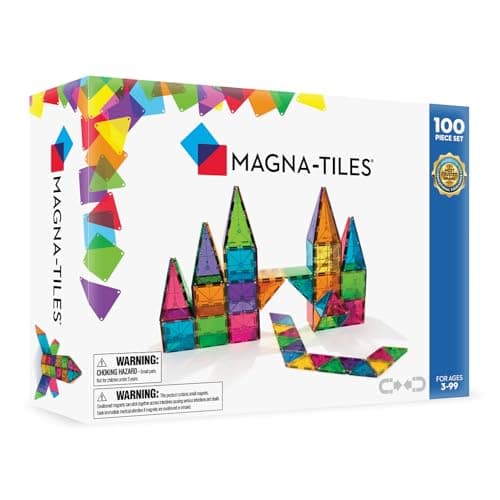
Never rotate this one
Magna-Tiles Classic 100-Piece Set
Age grade 3+
The daily construction set stays out. Boxing it is disruptive rather than refreshing.
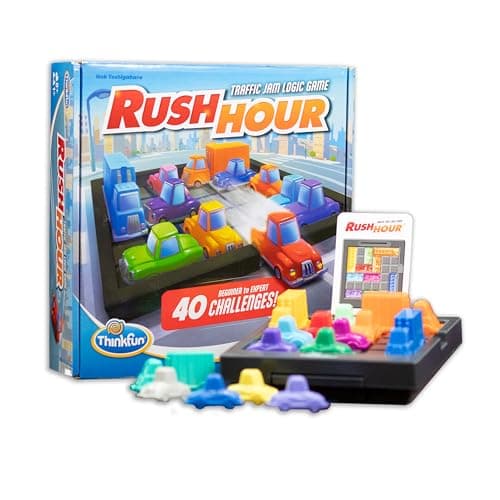
Ideal rotation material
ThinkFun Rush Hour Traffic Jam Logic Game
Age grade 8+
Self-contained, graded difficulty, and genuinely exciting when it reappears after six weeks.
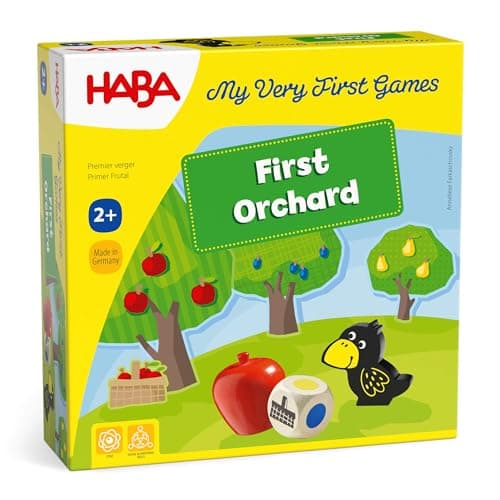
The one that comes back well
HABA My Very First Games — First Orchard
Age grade 2–4
Games rotate better than almost anything, because playing them is an event rather than a habit.
#ad · As an Amazon Associate we earn from qualifying purchases. How this works.
Questions
Questions people actually ask
How often should you rotate toys?
How do you start toy rotation?
Should you tell the child you are rotating toys?
What if my child asks for a toy that is boxed?
At what age does toy rotation stop working?
Keep reading
Related
Receipts
Sources
- American Academy of Pediatrics — “Selecting Appropriate Toys for Young Children in the Digital Era” (clinical report)
- US Consumer Product Safety Commission — Toy Safety business guidance
We do not run a playroom test lab and we do not pretend to. Age grades, battery requirements and assembly notes are quoted from each manufacturer’s own product listing, read on September 7, 2026; prices come live from Amazon’s API and are stamped with the date they were checked. Where a maker publishes nothing, the page says “manufacturer does not publish this” rather than guessing. Read the full method.