The premise is usually wrong, and wrong in a useful way. A child with forty toys rarely has forty kinds of toy — they have a lot of one kind, and three or four categories they have never been given at all. Those categories are what this page is.
We earn a commission if you buy through our links. It does not change the price you pay and it does not decide our picks — our method is published in full, including the part where we say we have not played with these toys. How this works.
#ad · Prices come live from Amazon’s API and were last checked Sep 18, 2026. Where we have no verified live price we show none — we would rather leave a gap than print a number that has gone stale. Age grades are the manufacturer’s own; noise is our reading, not a measurement.
The premise is nearly always wrong
“They have everything” is almost never true. What is usually true is that the child has a great deal of two or three things — bricks, figures, vehicles — and has never once been given a consumable, a process, a skill or something they can make and hand to somebody else. Those four categories are the whole of this page, and the reason they are missing is structural: they photograph badly, so they lose the shelf to the thing that photographs well.
It is also worth saying that a full toy box is itself the problem, not the reason you cannot solve it. A child with thirty toys available plays with about four of them. Our page on how many toys a child actually needs covers the evidence, and toy rotation covers the fix that does not involve throwing anything away.
The four things a full toy box does not contain
A consumable. Something that gets used up cannot be duplicated by another relative and cannot already be in the cupboard. Beads, dough, thread, paper.
A slow process. A tumbler that runs for days or a crystal that grows for a week is the only kind of gift that teaches waiting, because the machine enforces it and nobody has to nag.
A skill. Chess, a knot, a stitch, a mechanism. The gift is the competence; the object is just where it lives.
Something to give away. Children who have everything are frequently short of things they can be generous with, and it is the one gift category that improves somebody else’s week too.
Ask the one question that works
If you can ask a parent anything, do not ask what the child wants. Ask what they played with last weekend. The answer is specific, recent and honest, and it is the only reliable way to find the category that is actually missing rather than the one the child named because an advert did. Collectors in particular always know exactly what is missing — that is the entire psychology of a collection, and toys for the collector covers which systems are honest about it and which are designed never to be complete.
If the answer is really “a big present”
Then the honest advice is to spend it on one thing rather than five, and the argument for that is on one good toy instead of five. For a child who genuinely has the basics, the categories that still earn a main present are audio, optics, a first real camera and games the whole family plays — the board game comparison sorts those by the age that can actually play them, kids’ cameras compared covers the device question, and toys worth the money is the page for whether a price is doing anything.
What we would skip
Another set of the thing they already collect, bought without asking. It is the safest- feeling choice and the one most likely to arrive as a duplicate, because you are guessing inside a system where the child knows every gap and you know none of them. Also skip the novelty desk gadget — the thing that does one trick. A child with a full toy box has seen a great many one-trick objects and has already worked out how that story ends. The general version of this reasoning is on the skip list.
If you are buying for somebody else’s child
Then the constraint is not only the toy box, it is the living room: noise, floor space and who will be assembling it. Every card on this page carries a noise and a mess rating for that reason, and two of these — the tumbler and the bead kit — are genuinely unsuitable for some households and we would rather say so here than have it discovered later. If the recipient is a niece, a nephew or a friend’s child, gifts for your niece, gifts for your nephew and grandparent-proof gifts are written from exactly that position: buying without knowing what is already in the house.
In detail
Every pick, in full
01
A machine that works for days while they wait
National Geographic Hobby Rock Tumbler Kit
Blue Marble
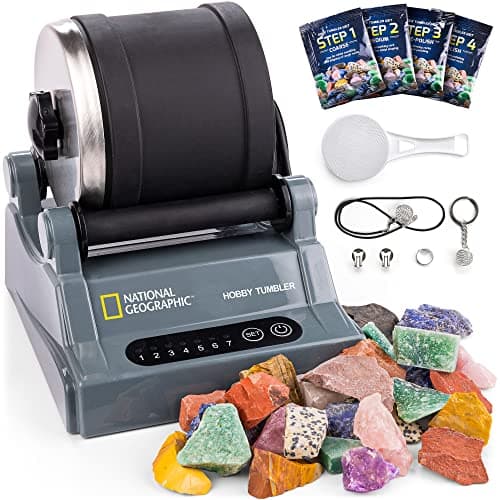
Graded 8+. A child loads rough stones and grit, the barrel runs for days per stage, and at the end they have polished stones they made. Almost nothing else in a toy box enforces patience like a machine that cannot be hurried, and the result is a real object rather than a score. One warning that matters more than any feature: it hums continuously for days, no decibel figure is published, and it needs a garage, a basement or a utility room rather than a bedroom.
Age grade:
8+
Batteries:
manufacturer does not publish a battery requirement
Noise:
Loud
Mess:
Contained
Assembly:
manufacturer does not publish an assembly time
Price:
$59.99 as of Sep 18, 2026
Age grade, battery and assembly wording are quoted from Blue Marble’s own product listing, read on September 7, 2026. The manufacturer’s exact words: “Ages 8+”. Noise and mess are our reading, not a measurement — we have not played with this.
What it gets right
+The result is genuinely impressive — polished stones a child made themselves
+Teaches patience in a way very few toys manage, because the machine enforces it
+Published 8+ grade and the process is safe once the barrel is sealed
What it doesn’t
−Runs for days and hums the entire time; it cannot live in a bedroom
−Grit is consumable and a full four-stage batch uses a lot of it
How loud
The barrel runs continuously for days per stage. It is a constant low rumble, not a burst. No decibel figure is published, and the usual advice is a garage or a basement.
How much mess
Grit and slurry at each stage change. Messy for ten minutes, four times per batch.
Skip this if…
…you live in an apartment with thin walls or the child's room is the only place for it. The noise is continuous and the run time is measured in weeks.
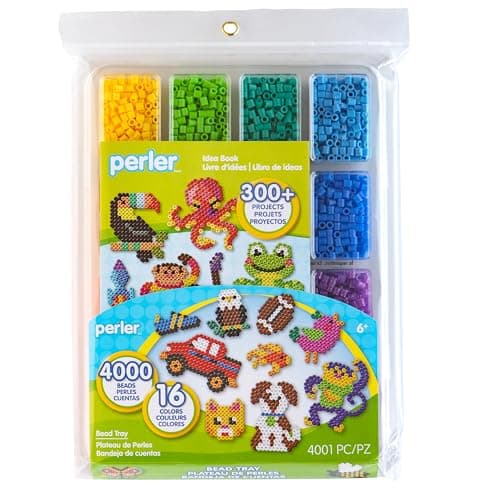
Graded 6+, and the reason it fits this page is the output: the child designs something, and afterwards it exists and can be given away. A full toy box is full of things that were bought; almost none of it is things the child made. Two honest conditions — the manufacturer states all ironing must be done by an adult, so this is not an independent activity, and the beads are the definitive small part, in thousands, so it is disqualified outright by a toddler in the house.
Age grade:
6+
Batteries:
manufacturer does not publish a battery requirement
Noise:
Silent
Mess:
Gets everywhere
Assembly:
manufacturer does not publish an assembly time
Price:
$14.59 as of Sep 18, 2026
Age grade, battery and assembly wording are quoted from Perler’s own product listing, read on September 7, 2026. The manufacturer’s exact words: “for ages 6 and up”. Noise and mess are our reading, not a measurement — we have not played with this.
What it gets right
+The finished pieces are real objects a child can give away, which is unusual for a craft kit
+Storage tray is included, and it is the only thing standing between you and the beads
+Enormously cheap per hour of activity
What it doesn’t
−Requires an adult with an iron for every single project — this is not an independent activity
−Loose beads are the definitive small part and there are thousands of them
How loud
Beads in a tub. Nothing electronic.
How much mess
The worst in this file. Thousands of loose beads with a published 6+ grade — one knocked tray and they are in the floorboards, the vents and the dog.
Skip this if…
…there is a child under three in the house or nobody has time to stand at an ironing board. Both of those disqualify it completely, and the second one is the reason most Perler kits stop being used.
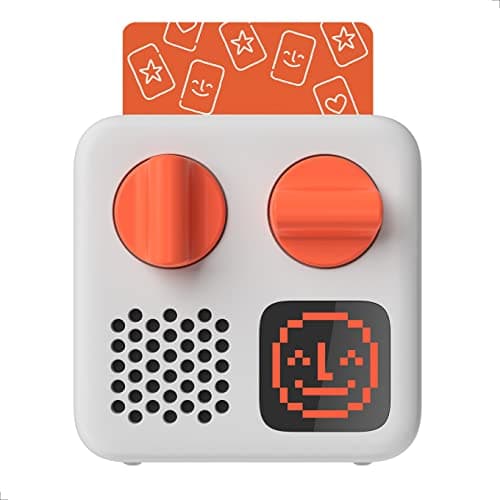
Graded 3 to 12 and explicitly screen-free: the child puts a physical card in and a story plays. There is no feed, no autoplay and no account, which is a genuinely different thing from anything else in the room, and it is the one item here that works in a car and at a grandparent’s house. The honest cost is the card library rather than the player — the player is the cheap part, and a Yoto with no cards is a nice-looking speaker.
Age grade:
3–12
Batteries:
manufacturer does not publish a battery requirement
Noise:
Loud
Mess:
Contained
Assembly:
manufacturer does not publish an assembly time
Price:
$79.99 as of Sep 18, 2026
Age grade, battery and assembly wording are quoted from YOTO’s own product listing, read on September 7, 2026. The manufacturer’s exact words: “Ages 3-12”. Noise and mess are our reading, not a measurement — we have not played with this.
What it gets right
+Screen-free by design, with a physical card for each story — no feed, no autoplay, no algorithm
+Published 3 to 12 range and it genuinely spans it, because the content changes rather than the device
+Rechargeable and portable, so it works in a car and at a grandparent's house
What it doesn’t
−Cards are proprietary and the library adds up fast — the player is the cheap part
−The volume limit is a setting, not a hardware limit, and children find settings
How loud
It is a speaker, so it is exactly as loud as the child sets it. There is a volume limit, and headphone output, which together are why it is here rather than on the loud-toys list.
How much mess
The player is one object. The cards are the small pieces, and they need a box.
Skip this if…
…nobody will buy cards. The player alone is a nice-looking speaker with very little on it, and the ongoing card cost is the real price of ownership.
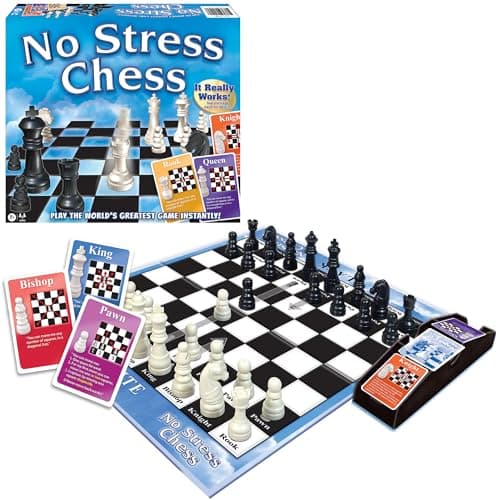
Graded 7+. It is a real chess set with a deck that tells the player which piece to move, and the board itself is printed with how each piece moves — which removes the barrier that usually stops a child learning chess, namely an adult who has to teach it. It converts into an ordinary chess set once the cards are redundant. Skip it if the child already plays: at that point it is a chess set with an unnecessary deck.
Age grade:
7+
Batteries:
manufacturer does not publish a battery requirement
Noise:
Silent
Mess:
Contained
Assembly:
manufacturer does not publish an assembly time
Price:
$23.97 as of Sep 18, 2026
Age grade, battery and assembly wording are quoted from Winning Moves’s own product listing, read on September 7, 2026. The manufacturer’s exact words: “Age 7+”. Noise and mess are our reading, not a measurement — we have not played with this.
What it gets right
+Teaches through play rather than through instruction, so no adult has to be a chess coach
+The board itself is a reference card, which is a genuinely good design idea
+Converts into an ordinary chess set once the cards are no longer needed
What it doesn’t
−The card mechanic removes the strategy, so it is training wheels rather than chess
−A child who already knows the moves has no use for the deck
How loud
Chess pieces on cardboard.
How much mess
Thirty-two pieces and a card tray. Chess pieces are famously the thing you find behind a radiator.
Skip this if…
…the child can already play chess. At that point this is an ordinary chess set with an unnecessary deck of cards and a higher price.
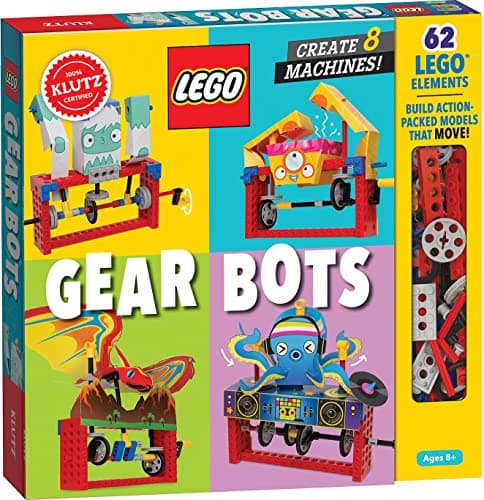
Graded 8 to 12, and it is a book as much as a kit: LEGO-compatible parts build gear-driven machines and the book explains what the gears are doing. For the very common case of a child who owns a great deal of LEGO, this adds a mechanism rather than another set — the parts fold into the collection they already have. It needs a child who will actually read the book; skip the reading and it becomes a small, expensive bag of bricks.
Age grade:
8–12
Batteries:
manufacturer does not publish a battery requirement
Noise:
Quiet
Mess:
Contained
Assembly:
manufacturer does not publish an assembly time
Price:
$22.56 as of Sep 18, 2026
Age grade, battery and assembly wording are quoted from Klutz’s own product listing, read on September 7, 2026. The manufacturer’s exact words: “for 8-12 years”. Noise and mess are our reading, not a measurement — we have not played with this.
What it gets right
+The book explains mechanism rather than just supplying steps, so something is actually learned
+Parts are LEGO-compatible and fold into a collection the child already has
+Published 8 to 12 grade matches the reading level as well as the build difficulty
What it doesn’t
−The projects are finite — once all of them are built, it becomes a small parts bag
−Needs a child who will read the book; skipping it turns the kit into ordinary bricks
How loud
Gears turning. Nothing electronic.
How much mess
Small LEGO-compatible parts, and they belong in the box the kit came in. Easy to keep together if you are firm about it on day one.
Skip this if…
…the child does not read for pleasure. Half the value here is on the page, and a kit-only approach makes it a small and expensive LEGO set.
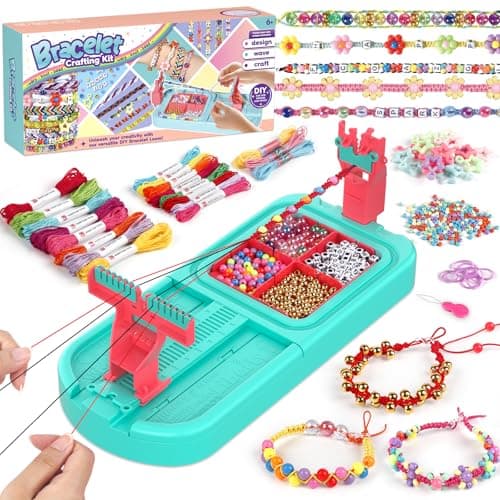
Graded 8 to 12, with a loom rather than a bundle of thread, which is the difference between a finished bracelet and an abandoned knot. At this age making things for other people is most of the appeal, and a child who has every toy still has nothing they can hand to a friend. Consumable in the good way. Skip it if the child gives up on anything that needs twenty quiet minutes of repetition.
Age grade:
8–12
Batteries:
manufacturer does not publish a battery requirement
Noise:
Silent
Mess:
Contained
Assembly:
manufacturer does not publish an assembly time
Price:
$9.99 as of Sep 18, 2026
Age grade, battery and assembly wording are quoted from Cmiolacuna’s own product listing, read on September 7, 2026. The manufacturer’s exact words: “Ages 8-12”. Noise and mess are our reading, not a measurement — we have not played with this.
What it gets right
+The loom makes a decent bracelet achievable on the first attempt, which is what keeps a child going
+Published 8 to 12 grade, aimed squarely at the age where making things for friends is the point
+Consumable in a good way — a full kit is many evenings
What it doesn’t
−Thread runs out and refills are not always the same quality
−Loose beads and thread ends get everywhere in a shared bedroom
How loud
Nothing.
How much mess
Thread offcuts and small beads. Annoying rather than destructive, and all of it is on the table.
Skip this if…
…the child gives up when something needs twenty minutes of repetition. Bracelet weaving is rhythmic and slow, and that is either the appeal or the dealbreaker.
Recommended by the manufacturer for ages 10 and up, with seven crystals to grow and cases to display them in. It belongs on this page because it is the opposite of everything already in the room: twenty minutes of setup and then days of nothing happening, with a keepable result at the end. Two things to say out loud before it is unwrapped — it needs boiling water and an adult at that step, and nothing arrives today.
Age grade:
10+
Batteries:
manufacturer does not publish a battery requirement
Noise:
Silent
Mess:
Contained
Assembly:
manufacturer does not publish an assembly time
Price:
$19.07 as of Sep 18, 2026
Age grade, battery and assembly wording are quoted from 4M’s own product listing, read on September 7, 2026. The manufacturer’s exact words: “Recommended for ages 10 years and up”. Noise and mess are our reading, not a measurement — we have not played with this.
What it gets right
+The finished crystals are keepable objects and the display cases mean they get kept
+Seven separate growths, so a failure does not end the kit
+Published 10+ grade, and the boiling water step is why
What it doesn’t
−Days of waiting between the setup and the result, which is not obvious from the box
−Requires boiling water and adult involvement at the critical step
How loud
Nothing.
How much mess
Hot water and a chemical powder at the start; after that the crystals just sit there. Contained but not zero.
Skip this if…
…the child needs a result today. Crystal growing is the slowest gift in this guide by an order of magnitude and it disappoints anyone expecting an afternoon.
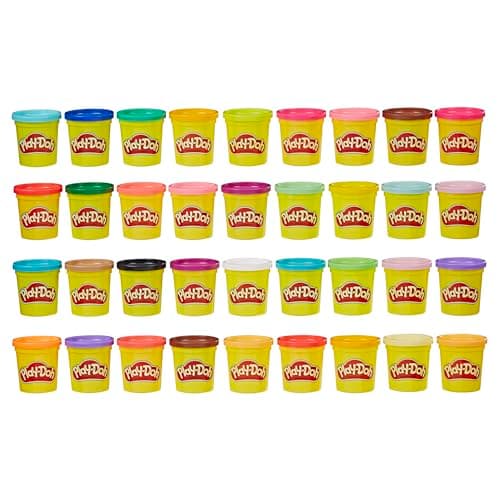
Graded 2+, thirty-six cans, and it is the answer when the child with everything is two rather than nine. A consumable is the one category a full toy box cannot already contain: it gets used up, it cannot be duplicated by another relative, and a 2+ grade on a creative material is rare. The mess rating is honest — trodden-in Play-Doh on a light rug does not come out, so this is a hard-surface gift and the table rule has to be real.
Age grade:
2+
Batteries:
manufacturer does not publish a battery requirement
Noise:
Silent
Mess:
Gets everywhere
Assembly:
manufacturer does not publish an assembly time
Price:
$28.99 as of Sep 18, 2026
Age grade, battery and assembly wording are quoted from Play-Doh’s own product listing, read on September 7, 2026. The manufacturer’s exact words: “Ages 2+”. Noise and mess are our reading, not a measurement — we have not played with this.
What it gets right
+A 2+ grade on a creative material is rare — most art supplies start at 3
+Thirty-six cans is enough to lose some, dry some out and still have plenty
+Non-toxic formulation, and the smell is doing a lot of nostalgic work for the adults
What it doesn’t
−Colors get mixed into a single gray-brown mass within about a week, and that is not reversible
−Cans left open dry solid, and half of any set ends up unusable
How loud
Nothing electronic. Squishing is the loudest it gets.
How much mess
Trodden-in Play-Doh is the reason this rating exists. Dry it first and it vacuums up; work it wet into a rug and it stays. Table only, and mean it.
Skip this if…
…there is a light-colored rug in the room where the child plays. Play-Doh is a hard-surface toy and treating it as anything else is a decision you make once.
Every toy site tells you they tested forty toys with a focus group of real children. We have not played with any of these, and we say so. Here is what we do instead: we read the manufacturer’s own listing and print its published age grade word for word, we record the battery requirement and the assembly note where the maker publishes one and say plainly when it does not, we pull the price live from Amazon so it is never a number we remembered, and we name one thing on every list we would not buy.
The noise and mess ratings are our judgment from what the listing describes — not measurements. Almost no toy manufacturer publishes a decibel figure, which is itself worth knowing. The full method is published, including what disqualifies a toy.
Questions
Questions people actually ask
What do you buy a kid who has everything?+
Something from a category they do not own rather than a better version of something they do: a consumable, a process that takes days, a skill, or something they make and give away. Those four are almost never in a full toy box.
What about a toddler who has everything?+
Consumables, and creative materials in particular — a 2+ grade on something the child uses up is the one gift another relative cannot duplicate. Keep it to hard surfaces and read the mess rating first.
Is an experience better than a toy?+
Often, yes, and this site earns nothing from saying so. The closest thing to an experience you can wrap is a slow process — a tumbler, a crystal kit, a set of bracelets to make — which is why three of the picks above are exactly that.
How do I avoid buying a duplicate?+
Ask the parent what the child played with last weekend rather than what they want, and avoid adding to a collection unless you have been told the specific gap. Collectors know every gap; guessers do not.
Should I just give money instead?+
For an older child it is a perfectly honest answer. For a younger one, a small consumable plus the money is usually better received than money alone, because there is something to open.
We do not run a playroom test lab and we do not pretend to. Age grades, battery requirements and assembly notes are quoted from each manufacturer’s own product listing, read on September 7, 2026; prices come live from Amazon’s API and are stamped with the date they were checked. Where a maker publishes nothing, the page says “manufacturer does not publish this” rather than guessing. Read the full method.