Honest · The Honest List
One good toy instead of five
A pile looks more generous and produces less play. This is the argument for buying one considered thing, what the evidence actually says about toy quantity, and how to do it without a child feeling short-changed.
We earn a commission if you buy through our links. It does not change the price you pay and it does not decide our picks — our method is published in full, including the part where we say we have not played with these toys. How this works.
The finding that started this
Work on toy quantity has consistently pointed in one direction: with fewer toys available, young children play with each one for longer and in more varied ways. The mechanism is not mysterious — with a great deal in front of them, children sample rather than settle, and sampling is shallower than settling. The American Academy of Pediatrics makes a related point in its clinical report on toy selection: what matters is the depth of engagement and the interaction around it, not the number of objects.
The practical translation for a gift buyer is uncomfortable, because a pile of five things looks more generous than one thing at the moment of opening, and generosity at that moment is a real social currency. But the pile produces less play, and a fortnight later most of it is at the back of a cupboard.
Why the pile happens anyway
Three reasons, all understandable. Unwrapping is the fun part, so more parcels feels like more occasion. A single expensive gift feels risky — if it misses, there is nothing else. And spreading the money feels safer than concentrating it.
All three are addressable without abandoning the principle, which is what the rest of this page is about.
How to give one thing well
- Make it open-ended. A single closed toy is a genuine risk; a single open-ended one is not, because it has many outcomes rather than one. Tiles, bricks, blocks, art materials and figures all qualify. See what open-ended means.
- Add a consumable, not another toy. Paper, thread, beads, refill packs. It is a second parcel to open, it costs very little, and it extends the main present rather than competing with it.
- Buy into what is already working. An expansion for a system they own is the highest hit rate in this entire guide, and it is the least likely thing to end up in a cupboard.
- Wrap it in parts. If unwrapping is the ritual, split one present across three parcels. It costs nothing and it solves the occasion problem entirely.
- Give some of it as time. A game that gets played with you is worth more than a toy played with alone, which is the AAP’s point exactly.
The version for relatives
If you are the aunt, uncle or grandparent, this argument is even stronger, because you are adding to a collection you cannot see. The safest single present from outside the household is a consumable or an expansion to something they already own — and the way to find out which is to ask the parents, who will be relieved rather than annoyed.
Coordinating with other relatives to buy one substantial thing between several people is the most effective version of this and the least commonly done. Our grandparent-proof guide covers the practical side.
Where the argument stops
This is not an argument for austerity, and a child who receives one small worthy present at a party where everyone else has a pile is not learning a lesson about consumption — they are having a bad afternoon. The point is concentration, not reduction: the same money, in one place, chosen well. Frequently that means a more expensive present than the pile it replaces.
What to do with the rest
If a pile has already arrived — and after a birthday it usually has — the highest-value move is not to get rid of anything. Box two-thirds of it and bring items back a few at a time. The boxed toys reappear as effectively new, the visible collection stays small enough to be used properly, and nothing was wasted. That is toy rotation, and it is the cheapest intervention in this entire guide.
Two related pages, if the pile is the whole problem: gifts for the kid who has everything covers the categories a full toy box structurally cannot contain, and how much to spend sets the number before the shopping starts, which is the point at which this decision is easiest to get right.
The toys
The toys this guide is about
Every one of these carries its manufacturer’s published age grade and a live Amazon price, read October 23, 2026. Full rankings live in the roundups linked above.
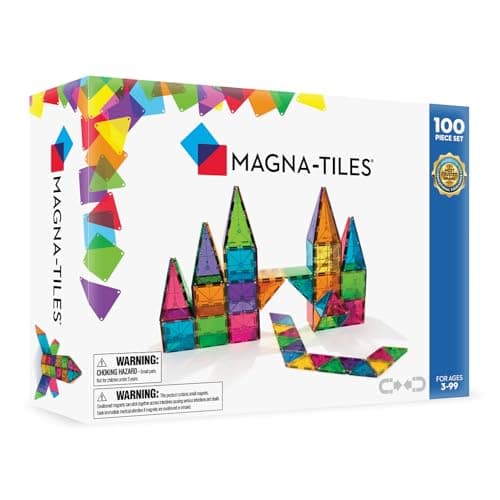
The one thing, if you buy one thing
Magna-Tiles Classic 100-Piece Set
Age grade 3+
Open-ended, five-year age range, and it absorbs every future expansion instead of competing with it.
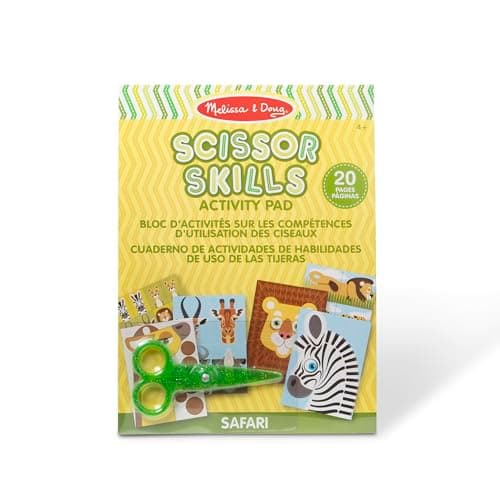
The consumable that goes with it
Melissa & Doug Safari Scissor Skills Activity Pad
Age grade 4–6
A second parcel to open for about ten dollars, which extends rather than competes.
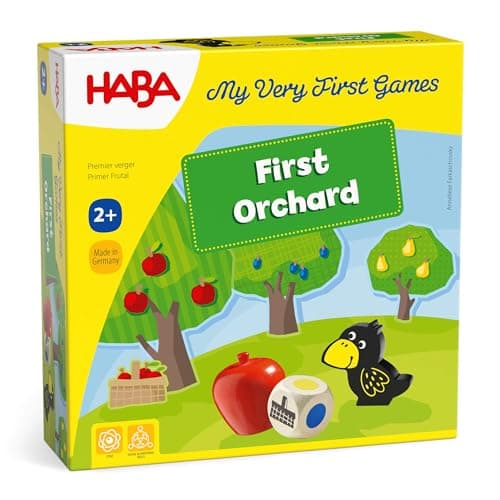
The one that comes with your time
HABA My Very First Games — First Orchard
Age grade 2–4
A game is a present and an hour together, which is the part the research keeps pointing at.
#ad · As an Amazon Associate we earn from qualifying purchases. How this works.
Questions
Questions people actually ask
Is it better to buy one big toy or several small ones?
How many presents should a child get for their birthday?
What if the one toy I buy is a miss?
What should relatives buy if they cannot see the toy box?
We already have too many toys. What now?
Keep reading
Related
Receipts
Sources
- American Academy of Pediatrics — “Selecting Appropriate Toys for Young Children in the Digital Era” (clinical report)
- US Consumer Product Safety Commission — Toy Safety business guidance
We do not run a playroom test lab and we do not pretend to. Age grades, battery requirements and assembly notes are quoted from each manufacturer’s own product listing, read on September 7, 2026; prices come live from Amazon’s API and are stamped with the date they were checked. Where a maker publishes nothing, the page says “manufacturer does not publish this” rather than guessing. Read the full method.