Guides · Guides
How to choose a toy in five minutes
Most toy buying goes wrong because it starts with browsing. This is the method that starts with the child, works in about five minutes, and has three fallbacks for when you know almost nothing.
We earn a commission if you buy through our links. It does not change the price you pay and it does not decide our picks — our method is published in full, including the part where we say we have not played with these toys. How this works.
Question 1: how old will they be when they open it?
Not how old they are now — how old on the day. This matters most under three, where a three-month gap changes what is safe, and it is the reason a present bought in September for a January birthday sometimes misses.
Then take the manufacturer’s age grade literally. Under three it is a small-parts test result rather than a suggestion; above three it is a difficulty judgment worth respecting, because a toy graded too high gets built by an adult while the child watches.
Question 2: what do they already have?
The single highest-hit-rate move in toy buying is adding to something that is already working. An expansion to a construction system they use daily beats a new system competing for the same rug, and it is nearly impossible to get wrong.
If you cannot see the toy box, ask the parents. It is not a failure of imagination — they will be relieved, and it converts a guess into a certainty.
Question 3: open or closed?
Default to open-ended unless there is a specific reason not to. A toy where the child decides the outcome cannot be finished, which is why it lasts. Ask the ten-times question: on the tenth use, is the child doing the same thing as on the first? See what open-ended means.
Question 4: what does the household have to live with?
This is the question gift buyers skip and parents never forget. Three properties decide whether a present is welcome:
- Noise. A loud toy in a flat gets put in a cupboard. See quiet toys.
- Mess. Match it to the floor. Glitter in a rented flat is a decision about someone else’s deposit.
- Space. Anything large should be checked against where it will live, not just whether it fits through the door.
A present chosen well on this axis is remembered fondly by two people rather than one.
Question 5: does anything need buying alongside it?
Batteries of the right type, in double quantity. A helmet with anything on wheels. A tray with anything sensory. Refill paper with a print camera. Adding the accessory to the same order is the difference between a present that works on the day and one that does not.
The three defaults
When you know almost nothing about the child, these rarely miss:
- A card or board game for their age. Cheap, social, impossible to duplicate meaningfully, and played for years.
- Art materials. Consumable, so duplication is impossible by definition.
- A magnetic tile or brick expansion. Almost every household with a child over three has one of the two systems, and more is always useful.
Above about ten, add a fourth: cash or a gift card. At that age taste is specific and a well-meant guess frequently misses in a way the child notices.
What not to start with
Browsing. Opening a shopping site before answering the questions above is how people end up buying the thing with the best photograph, and the best photograph belongs to whichever toy demonstrates most impressively — which is almost always a closed one.
The toys
The toys this guide is about
Every one of these carries its manufacturer’s published age grade and a live Amazon price, read October 23, 2026. Full rankings live in the roundups linked above.
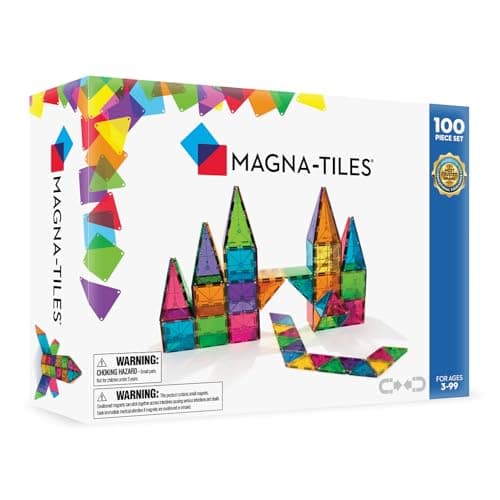
The default that almost never misses
Magna-Tiles Classic 100-Piece Set
Age grade 3+
Open-ended, huge age range, and it adds to a system most households already have.
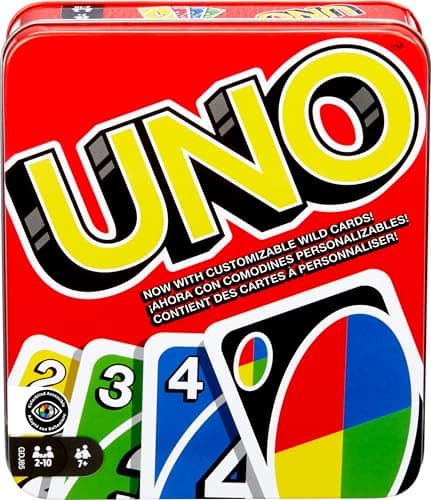
The cheap default
UNO Card Game
Age grade 7+
Social, portable, impossible to duplicate meaningfully, and played from seven to seventeen.
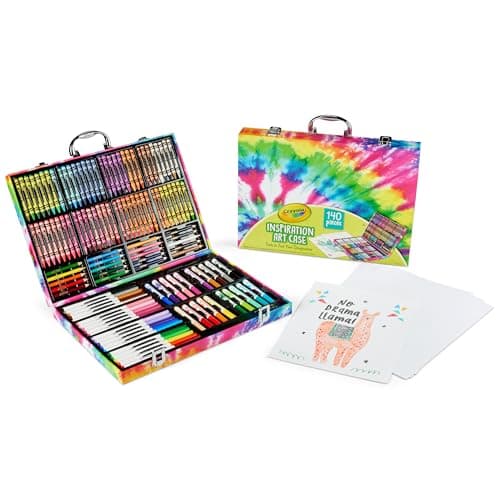
The consumable default
Crayola Inspiration Art Case, 140 Pieces
Age grade 5+
Art materials get used up, so there is no such thing as a duplicate.
#ad · As an Amazon Associate we earn from qualifying purchases. How this works.
Questions
Questions people actually ask
How do you choose a toy for a child you do not know well?
Should you buy a toy for the age above?
Is it rude to ask parents what to buy?
What should you consider besides the child?
What is the safest gift for any child?
Keep reading
Related
Receipts
Sources
- American Academy of Pediatrics — “Selecting Appropriate Toys for Young Children in the Digital Era” (clinical report)
- ASTM F963 — Standard Consumer Safety Specification for Toy Safety
- 16 CFR Part 1501 — the federal small-parts regulation behind the “not for children under 3” warning (eCFR)
We do not run a playroom test lab and we do not pretend to. Age grades, battery requirements and assembly notes are quoted from each manufacturer’s own product listing, read on September 7, 2026; prices come live from Amazon’s API and are stamped with the date they were checked. Where a maker publishes nothing, the page says “manufacturer does not publish this” rather than guessing. Read the full method.