Guides
How to choose, and how to keep the choosing under control
The questions underneath the shopping: how many toys is too many, what age grades actually mean, why some toys survive a decade, and what to do with the ones that do not.
We earn a commission if you buy through our links. It does not change the price you pay and it does not decide our picks — our method is published in full, including the part where we say we have not played with these toys. How this works.
Start here
Tech toys with no screen in them
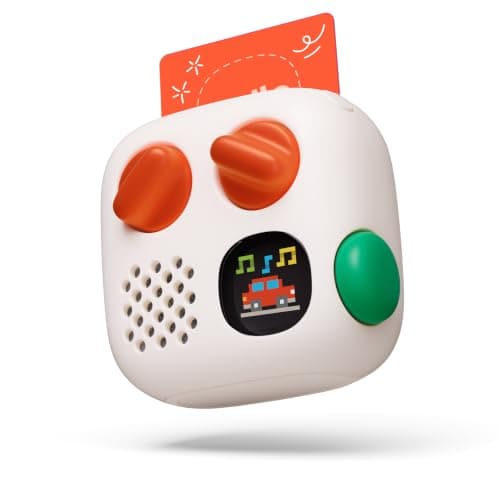
Our top pick: Yoto Mini Screen-Free Audio Player — Graded 3+ and explicitly screen-free. A child puts a card in and a story plays — no account, no feed, no recommendation engine, nothing to scroll. It is the single best answer in this guide to the screen-time problem.
YOTO grades it 3+. Facts read from the manufacturer’s listing on September 7, 2026.
The questions underneath the shopping
Most toy content answers “what should I buy”. Very little of it answers the questions that come before and after: how many toys a child actually needs, what an age grade really means, why the same three toys get played with and the other forty do not, and what to do with the forty.
These pages are the answers we could support with published sources. Where the honest answer is “nobody has measured that”, we say so rather than inventing a number, which turns out to be more often than you would expect in a category this large.
The single most useful idea here is rotation
If you read one page in this section, read the one on toy rotation. The observation behind it is one that almost every parent independently discovers and almost no toy guide mentions: a child with thirty toys available plays with about four of them, and a child with eight toys available plays with all eight — including several that were being ignored the week before.
Rotation is putting most of the toys in a cupboard and swapping the visible set every couple of weeks. It costs nothing, it requires no purchase, and it makes toys the child already owns interesting again. It is the highest-return thing in this entire section and it is inconvenient for us to tell you, because a site funded by affiliate commissions has an obvious interest in you buying more toys rather than rediscovering the ones on the shelf.
What “open-ended” actually means
The word gets used to sell almost anything now, so it is worth being concrete. An open-ended toy is one where the child decides what it is. Blocks are open-ended: today a tower, tomorrow a road. A molded plastic fire station is not open-ended, however many features it has, because it is a fire station on every single day.
This is not a moral distinction and closed toys are not bad — a fire station is a genuinely good gift for a child who is currently obsessed with fire engines. It is a longevity distinction. Open-ended toys survive changes in interest; closed toys are only as durable as the interest that bought them.
Age grades, standards and what the label is for
The other cluster here is about how toys are graded and tested. In the US the relevant documents are ASTM F963, the consumer safety specification for toys, and 16 CFR 1501, the federal small-parts regulation that produces the “not for children under 3” warning. Both are public, both are readable, and knowing roughly what they cover changes how you read a box.
The short version: the under-three line is a genuine safety rule with a physical test behind it. Everything above three is a judgment about difficulty and interest, made by the manufacturer, and it is generally conservative rather than aspirational — which is why a bright five-year-old often does fine with a 6+ game, and why nobody should ever go the other way with a set graded 3+.
Storage, and the reason it belongs in a toy guide
The last group of pages here is about where toys live. It sounds like a furniture question and it is actually a play question: a toy a child cannot see and cannot reach is a toy that does not exist, and a bin with forty things in it is a bin nobody digs through. Open shelving with one thing per slot gets used; a deep toy box does not.
If you are here before buying anything, start with how many toys a child needs. If you are here after an over-generous Christmas, start with rotation. And if you are shopping a single category for a single age, the most awkward one in this whole site has its own page: STEM toys for 4-year-olds, where almost every box on the shelf is graded two years too high.
Everything in this section
All of guides
Guide
How many toys does a child actually need
What the evidence says about toy quantity, a workable number by age, and how to get there without throwing anything away.
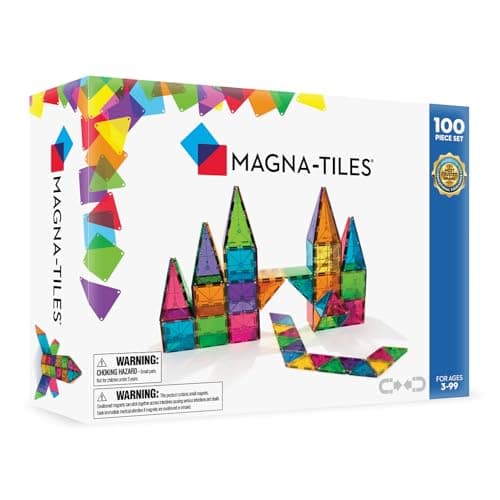
Discussed here: Magna-Tiles Classic 100-Piece Set · age grade 3+
$108.35See it on AmazonGuide
Toy rotation, properly done
A toy rotation system that takes ten minutes a month — how many boxes, what never rotates, and what to do when it stops working.
Discussed here: Magna-Tiles Classic 100-Piece Set · age grade 3+
$108.35See it on Amazon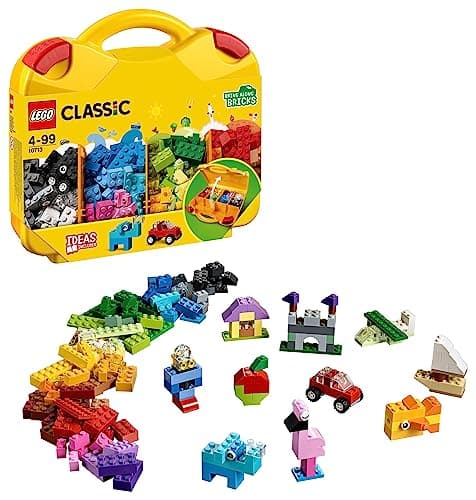
Guide
Toy storage that works
Why storage decides how long a toy survives, which systems hold up in a real household, and the two rules that do most of the work.
Discussed here: LEGO Classic Creative Suitcase 10713 · age grade 4+
$11.89See it on Amazon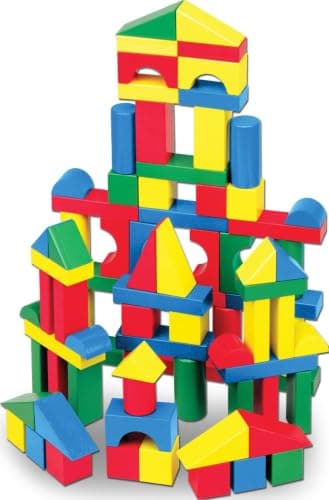
Guide
What “open-ended” actually means
The working definition of open-ended play, a one-question test for any toy, and why it predicts longevity better than anything else.
Discussed here: Melissa & Doug Wooden Building Blocks, 100 Pieces · age grade 2+
$13.99See it on Amazon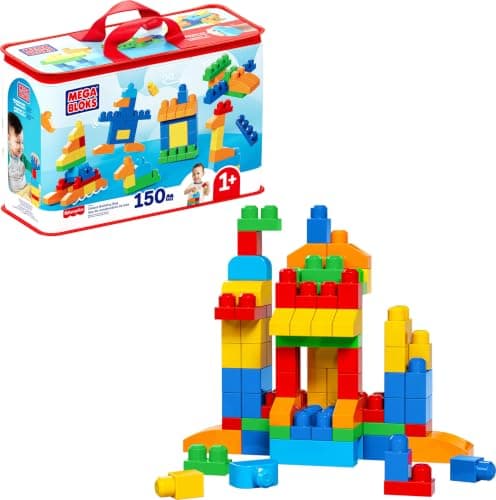
Guide
How toy age grades are set
Where the age on a toy box comes from, who sets it, and why the same number means different things at three and at eight.
Discussed here: MEGA BLOKS First Builders Deluxe Building Bag · age grade 1+
$38.98See it on AmazonGuide
Toy safety standards, explained
ASTM F963, the CPSC and CPSIA in plain English: what testing covers, what it does not, and how to check for recalls.
Discussed here: Melissa & Doug Wooden Building Blocks, 100 Pieces · age grade 2+
$13.99See it on AmazonGuide
What actually gets played with
The five properties that predict a toy still being used months later, ranked — plus the ones that turn out not to matter at all.
Discussed here: Magna-Tiles Classic 100-Piece Set · age grade 3+
$108.35See it on AmazonGuide
Buying toys secondhand
Which toys are excellent secondhand, which to avoid, the three safety checks worth running, and how to clean what you bring home.
Discussed here: Melissa & Doug Wooden Building Blocks, 100 Pieces · age grade 2+
$13.99See it on AmazonGuide
How to choose a toy in five minutes
Five questions in order that reliably produce a good toy choice, plus three defaults for when you know nothing about the child.
Discussed here: Magna-Tiles Classic 100-Piece Set · age grade 3+
$108.35See it on Amazon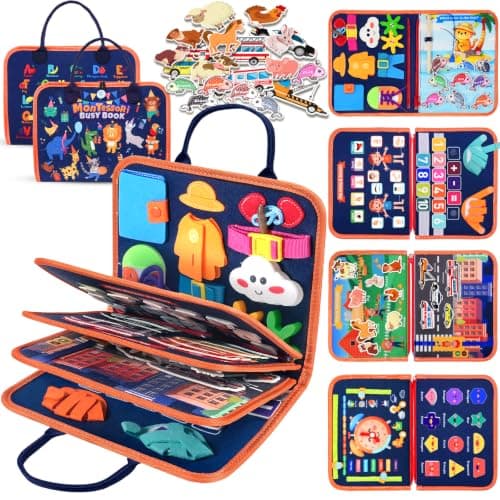
Guide
Montessori toys, explained
The word is unregulated and anyone can use it. The five things the approach actually asks of a toy, what they rule out, and how to check a box yourself.
Discussed here: Montessori Busy Board for Toddlers · age grade 1–3
$22.99See it on AmazonGuide
Toy brands, and what the name on the box actually buys
The five things worth paying a brand premium for, the places it buys nothing at all, and how to check any brand claim yourself in a minute.
Discussed here: Magna-Tiles Classic 100-Piece Set · age grade 3+
$108.35See it on Amazon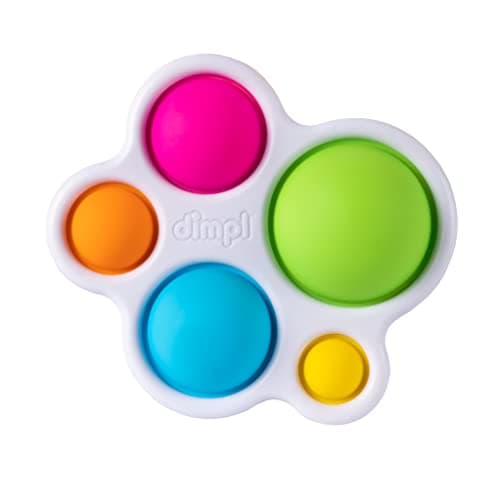
Guide
Fine motor toys, and what fine motor actually means
The four hand movements behind the phrase, a toy for each from ten months to eight years, and what we are careful not to claim.
Discussed here: Fat Brain Toys Dimpl · age grade 10 months+
$9.95See it on Amazon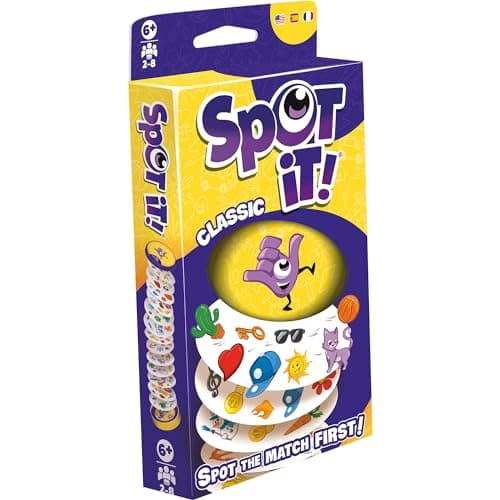
Guide
How much to spend on a child’s gift
The spend by relationship, what each tier actually buys in toys, where extra money buys something real, and where it buys nothing.
Discussed here: Spot It! Classic Card Game · age grade 6+
$5.86See it on Amazon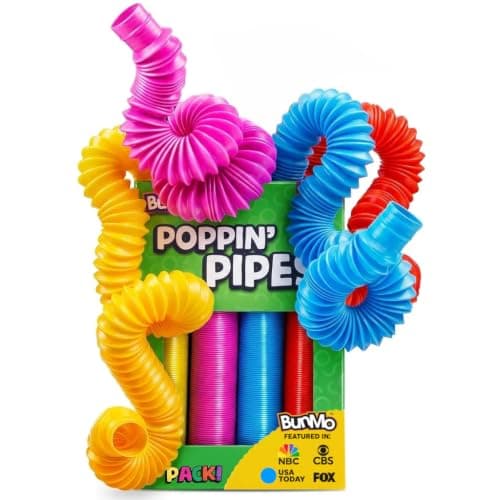
Guide
Toys for autistic kids: what to check on the box
No clinical claims, no therapy promises. The four toy properties parents ask for most — predictable, quiet, durable under repetition, one clear purpose — and how to check each.
Discussed here: BUNMO Pop Tubes, 8 Pack · age grade 3+
$11.75See it on Amazon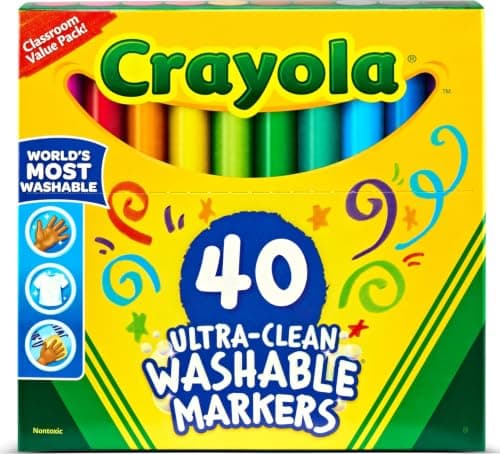
Guide
Non-toxic art supplies: what the labels actually certify
ASTM D-4236, the ACMI AP seal and the CL seal, explained — including why a CL seal means do not give it to a child in sixth grade or below.
Discussed here: Crayola Ultra Clean Washable Markers, 40 Count · age grade 3+
$18.99See it on Amazon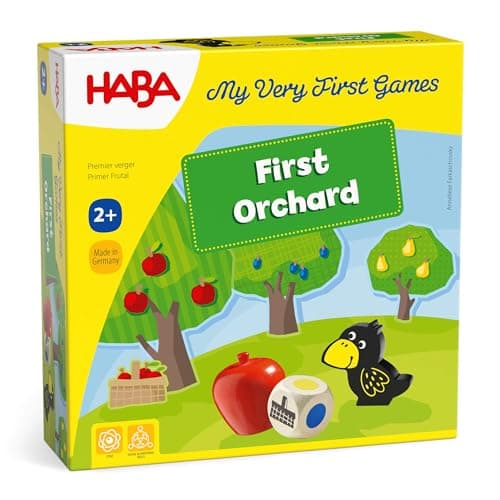
Guide
Board games by age: what a child can actually do
The four stages of game-playing from two to eight: cooperative first, competitive later, and why the age on the box is the least useful number on it.
Discussed here: HABA My Very First Games — First Orchard · age grade 2–4
$29.99See it on AmazonGuide
Gifts for kids that are not toys
The five non-toy gift categories that get used — tools, audio, a private place to write, something consumable, something to do together — and the three that do not.
Discussed here: Yoto Mini Screen-Free Audio Player · age grade 3+
$109.99See it on AmazonBest screen-free tech toy
Tech toys with no screen in them
Eight genuinely electronic toys with no display anywhere — audio, coding, circuits, radio, optics — plus the four things on a listing that tell you what a toy connects to.
Top pick: Yoto Mini Screen-Free Audio Player · age grade 3+
$109.99See it on Amazon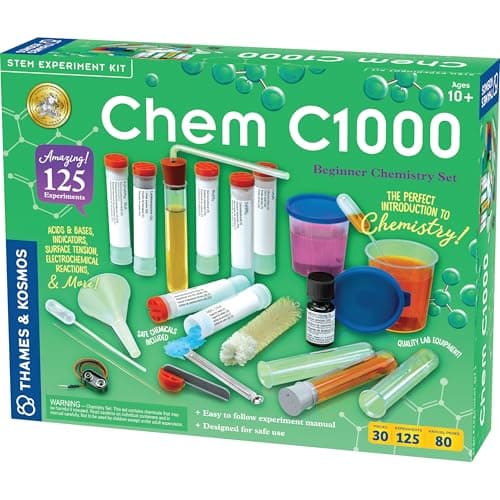
Best educational gift for a teenager
Educational gifts for a 13-year-old, without the homework problem
Eight learning gifts for 13-to-17-year-olds ranked on one test — does the teenager end up with a real skill or a real result — plus why the age grade on the box misleads here.
Top pick: Thames & Kosmos Chem C1000 Chemistry Set · age grade 10+
$59.95See it on AmazonBest STEM toy at each age
STEM toys by age, 3 to 12
One STEM pick per age band from 3 to 12, each with its manufacturer's published grade, plus the two failure modes that send these kits back.
Top pick: Magna-Tiles Classic 100-Piece Set · age grade 3+
$108.35See it on AmazonBest wooden toy for a toddler
Wooden toys for babies and toddlers
Seven wooden picks graded 2 and under, with the real case for wood at this age and the three situations where plastic wins.
Top pick: Melissa & Doug Wooden Building Blocks, 100 Pieces · age grade 2+
$13.99See it on Amazon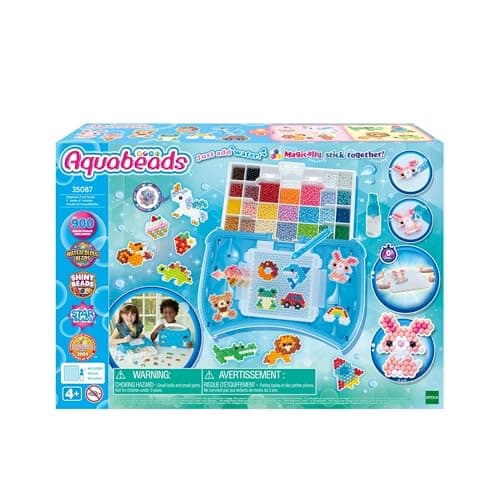
Best craft kit
Craft kits that actually get finished
Six craft kits from age 4 to 12, each with its published grade, plus the finishability question that predicts whether a kit gets done or abandoned.
Top pick: Aquabeads Beginner Craft Studio · age grade 4+
$22.69See it on Amazon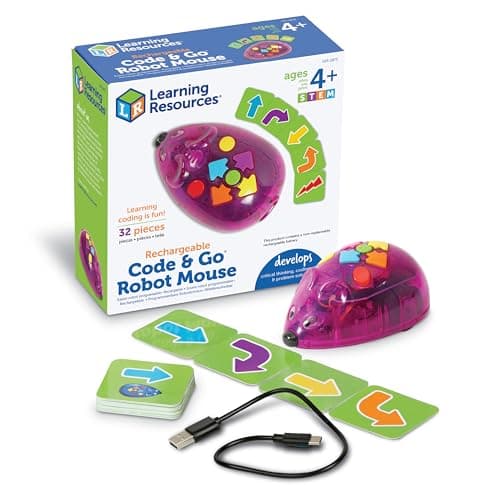
Guide
Coding toys: which ones teach anything
The one test that separates a coding toy from an app with an accessory, what to buy at 4, 8 and 12, and why screen-based options are not in our registry.
Discussed here: Code & Go Robot Mouse, Rechargeable · age grade 4+
$39.99See it on Amazon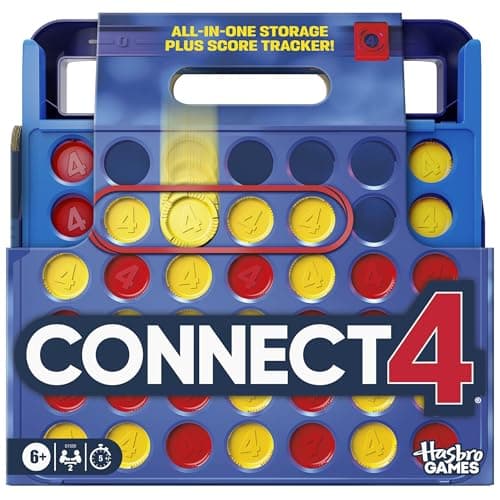
Guide
Board games that work with exactly two
Why most family games break at two players, the three mechanics that survive it, and four games graded 6+ to 8+ that work properly head to head.
Discussed here: Connect 4 (2025 Edition) · age grade 6+
$9.97See it on AmazonGuide
Toys for a classroom or a homeschool room
The four shared-use rules a classroom toy has to pass, why batteries and consumables are disqualifying, and four picks graded 2+ to 8+ that survive a group.
Discussed here: Magna-Tiles Classic 100-Piece Set · age grade 3+
$108.35See it on Amazon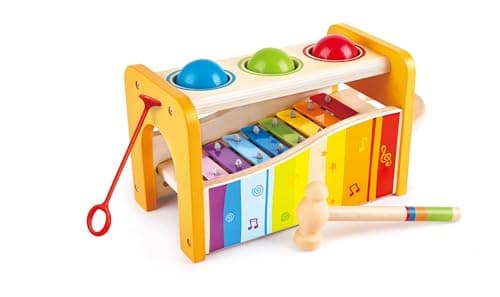
Guide
Musical toys, and the noise question underneath them
Instrument or soundbox: the one distinction that matters in this aisle, what no manufacturer publishes about volume, and four picks from a toddler xylophone to a card-driven audio player.
Discussed here: Hape Pound & Tap Bench with Xylophone · age grade 12 months–3 years
$32.53See it on Amazon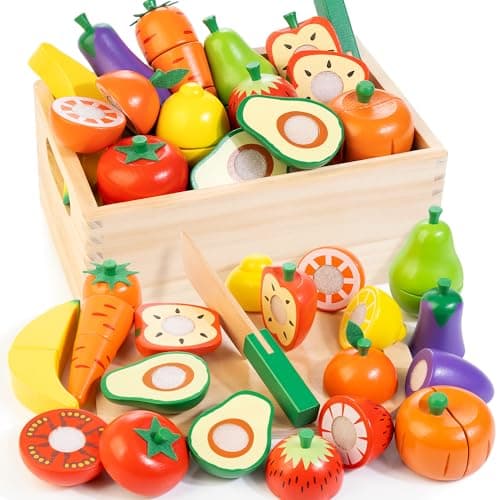
Best pretend play toy
Pretend play toys, 2 to 6
Six pretend-play picks for a two to six-year-old, the order to buy them in, and why the kitchen is not the first thing you need.
Top pick: Wooden Cutting Play Food Set · age grade 3+
$25.99See it on Amazon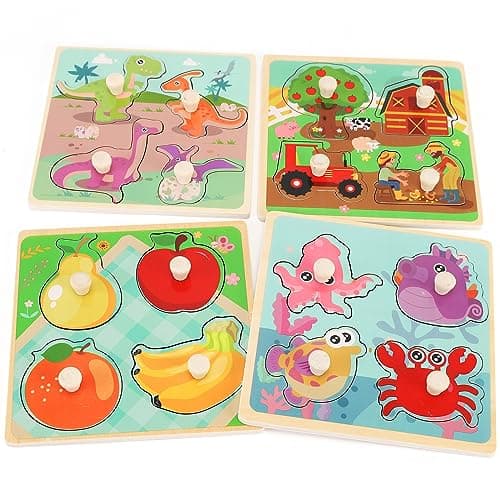
Guide
Toys for a toddler with a speech delay
What speech-language guidance actually recommends, the toys that fit it, and why the talking toy is the one to leave on the shelf.
Discussed here: Wooden Peg Puzzles for Toddlers, 4 Pack · age grade 2–4
$9.37See it on Amazon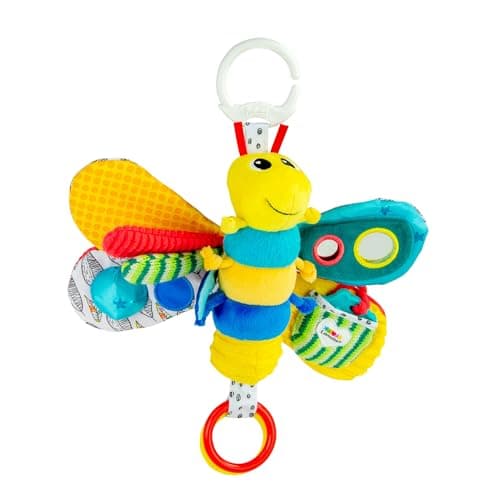
Guide
Non-toxic toys, and what that word is worth
The federal toy rules in plain words, why "non-toxic" is marketing, what wood and finish actually matter, and the four things worth checking on a listing.
Discussed here: Lamaze Freddie the Firefly Clip-On Toy · age grade 0 months+
$14.99See it on AmazonBest STEM toy at four
Best STEM toys for 4-year-olds
Seven STEM picks graded at or below four years old, chosen because none of them needs reading, a screen or an adult running the session.
Top pick: Code & Go Robot Mouse, Rechargeable · age grade 4+
$39.99See it on Amazon