Honest · The Honest List
How loud is that toy, actually
We looked for a published sound level on every toy on this site. We found almost none. That absence is the finding, and this page explains what we print instead and why it is not a measurement.
We earn a commission if you buy through our links. It does not change the price you pay and it does not decide our picks — our method is published in full, including the part where we say we have not played with these toys. How this works.
The finding: nobody publishes a number
Noise is one of the top complaints parents have about toys, and it is the property most likely to determine whether a toy stays in a living room or moves to a cupboard. It is also the property least likely to appear anywhere on a product listing.
When we compiled the manufacturer facts for every product on this site, we recorded the published sound level wherever one existed. Essentially none did. Toy listings routinely publish dimensions, piece counts, materials, battery requirements and age grades. They do not publish how loud the thing is, even for products whose main feature is that they make noise.
We could have filled that gap with numbers. We have not, because we do not own a sound meter and we have not handled these toys — inventing a decibel figure would be exactly the kind of fabrication this site exists in opposition to. So we print a judgment, and we label it as one.
The scale we actually use
| Rating | What it means | Typical examples |
|---|---|---|
| Silent | Nothing in the box can make a sound on its own. | Figures, jigsaws, art materials, magnetic dress-up |
| Quiet | Any noise is whatever the child makes with it. | Magnetic tiles, bricks, balance bikes, card games |
| Some noise | Mechanical sound: clicks, rattles, wheels, a bell, marbles on wood. | Marble runs, tricycles, Jenga, roller skates |
| Loud | Electronic sound the toy produces itself, at a volume the listing treats as a feature. | Activity centers, karaoke microphones, walkie-talkies, tool benches |
Each rating is based on three checkable things: whether the box contains anything electronic, whether the listing advertises sounds, music or voice, and whether a published decibel figure exists. It is a reading of the manufacturer’s own description, not a test result, and it is stated as such on every card.
What the actual hearing risk looks like
Volume is a genuine safety question and not merely an irritation, but the risk is concentrated in a specific behavior: holding the toy close to the ear. A toy that measures moderately at arm’s length can be substantially louder at the ear, which is exactly where a small child puts things. NIOSH publishes guidance on the relationship between exposure level and duration, and the short version is that both matter — loud for a moment is different from moderate for an hour.
Practical consequences worth acting on: prefer toys with a volume control, be wary of any toy small enough to be held against the head, and treat toy hearing risk as a proximity problem rather than a volume problem.
What we would like manufacturers to publish
A single A-weighted decibel figure measured at a stated distance would cost nothing to publish and would let every parent make an informed decision in two seconds. Age grades, piece counts and battery requirements are all published as standard. Noise is not, and there is no technical reason for the difference.
Until that changes, the honest options are a judgment clearly labeled as a judgment, or silence. We have chosen the first. If a manufacturer publishes a figure for any product on this site, we will print it and say so.
Where to go from here
If you want the practical output of all this rather than the methodology, the quiet toys page is the list of things that make no sound of their own, and the battery-free page overlaps with it heavily — a toy with no electronics has nothing to be loud with. The inverse list is loud toys, named — and what to buy instead, which goes through the categories we rate loud, including the ones we recommend anyway, with a quieter swap for each.
The category where this whole problem is most acute is the one that advertises sound as the feature. Musical toys takes the distinction that actually matters there — instrument or soundbox — and applies the ratings above to it.
The toys
The toys this guide is about
Every one of these carries its manufacturer’s published age grade and a live Amazon price, read October 23, 2026. Full rankings live in the roundups linked above.
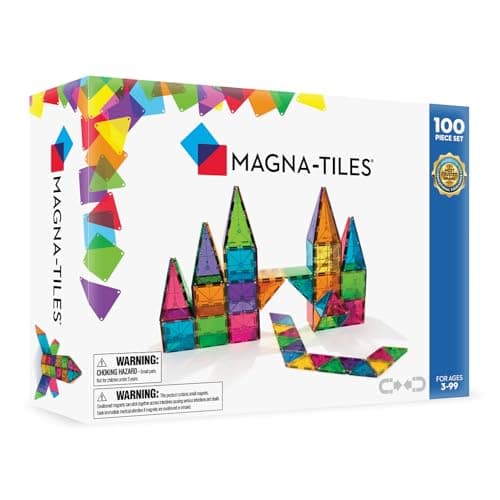
Rated: quiet
Magna-Tiles Classic 100-Piece Set
Age grade 3+
The click of one tile meeting another is the whole sound. Nothing electronic in the box.
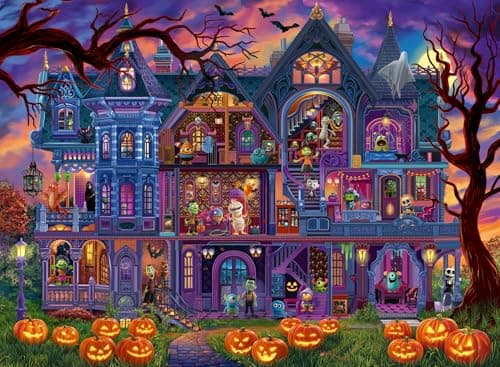
Rated: silent
Ravensburger 100-Piece XXL Jigsaw Puzzle
Age grade 6+
Pieces on a table. The activity lowers the volume of everyone doing it.
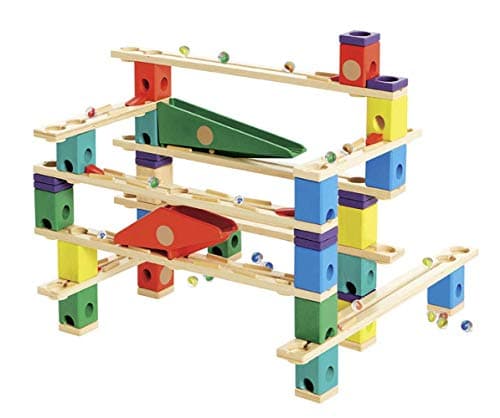
Rated: some noise
Hape Quadrilla Vertigo Wooden Marble Run, 134 Pieces
Age grade 4+
Marbles on wood, repeatedly, by design. Worth knowing before it is unwrapped.
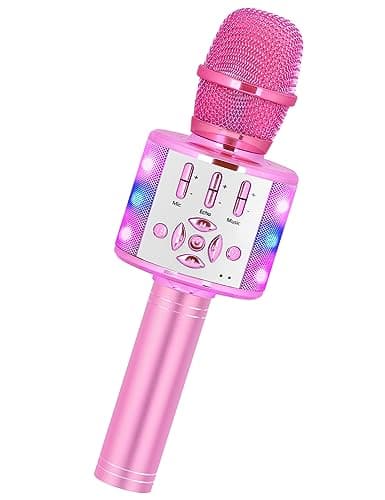
Rated: loud
Kids Karaoke Microphone
Age grade 6–8
Amplified voice is the entire product. Listed here as an example of the top of the scale, not as a recommendation for a shared wall.
#ad · As an Amazon Associate we earn from qualifying purchases. How this works.
Questions
Questions people actually ask
How loud are children's toys?
Can toys damage a child's hearing?
Why do you not publish decibel measurements?
What is the loudest category of toy?
Keep reading
Related
Receipts
Sources
- NIOSH — Noise and Hearing Loss Prevention, on exposure levels and duration
- ASTM F963 — Standard Consumer Safety Specification for Toy Safety
- US Consumer Product Safety Commission — Toy Safety business guidance
We do not run a playroom test lab and we do not pretend to. Age grades, battery requirements and assembly notes are quoted from each manufacturer’s own product listing, read on September 7, 2026; prices come live from Amazon’s API and are stamped with the date they were checked. Where a maker publishes nothing, the page says “manufacturer does not publish this” rather than guessing. Read the full method.