Expensive is not the same as good value and cheap is not the same as bad. The only useful measure is how many hours a toy gets used across how many years, and on that measure the answers are not what the price tags suggest.
We earn a commission if you buy through our links. It does not change the price you pay and it does not decide our picks — our method is published in full, including the part where we say we have not played with these toys. How this works.
#ad · Prices come live from Amazon’s API and were last checked October 23, 2026. Where we have no verified live price we show none — we would rather leave a gap than print a number that has gone stale. Age grades are the manufacturer’s own; noise is our reading, not a measurement.
The measure that actually matters
Divide the price by the number of hours the toy will realistically be used across its whole life. That is it. It is a crude calculation and it reorders the toy aisle completely: the $12 card game beats the $80 playset, and the $70 balance bike beats the $25 plastic ride-on that is outgrown in eight months.
The reason this is not the standard way of thinking about toy prices is that the hours are invisible at the point of purchase. A big box looks like more toy. A deck of cards looks like less. Neither impression survives contact with a year of actual use. The same trick is played by the word on the lid, which is why educational toys vs just-for-fun toys ends up ranking a card game above a science kit.
Where spending more genuinely pays
Anything with wheels or bearings. Cheap scooters have loose steering and wheels that seize, and the child feels it immediately. This is the clearest price-to-quality relationship in the whole category.
Construction systems that will be added to for years. Better tolerances mean pieces still fit together in five years, which is the entire value proposition of a system.
Anything that gets sat on, climbed on or ridden. Structural failure is not a durability annoyance here, it is a safety problem.
Where it does not
Art materials for young children. Quantity of paper matters more than quality of pens at four.
Board and card games. The cheap ones and the expensive ones are printed the same way. You are buying the design, and good design is not correlated with price.
Anything electronic. Price buys features, features add failure modes, and the failure modes are what ends the toy’s life.
Anything with a license on it. Roughly double the price for the same object with a character printed on it, and it gets played with for less time.
The secondhand argument
For the toys on this page, secondhand is close to free money. Wooden blocks, figures, track and construction sets survive decades, and a complete secondhand set frequently costs less than two new pieces. Check the recall database, check any battery compartment closes with a screw, and otherwise buy without hesitation. See buying secondhand.
The uncomfortable disclosure
We earn commission on links, and commission is a percentage — so an expensive recommendation pays us more than a cheap one. This page argues for the cheap ones, and the single best-value item on it costs about as much as a sandwich. That is not a boast; it is the check anyone can run on whether our rankings follow the money. They do not.
In detail
Every pick, in full
01
The best value item on the entire site
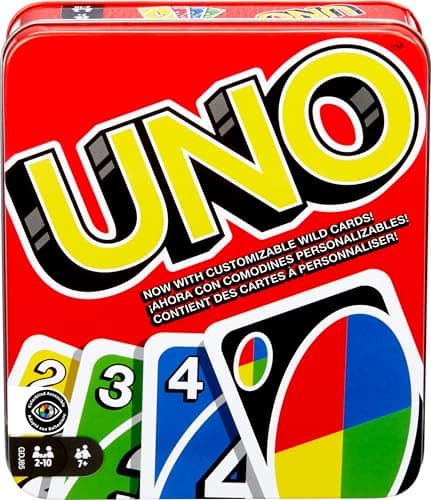
UNO Card Game
Mattel Games
Costs less than lunch and gets played from seven to seventeen, at sleepovers, on journeys and in every waiting room. Nothing else here comes close on hours per dollar, and it fits in a pocket.
Age grade:
7+
Batteries:
manufacturer does not publish a battery requirement
Noise:
Some noise
Mess:
No mess
Assembly:
manufacturer does not publish an assembly time
Price:
$11.47 as of October 23, 2026
Age grade, battery and assembly wording are quoted from Mattel Games’s own product listing, read on September 7, 2026. The manufacturer’s exact words: “ages 7 years and older”. Noise and mess are our reading, not a measurement — we have not played with this.
What it gets right
+Two to ten players, which no other game here matches
+Everybody already knows the rules, so it needs no teaching at a family gathering
+Costs less than a takeaway coffee and lasts years
What it doesn’t
−Draw-four cards produce genuine family arguments and always have
−Paper cards wear fast in young hands
How loud
Cards are silent. The 'UNO' shouting is not, and it is a required part of the rules.
How much mess
One deck of cards.
Skip this if…
…there is a child who cannot yet take being targeted. UNO is a game about attacking whoever is winning, and at seven that is not always fun.
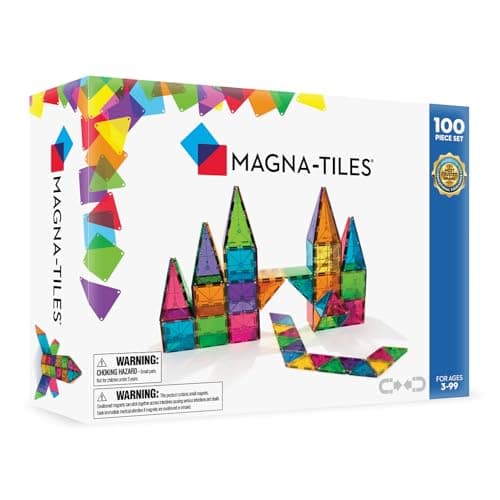
A five-year usable age range with genuinely different play in each of those years. It is one of the pricier items in this guide and among the cheapest per hour, which is the whole point of measuring it this way.
Age grade:
3+
Batteries:
manufacturer does not publish a battery requirement
Noise:
Quiet
Mess:
Contained
Assembly:
manufacturer does not publish an assembly time
Price:
$117.52 as of October 23, 2026
Age grade, battery and assembly wording are quoted from MAGNA-TILES’s own product listing, read on September 7, 2026. The manufacturer’s exact words: “builders ages 3-99”. Noise and mess are our reading, not a measurement — we have not played with this.
What it gets right
+Lifetime warranty against manufacturer's defects, published on the listing — almost nothing else in this price bracket carries one
+Age grade of 3+ but the manufacturer describes the set as built for ages 3 to 99, which is the honest range: adults build with these too
+Made from food-grade MABS plastic that the maker states is free from BPA, phthalates and latex
What it doesn’t
−Roughly four times the price per piece of the copies, and the copies are magnetic tiles too
−One hundred pieces sounds like a lot until two children want to build separately
How loud
Nothing electronic in the box. The loudest sound it makes is a tower coming down.
How much mess
A hundred big flat pieces. They go back in a bin in under two minutes, and none of them hurt to step on.
Skip this if…
…you are buying for a child under three. The age grade is 3+ and these are exactly the flat, swallowable-magnet shape the small-parts rule exists for — no amount of supervision makes an under-three set out of a 3+ set.
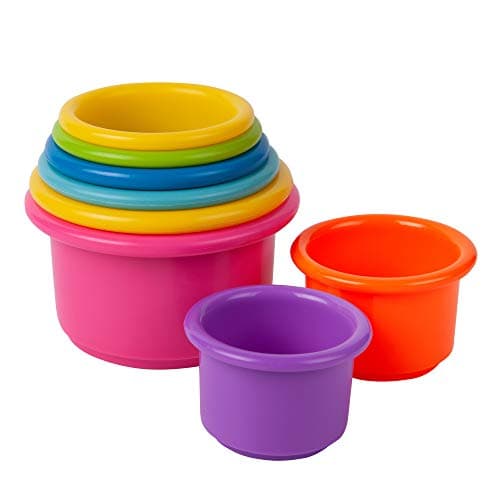
Graded 9 months+ and it costs about the same as a sandwich. Stacking, nesting, pouring, bath play and later sand play. Nothing in the baby aisle at ten times the price does ten times as much.
Age grade:
9 months+
Batteries:
manufacturer does not publish a battery requirement
Noise:
Quiet
Mess:
No mess
Assembly:
manufacturer does not publish an assembly time
Price:
$7.42 as of October 23, 2026
Age grade, battery and assembly wording are quoted from The First Years’s own product listing, read on September 7, 2026. The manufacturer’s exact words: “ages 9 months and up”. Noise and mess are our reading, not a measurement — we have not played with this.
What it gets right
+Costs almost nothing and covers stacking, nesting, bath play and sand play in one set
+Published 9 months grade and the cups are far too large to be a hazard
+Nest into one column for storage, which almost nothing else does
What it doesn’t
−Water gets trapped inside and goes moldy unless they are stored upside down
−Thin plastic that cracks if an older child stands on one
How loud
Plastic cups. The loudest thing is a stack being knocked over on a hard floor.
How much mess
They live in the bath half the time, which is the tidiest possible arrangement.
Skip this if…
…you are looking for a main gift. This is a five-dollar extra that outperforms half the fifty-dollar toys, but it will not carry a birthday on its own.
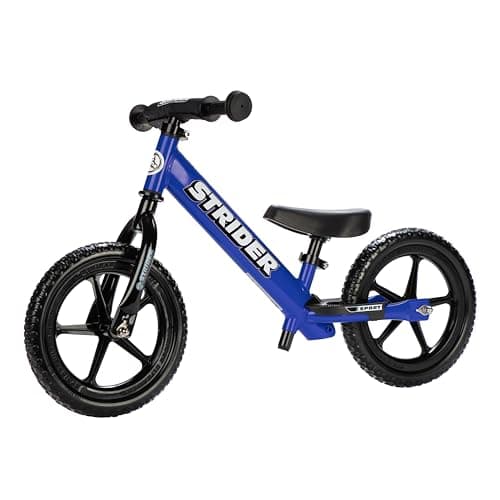
Ridden daily for two or three years, then resold for a substantial fraction of what it cost, because the frame does not wear out. Net cost per year of use is frequently lower than a cheap plastic ride-on that goes in a skip.
Age grade:
1–4
Batteries:
manufacturer does not publish a battery requirement
Noise:
Quiet
Mess:
No mess
Assembly:
manufacturer does not publish an assembly time
Price:
$149.99 as of October 23, 2026
Age grade, battery and assembly wording are quoted from Strider’s own product listing, read on September 7, 2026. The manufacturer’s exact words: “for Kids Ages 1–4 Years”. Noise and mess are our reading, not a measurement — we have not played with this.
What it gets right
+The published 1 to 4 range is real — the seat and bars both adjust, so it is three years of use from one purchase
+Balance first, pedals later, which is the approach that avoids training wheels altogether
+No chain, no brakes to adjust, nothing to service
What it doesn’t
−Expensive against the supermarket balance bikes, which are heavier but do the same job
−No brake on the base model — stopping is done with feet
How loud
Tires on pavement. No electronics.
How much mess
It is a bike. It lives by the door.
Skip this if…
…there is nowhere flat and traffic-free to ride. A balance bike needs a driveway, a park path or a quiet pavement, and without one it stays in the garage.
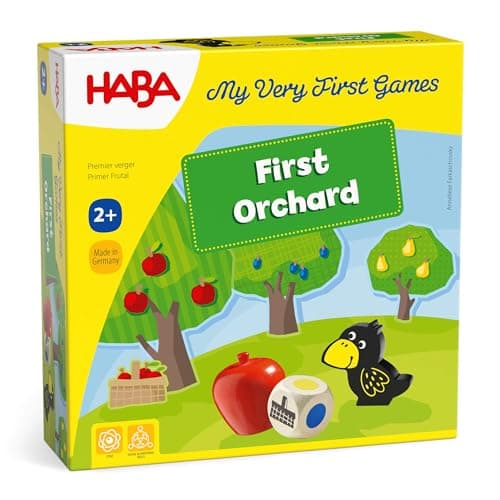
Wooden, graded 2+, and played long past the point where the child could technically handle something harder. Games are the most underpriced category in the toy aisle relative to how much they get used.
Age grade:
2–4
Batteries:
manufacturer does not publish a battery requirement
Noise:
Silent
Mess:
Contained
Assembly:
manufacturer does not publish an assembly time
Price:
$29.99 as of October 23, 2026
Age grade, battery and assembly wording are quoted from HABA’s own product listing, read on September 7, 2026. The manufacturer’s exact words: “ages 2-4”. Noise and mess are our reading, not a measurement — we have not played with this.
What it gets right
+Cooperative, so a two-year-old never has to lose — which is the difference between a game played twice and a game played fifty times
+Published 2 to 4 grade with pieces sized well above the small-parts threshold
+Teaches turn-taking and color matching without either being the stated point
What it doesn’t
−Outgrown properly at four — this is a two-year window and it is honest about it
−Expensive for the amount of cardboard and wood in the box
How loud
Wooden fruit in a basket. Nothing electronic.
How much mess
Large wooden pieces in a box with an insert. Nothing here rolls away.
Skip this if…
…the child is already four. They will play it once to be kind and then ask for a real game, and they will be right.
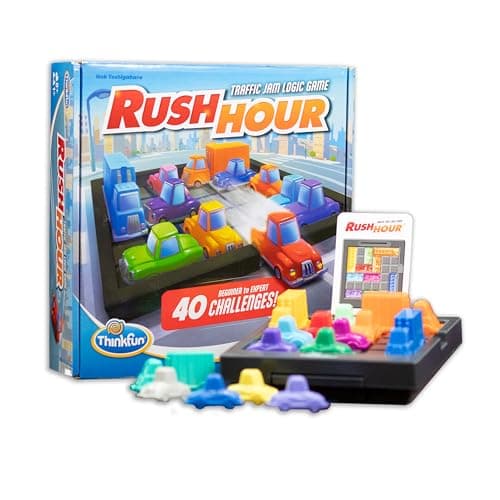
A single box of graded challenges covering years of difficulty. There is no mechanism to break and no expansion required, and the difficult cards defeat adults.
Age grade:
8+
Batteries:
manufacturer does not publish a battery requirement
Noise:
Silent
Mess:
Contained
Assembly:
manufacturer does not publish an assembly time
Price:
$19.95 as of October 23, 2026
Age grade, battery and assembly wording are quoted from ThinkFun’s own product listing, read on September 7, 2026. The manufacturer’s exact words: “for Kids Age 8 and Up”. Noise and mess are our reading, not a measurement — we have not played with this.
What it gets right
+Genuinely single-player, so it works when no adult is available
+Forty challenges with a real difficulty curve — the last ones defeat adults
+The whole thing packs into its own board for travel
What it doesn’t
−Finite. Once the forty cards are solved, it is done until the expansion packs
−The published 8+ grade is honest; a six-year-old will stall around challenge ten
How loud
Plastic cars sliding on a plastic grid.
How much mess
A grid, sixteen vehicles and a card deck, all of which fit in the tray.
Skip this if…
…you want something the family plays together. Rush Hour is solitary by design and does not convert into a group game.
Ten dollars for twenty focused minutes, repeatedly
Melissa & Doug Safari Scissor Skills Activity Pad
Melissa & Doug
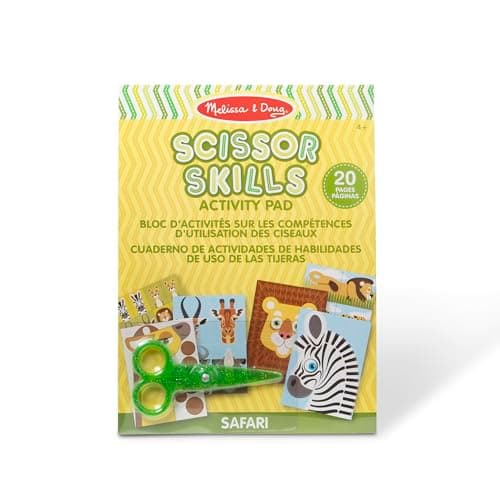
Cheap, consumable and genuinely useful for a skill children arrive at school with or without. Consumables look like poor value until you count how often they are used.
Age grade:
4–6
Batteries:
manufacturer does not publish a battery requirement
Noise:
Silent
Mess:
Contained
Assembly:
manufacturer does not publish an assembly time
Price:
$6.97 as of October 23, 2026
Age grade, battery and assembly wording are quoted from Melissa & Doug’s own product listing, read on September 7, 2026. The manufacturer’s exact words: “ages 4 to 6”. Noise and mess are our reading, not a measurement — we have not played with this.
What it gets right
+Scissors included, sized and blunted for the published 4 to 6 range
+Cutting practice is a genuinely useful pre-school skill and this makes it a game
+Cheap enough to be a party gift rather than a main present
What it doesn’t
−Consumable — once the pages are cut, the pad is finished
−Narrow published window; a seven-year-old will find it beneath them
How loud
Nothing.
How much mess
Paper confetti. It is a lot of paper confetti, and it is all in one place.
Skip this if…
…the child already cuts confidently. This teaches the skill; a child who has it wants a craft project, not a practice pad.
Price checked October 23, 2026. Toy prices move constantly, especially in December — Amazon’s price at checkout is the one that counts.
#ad · we may earn a commission from this link to Melissa & Doug Safari Scissor Skills Activity Pad
08
The expensive one that earns it
Micro Kickboard Maxi Foldable LED Scooter
Micro
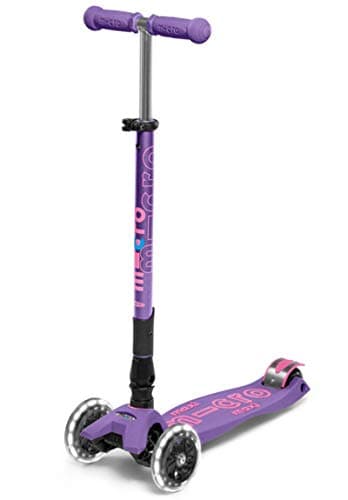
Well enough made to be handed down, with steering that teaches balance transfer. It is the clearest case on this site where the budget version is worse in a way the child immediately feels.
Age grade:
5–12
Batteries:
No batteries required
Noise:
Quiet
Mess:
No mess
Assembly:
manufacturer does not publish an assembly time
Price:
$179.99 as of October 23, 2026
Age grade, battery and assembly wording are quoted from Micro’s own product listing, read on September 7, 2026. The manufacturer’s exact words: “Ages 5-12”. Noise and mess are our reading, not a measurement — we have not played with this.
What it gets right
+Published 5 to 12 range with a 110 lb limit — this genuinely lasts to secondary school
+LED wheels with no batteries, stated by the manufacturer
+Folds for storage and for carrying, which is the thing you appreciate on the walk home
What it doesn’t
−Expensive enough that losing it to a school bike rack genuinely hurts
−Replacement parts are proprietary and priced accordingly
How loud
Polyurethane wheels are notably quieter than hard plastic. No electronics — the LEDs are driven by the wheels.
How much mess
Folds, so it can live in a hall cupboard rather than against a wall.
Skip this if…
…the child is going to grow out of scootering in a year. The whole value case is longevity, and it does not work over a short horizon.
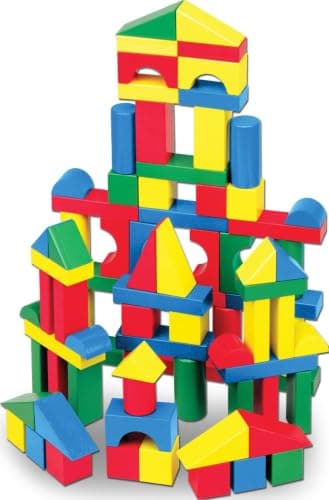
Graded 2+, no mechanism, no obsolescence, and still worth something secondhand thirty years later. The purest example of buy-once economics in the category.
Age grade:
2+
Batteries:
manufacturer does not publish a battery requirement
Noise:
Some noise
Mess:
Contained
Assembly:
manufacturer does not publish an assembly time
Price:
$13.99 as of October 23, 2026
Age grade, battery and assembly wording are quoted from Melissa & Doug’s own product listing, read on September 7, 2026. The manufacturer’s exact words: “Ages 2+”. Noise and mess are our reading, not a measurement — we have not played with this.
What it gets right
+FSC-certified wood and a 2+ grade — one of the cheapest ways into open-ended building at that age
+Nine shapes, four colors, no instructions, no theme, nothing to outgrow
+Costs less than a themed plastic set that will be finished with by February
What it doesn’t
−Wooden blocks on a wooden floor are loud, and there is no volume control
−Nothing about it is exciting on Christmas morning — it earns its place in week three, not on day one
How loud
Wood on a hard floor is genuinely loud, and a tower coming down is the loudest thing in this guide. A rug fixes it.
How much mess
Heavy pieces that stay where they land. Painful underfoot, but they do not travel.
Skip this if…
…you need the gift to land in the first ten minutes. Blocks are a slow burn, and a child expecting a big shiny thing will visibly deflate.
Price checked October 23, 2026. Toy prices move constantly, especially in December — Amazon’s price at checkout is the one that counts.
#ad · we may earn a commission from this link to Melissa & Doug Wooden Building Blocks, 100 Pieces
10
The cheapest thing in every bag
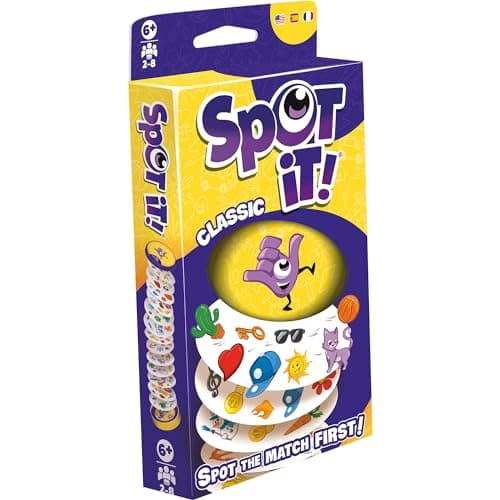
Spot It! Classic Card Game
Asmodee
A tin of cards that plays in five minutes anywhere, works across a wide age range, and survives being sat on. It gets carried, which is what makes the value real.
Age grade:
6+
Batteries:
manufacturer does not publish a battery requirement
Noise:
Some noise
Mess:
No mess
Assembly:
manufacturer does not publish an assembly time
Price:
$5.86 as of October 23, 2026
Age grade, battery and assembly wording are quoted from Asmodee’s own product listing, read on September 7, 2026. The manufacturer’s exact words: “Ages 6+”. Noise and mess are our reading, not a measurement — we have not played with this.
What it gets right
+Travels better than anything else in this file — it is a tin, and it plays on a tray table
+Two to eight players, which covers almost any family situation
+Ten-minute rounds, so it fits into the gap before dinner
What it doesn’t
−Fast visual scanning favors some children heavily, and the same child wins every time
−The tin lid loosens and the cards escape into a bag
How loud
The game itself is silent; the players are not. Spot It gets loud in the way a good game gets loud.
How much mess
A tin of cards.
Skip this if…
…you are buying for a child who finds losing hard. Spot It is fast, public and repeated — a bad round is very visible.
Every toy site tells you they tested forty toys with a focus group of real children. We have not played with any of these, and we say so. Here is what we do instead: we read the manufacturer’s own listing and print its published age grade word for word, we record the battery requirement and the assembly note where the maker publishes one and say plainly when it does not, we pull the price live from Amazon so it is never a number we remembered, and we name one thing on every list we would not buy.
The noise and mess ratings are our judgment from what the listing describes — not measurements. Almost no toy manufacturer publishes a decibel figure, which is itself worth knowing. The full method is published, including what disqualifies a toy.
Questions
Questions people actually ask
What is the best value toy?+
Card games and open-ended construction sets, by a wide margin. A deck of cards costs almost nothing and gets used for a decade; magnetic tiles cost more but cover five years of genuinely different play.
Is it worth spending more on toys?+
On anything with wheels, bearings or a structure that gets sat on, yes. On art materials, board games and electronics, no — price buys features rather than longevity.
How much should I spend on a child's present?+
$15 to $50 covers essentially everything genuinely good below about ten years old. Above that band you are usually buying size rather than play value.
Are cheap toys always bad?+
No. Several of the highest-value items we recommend are among the cheapest. What matters is whether the toy is open-ended and whether it contains anything that can fail.
Should I buy toys secondhand to save money?+
For blocks, figures, track and construction sets, absolutely — they are close to indestructible. Check the recall database first, and check any battery compartment still closes with a screw.
We do not run a playroom test lab and we do not pretend to. Age grades, battery requirements and assembly notes are quoted from each manufacturer’s own product listing, read on September 7, 2026; prices come live from Amazon’s API and are stamped with the date they were checked. Where a maker publishes nothing, the page says “manufacturer does not publish this” rather than guessing. Read the full method.