You know their age, roughly. You do not know what they have, what they like, or how their parents feel about noise. These are gifts that work anyway — and that the parents will be glad you chose.
We earn a commission if you buy through our links. It does not change the price you pay and it does not decide our picks — our method is published in full, including the part where we say we have not played with these toys. How this works.
#ad · Prices come live from Amazon’s API and were last checked Sep 15, 2026. Where we have no verified live price we show none — we would rather leave a gap than print a number that has gone stale. Age grades are the manufacturer’s own; noise is our reading, not a measurement.
The rules for buying for someone else’s child
Get the age right. Every card prints the manufacturer’s age grade. If you are not sure of the child’s age, buy for the younger end.
Avoid duplicates. Art supplies and extra building pieces are almost impossible to duplicate. A specific popular toy is very likely to be already in the house.
Respect the household. Nothing loud, nothing that spreads across a carpet, nothing that needs a room of its own. Every card has a noise and mess rating.
Skip the character toy unless you know. A licensed toy is a guess about what the child likes this month.
Why the babyish problem matters from about eight
Older children are quick to notice a present meant for someone younger, and at a party that is noticed in public. For eight and up, pick something that could belong to an older child or an adult — a puzzle game, a craft kit, a card game — rather than anything with a cartoon on the box.
If you can ask, ask
A quick message to the parent is not a failure of imagination. It prevents duplicates, and most parents are relieved to be asked. If you cannot, this list is built for exactly that situation. For a school or class party at a lower price, see our under-$25 guide; for nieces and nephews, see buying for a niece.
In detail
Every pick, in full
01
The safest gift for a four- to eight-year-old
LEGO Classic Creative Suitcase 10713
LEGO
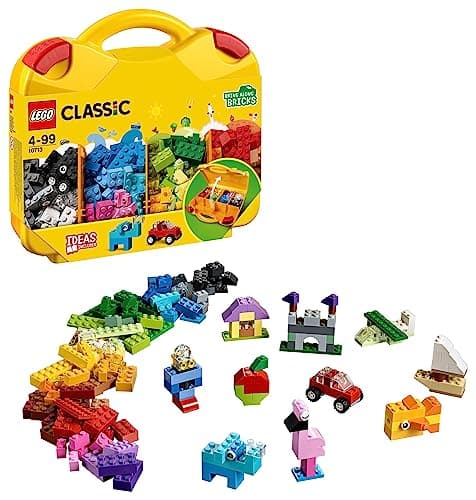
Why it lands: almost every child likes building, and extra bricks are never a duplicate — they add to whatever the family already has. Who it suits: four and up. Check before buying: graded 4+ because of small parts, so think twice if you know there is a baby at home. It comes in its own case, which parents appreciate.
Age grade:
4+
Batteries:
manufacturer does not publish a battery requirement
Noise:
Quiet
Mess:
Contained
Assembly:
manufacturer does not publish an assembly time
Price:
$11.80 as of Sep 15, 2026
Age grade, battery and assembly wording are quoted from LEGO’s own product listing, read on September 7, 2026. The manufacturer’s exact words: “4 years and older”. Noise and mess are our reading, not a measurement — we have not played with this.
What it gets right
+Published 4+ grade, so it is the correct first real-brick set rather than a set bought two years early
+The sorting suitcase is included, which means the toy arrives with its own answer to where it lives
+No instructions to follow and no model to rebuild — it is a box of parts, which is what makes it last
What it doesn’t
−No minifigures and no theme, so it does not have the shelf appeal of a licensed set
−The brick count is modest; a child who already builds will run out of pieces quickly
How loud
Silent. Bricks do not have an opinion.
How much mess
Storage is built in — the suitcase has compartments. This is the tidiest LEGO gets.
Skip this if…
…the child already has a LEGO collection. This is a starter set, and its value is the case and the entry price — for an established builder the money is better spent on a themed set they actually want.
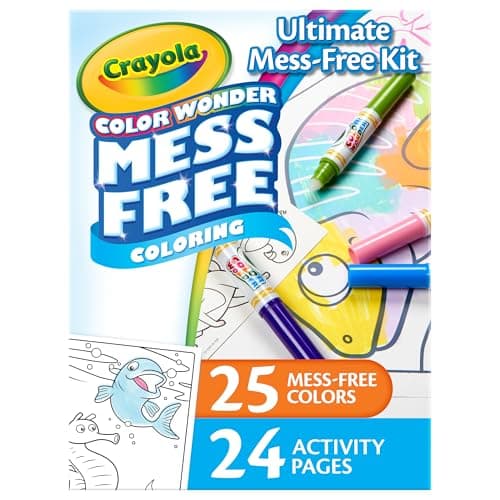
Why it lands: the markers only work on the special paper, so nothing gets on walls, sofas or clothes — the most considerate art gift you can give someone else's child. Who it suits: three to seven. Check before buying: it only works on its own paper, so it is a travel and quiet-time present rather than a main art supply.
Age grade:
3+
Batteries:
manufacturer does not publish a battery requirement
Noise:
Silent
Mess:
No mess
Assembly:
manufacturer does not publish an assembly time
Price:
$25.33 as of Sep 15, 2026
Age grade, battery and assembly wording are quoted from Crayola’s own product listing, read on September 7, 2026. The manufacturer’s exact words: “Ideal for ages 3 and up”. Noise and mess are our reading, not a measurement — we have not played with this.
What it gets right
+The one art set that cannot mark a wall, which changes where a child is allowed to use it
+Published 3+ grade, and the markers are chunky enough for a three-year-old grip
+Travels — this is the car, restaurant and waiting-room answer
What it doesn’t
−The special paper is consumable and the refills cost real money over a year
−Nothing the child makes can be done on ordinary paper, so it does not transfer to normal drawing
How loud
Markers. There is nothing to make a sound.
How much mess
This is the entire product. The ink is colorless on skin, walls, upholstery and clothing — it develops only on the supplied paper.
Skip this if…
…you want the child to learn to draw. Color Wonder is a mess-control product, not an art product — the pages are pre-printed and the child is filling in.
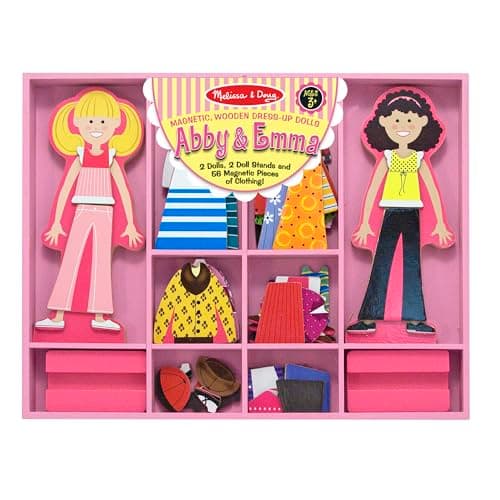
Why it lands: wooden figures with magnetic outfits that store on their own board — no noise, no loose pieces under the couch. Who it suits: three to six. Check before buying: graded 3+; it is a quiet play present, not an exciting unwrapping moment.
Age grade:
3–6
Batteries:
manufacturer does not publish a battery requirement
Noise:
Silent
Mess:
Contained
Assembly:
manufacturer does not publish an assembly time
Price:
$22.99 as of Sep 15, 2026
Age grade, battery and assembly wording are quoted from Melissa & Doug’s own product listing, read on September 7, 2026. The manufacturer’s exact words: “ages 3-6”. Noise and mess are our reading, not a measurement — we have not played with this.
What it gets right
+Magnetic pieces do not tear, which is the entire reason paper dress-up sets fail
+Wooden storage case included and the pieces do fit back in it
+Published 3 to 6 grade, and the pieces are big enough for a three-year-old to place
What it doesn’t
−Fifty-five flat pieces will lose a few, and the set looks depleted quickly
−A short window — six-year-olds are usually done with it
How loud
Nothing.
How much mess
Many flat magnetic pieces and a wooden storage case. Losing the pieces is the failure mode, not mess.
Skip this if…
…there is nowhere flat and metal-free to keep it. The pieces stick to each other and to any fridge in reach, and they end up scattered across the kitchen.
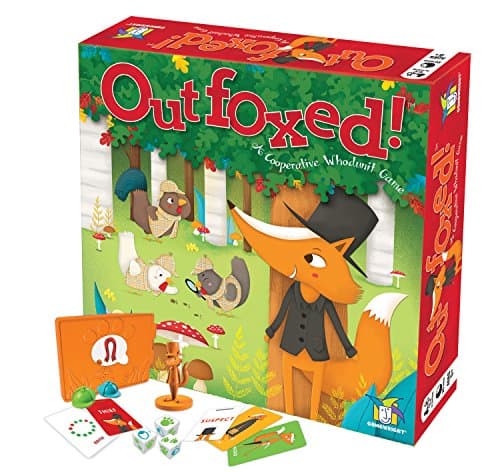
Why it lands: everyone plays together against the game, so it works whether the child has competitive siblings or none. Who it suits: six to ten. Check before buying: graded 6+, about twenty minutes a game, and it needs an adult or older child to learn the rules the first time.
Age grade:
6+
Batteries:
manufacturer does not publish a battery requirement
Noise:
Quiet
Mess:
Contained
Assembly:
manufacturer does not publish an assembly time
Price:
$24.00 as of Sep 15, 2026
Age grade, battery and assembly wording are quoted from Gamewright’s own product listing, read on September 7, 2026. The manufacturer’s exact words: “ages 6 and up”. Noise and mess are our reading, not a measurement — we have not played with this.
What it gets right
+Cooperative structure means nobody is knocked out and nobody sulks
+Real deduction — the child is genuinely reasoning, not just moving a counter
+Published 6+ grade is accurate, and adults do not have to pretend to enjoy it
What it doesn’t
−Games run twenty minutes and the difficulty does not scale much once the mechanic is understood
−Losing the plastic decoder ends the game permanently
How loud
Dice and discussion. Nothing electronic.
How much mess
Cardboard tiles and a decoder. The decoder is the one piece you cannot play without.
Skip this if…
…the family wants competition. Outfoxed is deliberately non-competitive, and a household that enjoys beating each other will find it flat.
Why it lands: a jigsaw is quiet, has a clear finish, and gets parents and children sitting together. Who it suits: six and up. Check before buying: 100 large pieces is right for six to eight; an older child may want more pieces.
Age grade:
6+
Batteries:
manufacturer does not publish a battery requirement
Noise:
Silent
Mess:
Contained
Assembly:
manufacturer does not publish an assembly time
Price:
$16.99 as of Sep 15, 2026
Age grade, battery and assembly wording are quoted from Ravensburger’s own product listing, read on September 7, 2026. The manufacturer’s exact words: “Ages 6+”. Noise and mess are our reading, not a measurement — we have not played with this.
What it gets right
+XXL pieces suit six-year-old hands without making the puzzle babyish
+Ravensburger's board and cut quality genuinely outlast the supermarket brands
+Cheap enough to give two or three at once
What it doesn’t
−One missing piece ruins the whole thing, permanently
−A hundred pieces is one afternoon for a confident eight-year-old
How loud
Cardboard.
How much mess
A hundred pieces on a table. It occupies a surface for a day and then goes back in the box.
Skip this if…
…the household has no table that can be left occupied. A hundred-piece puzzle needs a surface for longer than dinner allows.
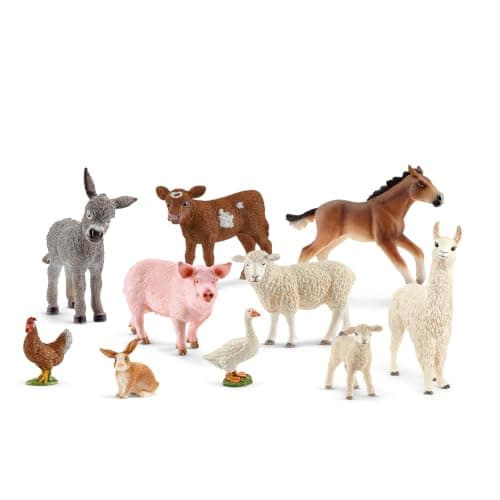
Why it lands: solid animal figures are loved by most young children, survive rough play and make no noise. Who it suits: three to eight. Check before buying: graded 3+; if you know the child collects a particular kind of animal, lean into it.
Age grade:
3+
Batteries:
manufacturer does not publish a battery requirement
Noise:
Silent
Mess:
Contained
Assembly:
manufacturer does not publish an assembly time
Price:
$45.09 as of Sep 15, 2026
Age grade, battery and assembly wording are quoted from Schleich’s own product listing, read on September 7, 2026. The manufacturer’s exact words: “Ages 3+”. Noise and mess are our reading, not a measurement — we have not played with this.
What it gets right
+Effectively indestructible — no moving parts, no paint that flakes in normal handling
+Works with blocks, train sets, dollhouses and sandpits, which almost nothing else does
+Ten figures at a price where Schleich normally sells three or four
What it doesn’t
−Static poses; a child who wants articulation will be unimpressed
−Individually they are expensive, and replacing a lost one costs real money
How loud
Nothing.
How much mess
Ten solid pieces. They do not break and they do not shed anything.
Skip this if…
…the child is under three. Schleich figures are graded 3+ and the smaller animals are exactly the size the rule covers.
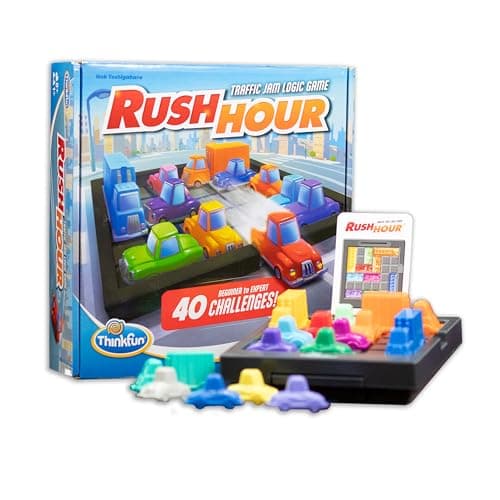
Why it lands: a puzzle game a child plays alone, with challenges that get harder — it does not depend on siblings, interests or what is already in the house. Who it suits: eight and up. Check before buying: graded 8+; it is quiet and packs into itself.
Age grade:
8+
Batteries:
manufacturer does not publish a battery requirement
Noise:
Silent
Mess:
Contained
Assembly:
manufacturer does not publish an assembly time
Price:
$19.95 as of Sep 15, 2026
Age grade, battery and assembly wording are quoted from ThinkFun’s own product listing, read on September 7, 2026. The manufacturer’s exact words: “for Kids Age 8 and Up”. Noise and mess are our reading, not a measurement — we have not played with this.
What it gets right
+Genuinely single-player, so it works when no adult is available
+Forty challenges with a real difficulty curve — the last ones defeat adults
+The whole thing packs into its own board for travel
What it doesn’t
−Finite. Once the forty cards are solved, it is done until the expansion packs
−The published 8+ grade is honest; a six-year-old will stall around challenge ten
How loud
Plastic cars sliding on a plastic grid.
How much mess
A grid, sixteen vehicles and a card deck, all of which fit in the tray.
Skip this if…
…you want something the family plays together. Rush Hour is solitary by design and does not convert into a group game.
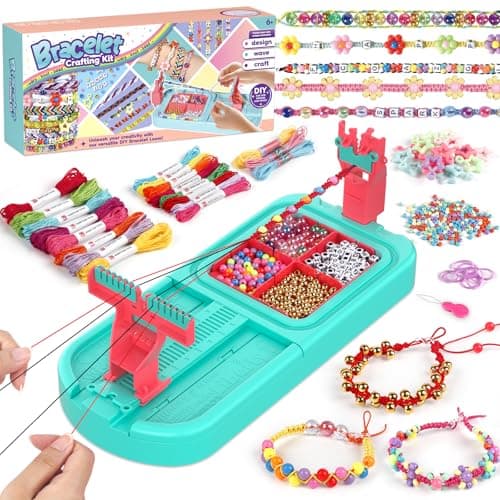
Why it lands: children make bracelets for their friends, which is exactly what matters at this age. Who it suits: eight to twelve. Check before buying: graded 8+; the thread runs out and is cheap to refill.
Age grade:
8–12
Batteries:
manufacturer does not publish a battery requirement
Noise:
Silent
Mess:
Contained
Assembly:
manufacturer does not publish an assembly time
Price:
$9.99 as of Sep 15, 2026
Age grade, battery and assembly wording are quoted from Cmiolacuna’s own product listing, read on September 7, 2026. The manufacturer’s exact words: “Ages 8-12”. Noise and mess are our reading, not a measurement — we have not played with this.
What it gets right
+The loom makes a decent bracelet achievable on the first attempt, which is what keeps a child going
+Published 8 to 12 grade, aimed squarely at the age where making things for friends is the point
+Consumable in a good way — a full kit is many evenings
What it doesn’t
−Thread runs out and refills are not always the same quality
−Loose beads and thread ends get everywhere in a shared bedroom
How loud
Nothing.
How much mess
Thread offcuts and small beads. Annoying rather than destructive, and all of it is on the table.
Skip this if…
…the child gives up when something needs twenty minutes of repetition. Bracelet weaving is rhythmic and slow, and that is either the appeal or the dealbreaker.
Every toy site tells you they tested forty toys with a focus group of real children. We have not played with any of these, and we say so. Here is what we do instead: we read the manufacturer’s own listing and print its published age grade word for word, we record the battery requirement and the assembly note where the maker publishes one and say plainly when it does not, we pull the price live from Amazon so it is never a number we remembered, and we name one thing on every list we would not buy.
The noise and mess ratings are our judgment from what the listing describes — not measurements. Almost no toy manufacturer publishes a decibel figure, which is itself worth knowing. The full method is published, including what disqualifies a toy.
Questions
Questions people actually ask
What do you buy a child you don't know well?+
Something hard to duplicate and easy for the household to live with: building pieces, a no-mess art kit, a cooperative game, or animal figures. Buy for the child’s age using the manufacturer’s grade.
How much should I spend on a friend's child?+
For a party, $15 to $25 is normal; for a close family friend, a little more. Nothing about a smaller budget needs apologizing for.
Should I avoid noisy toys as a gift?+
For someone else’s child, yes. You will not hear it; they will. Every pick on this site carries a noise rating.
Is it rude to ask the parents what to get?+
No. It avoids duplicates and most parents appreciate it.
We do not run a playroom test lab and we do not pretend to. Age grades, battery requirements and assembly notes are quoted from each manufacturer’s own product listing, read on September 7, 2026; prices come live from Amazon’s API and are stamped with the date they were checked. Where a maker publishes nothing, the page says “manufacturer does not publish this” rather than guessing. Read the full method.