This is a gift with a job. The first term of school asks a five-year-old for a specific and slightly odd set of skills — hold a pair of scissors, recognize their own name, take a turn, lose without collapsing, and sit still for twenty minutes — and almost none of them are taught by anything sold as educational.
We earn a commission if you buy through our links. It does not change the price you pay and it does not decide our picks — our method is published in full, including the part where we say we have not played with these toys. How this works.
#ad · Prices come live from Amazon’s API and were last checked October 5, 2026. Where we have no verified live price we show none — we would rather leave a gap than print a number that has gone stale. Age grades are the manufacturer’s own; noise is our reading, not a measurement.
The short verdict
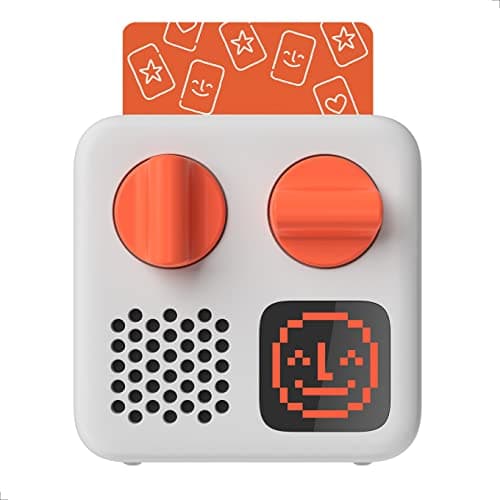
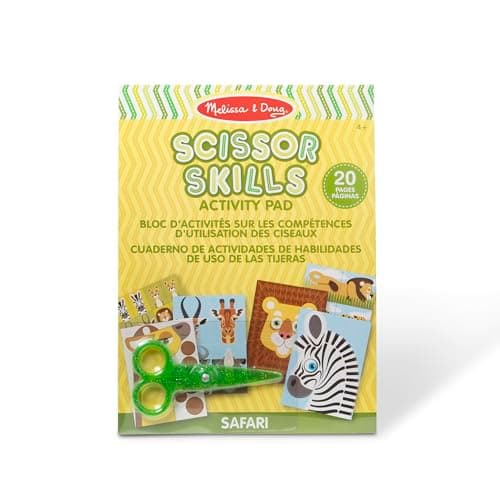
Buy the Melissa & Doug Safari Scissor Skills pad. It is graded 4 to 6, it includes the child-safe scissors, and cutting is the one first-term skill most new starters genuinely cannot do when they arrive. If letters are the worry, the self-correcting alphabet puzzle does that job without an adult turning it into a lesson. If the worry is social rather than academic — taking turns, losing a game — buy the cooperative board game. And if the household is about to discover how tired a child is at four o’clock, the screen-free audio player is the most used object on this list.
What the first term actually asks for
Starting school is not an academic event for a five-year-old. The things that make the first term hard are physical and social: holding a pencil and a pair of scissors, recognizing their own written name, waiting for a turn, coping with not winning, putting their own coat on, and sitting at a table for twenty minutes with something in front of them. Reading is not on that list, and neither is counting. Both arrive, and both arrive more easily if the five things above are already comfortable.
Which is why this is one of the few gifts where “educational” is the wrong filter. A flashcard set addresses none of the five. A pair of scissors and twenty printed pages addresses the hardest one.
The five skills and what practices each
What the first term asks for
What practices it
Published grade
Using scissors
Scissor skills pad, with the safety scissors in the box
4–6
Recognizing letters and their own name
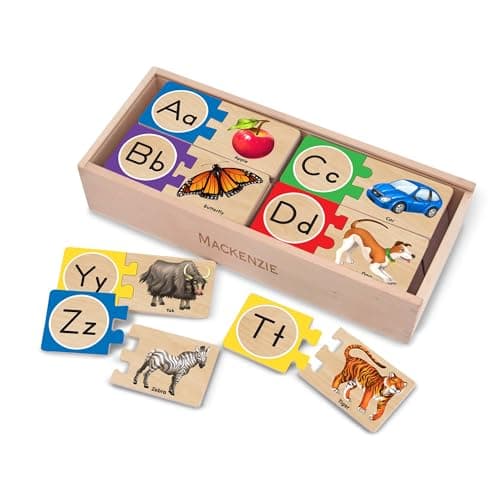
Self-correcting alphabet puzzle — the piece only fits its own slot
4+
Taking a turn, and losing
A cooperative board game first, a competitive one two months later
5+
Holding a pen, and drawing daily
Washable broad-line markers, forty of them
3+
Sitting still, and recovering after school
A water-reveal pad, and a screen-free audio player
3–7 / 3–12
The gift that is really for the parents
Worth saying plainly, because it is the most useful thing on this page and nobody puts it on a list: the hour after school pickup in the first term is brutal. A child who has held themselves together for six hours comes home with nothing left, and the standard response — asking about their day — is the worst possible opening move. The audio player is on this list because it is the one object a five-year-old can operate entirely alone while they recover, and it is not a screen. If the gift is from a grandparent, it is also the pick most likely to be remembered as the good one.
If the child is four, or already six
Grades matter here and we hold to them: everything above is graded five or under, which is why this page is written for a child of five. A four-year-old starting pre-K is the same list minus the board game — the cooperative game is graded 5+, and a four-year-old plays it with an adult holding it together, which defeats the purpose. For a six-year-old, toys for a 6-year-old is the right page and the games get competitive. The year either side is covered on toys for a 5-year-old, which is the broader list this page narrows down.
What we would skip
The branded character backpack-and-lunchbox set, unless the child has specifically asked for it. It is the most common starting-school gift and the one most likely to be replaced by the school’s own bag, or by a different character four months later. Also skip the workbook. A five-year-old who has spent six hours at a table does not want a seventh hour of table, and a workbook given as a present is the fastest way to become the relative who brings work. How to choose a toy covers the general test, and fine motor skills toys goes deeper on the cutting-and-pencil half of this page.
In detail
Every pick, in full
01
The single most useful starting-school gift on this site
Melissa & Doug Safari Scissor Skills Activity Pad
Melissa & Doug
Graded 4 to 6 and it comes with the child-safe scissors, which is the whole reason to buy the pad rather than a craft book. Cutting is the first fine-motor task school asks for and the one most new starters cannot do, because scissors are the tool parents sensibly keep out of reach. Twenty pages of printed cutting lines means the practice happens on paper designed for it rather than on a library book. It is consumable — twenty pages go in a fortnight with an enthusiastic child.
Age grade:
4–6
Batteries:
manufacturer does not publish a battery requirement
Noise:
Silent
Mess:
Contained
Assembly:
manufacturer does not publish an assembly time
Price:
$6.97 as of October 5, 2026
Age grade, battery and assembly wording are quoted from Melissa & Doug’s own product listing, read on September 7, 2026. The manufacturer’s exact words: “ages 4 to 6”. Noise and mess are our reading, not a measurement — we have not played with this.
What it gets right
+Scissors included, sized and blunted for the published 4 to 6 range
+Cutting practice is a genuinely useful pre-school skill and this makes it a game
+Cheap enough to be a party gift rather than a main present
What it doesn’t
−Consumable — once the pages are cut, the pad is finished
−Narrow published window; a seven-year-old will find it beneath them
How loud
Nothing.
How much mess
Paper confetti. It is a lot of paper confetti, and it is all in one place.
Skip this if…
…the child already cuts confidently. This teaches the skill; a child who has it wants a craft project, not a practice pad.
Price checked October 5, 2026. Toy prices move constantly, especially in December — Amazon’s price at checkout is the one that counts.
#ad · we may earn a commission from this link to Melissa & Doug Safari Scissor Skills Activity Pad
02
For learning letters without anybody teaching
Melissa & Doug Self-Correcting Alphabet Puzzles
Melissa & Doug
Graded 4+, fifty-two pieces, and the word that matters on the box is self-correcting: each letter only fits its own slot, so the puzzle tells the child they are wrong without an adult saying so. That is the difference between letter practice a child does alone at a table and letter practice that turns into a lesson nobody wanted. Uppercase and lowercase both, which is the exact distinction the first term makes a fuss about. The storage box is not optional at fifty-two pieces.
Age grade:
4+
Batteries:
manufacturer does not publish a battery requirement
Noise:
Silent
Mess:
Contained
Assembly:
manufacturer does not publish an assembly time
Price:
$18.99 as of October 5, 2026
Age grade, battery and assembly wording are quoted from Melissa & Doug’s own product listing, read on September 7, 2026. The manufacturer’s exact words: “Ages 4+”. Noise and mess are our reading, not a measurement — we have not played with this.
What it gets right
+Self-correcting cut means the child gets feedback from the puzzle, not from a grown-up
+Storage box included, and it is wooden rather than a cardboard sleeve that splits
+Published 4+ grade lines up with when letter recognition is genuinely starting
What it doesn’t
−Fifty-two small wooden pieces; a missing letter is very visible
−Single-purpose — once the alphabet is known, the puzzle is finished
How loud
Wooden pieces.
How much mess
Fifty-two pieces and a wooden storage box that they actually fit in.
Skip this if…
…the child already reads. This is a letter-recognition toy and it has no second act.
Price checked October 5, 2026. Toy prices move constantly, especially in December — Amazon’s price at checkout is the one that counts.
#ad · we may earn a commission from this link to Melissa & Doug Self-Correcting Alphabet Puzzles
03
For practicing how to lose
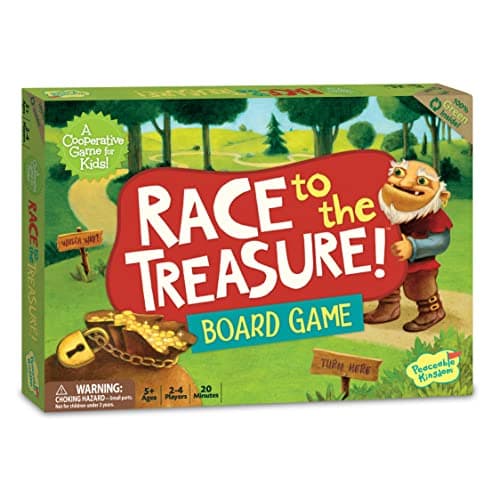
Peaceable Kingdom Race to the Treasure!
Peaceable Kingdom
Graded 5+, two to four players, and it is cooperative — the players race the game rather than each other, so everybody wins or everybody loses together. For a child about to spend a year in a classroom full of other people's turns, that is the most useful board game format there is: it teaches taking a turn and tolerating an outcome without producing the sulk a competitive game produces at five. Play it for two months, then move to something competitive.
Age grade:
5+
Batteries:
manufacturer does not publish a battery requirement
Noise:
Quiet
Mess:
Contained
Assembly:
manufacturer does not publish an assembly time
Price:
$19.95 as of October 5, 2026
Age grade, battery and assembly wording are quoted from Peaceable Kingdom’s own product listing, read on September 7, 2026. The manufacturer’s exact words: “Ages 5+”. Noise and mess are our reading, not a measurement — we have not played with this.
What it gets right
+Bridges the gap between toddler cooperative games and rules-heavy family games
+Path-building introduces genuine spatial planning at five
+Short enough that a five-year-old finishes a whole game in one sitting
What it doesn’t
−Repetitive once the strategy is understood, which happens quickly for an older child
−Small tiles are easy to lose and the game needs all of them
How loud
Cardboard tiles. Nothing electronic.
How much mess
Path tiles and a small board. All of it fits back in the box.
Skip this if…
…the child is seven or older. They will solve it in two plays and want something with real decisions.
The practical one, and the one that gets used daily
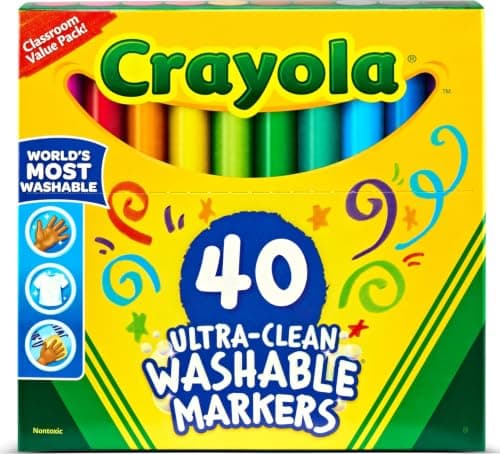
Crayola Ultra Clean Washable Markers, 40 Count
Crayola
Graded 3+, forty broad-line markers, and the Ultra Clean line is the one that washes off skin, most clothing and painted walls. For a household about to acquire daily homework-adjacent drawing, that is worth more than any feature on a fancier set. Forty colors is also the right number for a five-year-old: enough that nothing is missing, cheap enough that losing a cap is not a crisis. The caps do not reseal well once chewed, which is the honest failure mode.
Age grade:
3+
Batteries:
manufacturer does not publish a battery requirement
Noise:
Silent
Mess:
Spreads
Assembly:
manufacturer does not publish an assembly time
Price:
$18.99 as of October 5, 2026
Age grade, battery and assembly wording are quoted from Crayola’s own product listing, read on September 7, 2026. The manufacturer’s exact words: “Ages 3+”. Noise and mess are our reading, not a measurement — we have not played with this.
What it gets right
+Forty colors means no arguments about who has the good one
+Washable formulation is the difference between a marker incident and a redecoration
+Published 3+ grade and the caps are the standard vented safety design
What it doesn’t
−Caps left off, always. Half the set is dry within six months in most households
−Washable does not mean washable from everything — untreated wood and some upholstery keep it
How loud
No sound. A box of markers.
How much mess
Washable, not invisible. It comes off skin, most fabrics and painted walls — but it goes on all of them first.
Skip this if…
…the child is under three or still mouths things. The grade is 3+ and marker caps are a classic small part.
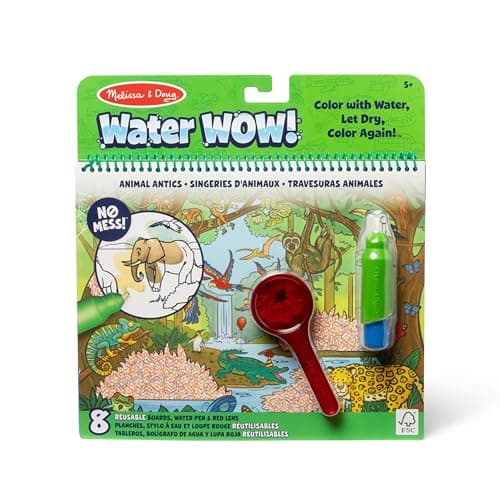
Graded 3 to 7. A water-filled pen reveals the picture and the page fades as it dries, so the same pad works again tomorrow — and it requires no table, no supervision and nothing that can stain a school uniform. In the first term the use for this is not learning: it is the waiting room, the car, the twenty minutes at a grandparent's house. Flat, light, lives in a bag. A child who can already write finds it babyish, so this is the bottom of the age range rather than the top.
Age grade:
3–7
Batteries:
manufacturer does not publish a battery requirement
Noise:
Silent
Mess:
No mess
Assembly:
manufacturer does not publish an assembly time
Price:
$9.77 as of October 5, 2026
Age grade, battery and assembly wording are quoted from Melissa & Doug’s own product listing, read on September 7, 2026. The manufacturer’s exact words: “AGES 3 TO 7”. Noise and mess are our reading, not a measurement — we have not played with this.
What it gets right
+Genuinely reusable — the pages reset, so one pad lasts hundreds of sessions
+The only ink is water, so it is the safest thing here to hand over in a car or a cafe
+Cheap enough to keep one in a bag permanently
What it doesn’t
−Pages are pre-printed, so this is coloring-in rather than drawing
−The pen leaks in a bag if it is not emptied, which nobody ever does
How loud
Nothing.
How much mess
The 'paint' is water. Nothing stains, nothing spills except water, and the pen refills from a tap.
Skip this if…
…the child is at the top of the published range. A seven-year-old has usually seen through the reveal trick in one sitting.
Graded 3 to 12 and explicitly screen-free: the child puts a physical card in and a story plays, with no feed, no autoplay and no account. The reason it belongs on a starting-school list is that the first term is genuinely exhausting, and the hour after pickup is the hour a five-year-old has no capacity left for anything. This is the one thing here they can operate entirely alone. The honest cost is the card library rather than the player — a Yoto with no cards is a nice-looking speaker.
Age grade:
3–12
Batteries:
manufacturer does not publish a battery requirement
Noise:
Loud
Mess:
Contained
Assembly:
manufacturer does not publish an assembly time
Price:
$79.99 as of October 5, 2026
Age grade, battery and assembly wording are quoted from YOTO’s own product listing, read on September 7, 2026. The manufacturer’s exact words: “Ages 3-12”. Noise and mess are our reading, not a measurement — we have not played with this.
What it gets right
+Screen-free by design, with a physical card for each story — no feed, no autoplay, no algorithm
+Published 3 to 12 range and it genuinely spans it, because the content changes rather than the device
+Rechargeable and portable, so it works in a car and at a grandparent's house
What it doesn’t
−Cards are proprietary and the library adds up fast — the player is the cheap part
−The volume limit is a setting, not a hardware limit, and children find settings
How loud
It is a speaker, so it is exactly as loud as the child sets it. There is a volume limit, and headphone output, which together are why it is here rather than on the loud-toys list.
How much mess
The player is one object. The cards are the small pieces, and they need a box.
Skip this if…
…nobody will buy cards. The player alone is a nice-looking speaker with very little on it, and the ongoing card cost is the real price of ownership.
Every toy site tells you they tested forty toys with a focus group of real children. We have not played with any of these, and we say so. Here is what we do instead: we read the manufacturer’s own listing and print its published age grade word for word, we record the battery requirement and the assembly note where the maker publishes one and say plainly when it does not, we pull the price live from Amazon so it is never a number we remembered, and we name one thing on every list we would not buy.
The noise and mess ratings are our judgment from what the listing describes — not measurements. Almost no toy manufacturer publishes a decibel figure, which is itself worth knowing. The full method is published, including what disqualifies a toy.
Questions
Questions people actually ask
What is the best gift for a child starting kindergarten?+
A scissor skills pad with the child-safe scissors included. Cutting is the first fine-motor task school asks for and the one most new starters cannot do, because scissors are the tool parents sensibly keep out of reach at home.
Should I buy educational toys for starting school?+
Not as a filter. The first term asks for scissors, turn-taking, letter recognition and sitting still — physical and social skills. Flashcards address none of them. A self-correcting puzzle and a pair of safety scissors address two.
What do you buy a 5-year-old that is not a toy?+
A screen-free audio player is the one we would buy, because the hour after school pickup is the hour a new starter has nothing left and it is the only object on this list they can operate alone. More options on gifts that are not toys.
Is a board game a good starting-school gift?+
A cooperative one, yes — players race the game rather than each other, which teaches taking a turn without producing the sulk a competitive game produces at five. Move to competitive games about two months in. Board games by age has the ladder.
What about a gift for a child starting pre-K at four?+
The same list minus the board game, which is graded 5+. The scissor pad is graded 4 to 6 and the alphabet puzzle 4+, so both still fit. We do not recommend below a maker’s published grade.
We do not run a playroom test lab and we do not pretend to. Age grades, battery requirements and assembly notes are quoted from each manufacturer’s own product listing, read on September 7, 2026; prices come live from Amazon’s API and are stamped with the date they were checked. Where a maker publishes nothing, the page says “manufacturer does not publish this” rather than guessing. Read the full method.