Guides · Guides
How many toys does a child actually need
Fewer than almost every household has, and the reason is not moral — it is that children play with each toy longer when there are fewer of them in front of them.
We earn a commission if you buy through our links. It does not change the price you pay and it does not decide our picks — our method is published in full, including the part where we say we have not played with these toys. How this works.
The finding
Research on toy quantity has pointed consistently in one direction: when fewer toys are available, young children play with each one for longer and in more varied ways. The mechanism is not complicated. Faced with a great deal of choice, children sample; faced with a little, they settle. Sampling is shallower than settling, and the depth is where the value is.
The American Academy of Pediatrics makes a compatible point in its clinical report on toy selection: the developmental value of play comes from depth of engagement and the interaction around it, not from the number of objects present. A cardboard box with an adult in the room outperforms an expensive toy played with alone.
A workable number, by age
There is no correct figure, and anyone offering one precisely is guessing. What follows is a working starting point for what is visible and available at any given time — not what the household owns.
- Under 1: five or six things. At this age the highest-value “toy” is a person talking to the child.
- 1–3: eight to twelve visible, heavily weighted toward open-ended things — blocks, a stacking set, a push-along, one or two books out.
- 3–6: twelve to twenty visible, including one construction system, one art option, one pretend-play set and one physical thing.
- 6+: the number matters less, because interests have narrowed and children self-select. Depth in two or three areas beats breadth across ten.
You do not have to get rid of anything
This is the part that makes the whole argument practical. The alternative to owning fewer toys is not decluttering — it is rotation. Box two-thirds, keep a third out, swap every few weeks. The boxed toys reappear as effectively new, nothing is wasted, and the visible collection stays small enough to be used properly.
Rotation also solves the birthday problem: a pile arrives, most of it goes straight into the rotation boxes, and it re-emerges across the following year. See toy rotation for how to run it without it becoming a second job.
What to keep out permanently
A small number of things earn a permanent place because they are used constantly and because rotating them is disruptive rather than refreshing:
- The main construction system — bricks, tiles or blocks.
- Art materials, in a container the child can open alone.
- Books, always and all of them.
- Whatever the current obsession is, however inconvenient.
The honest disclosure
This site earns commission when readers buy toys through its links, and this page argues that most households already have too many. Both of those things are true simultaneously, and we would rather publish the page than have a reader discover the tension on their own. The useful version of the argument is not “buy nothing” — it is buy one good thing rather than five. For the households where the answer really is nothing further in the toy box, gifts that are not toys is the other half of that argument.
The toys
The toys this guide is about
Every one of these carries its manufacturer’s published age grade and a live Amazon price, read October 23, 2026. Full rankings live in the roundups linked above.
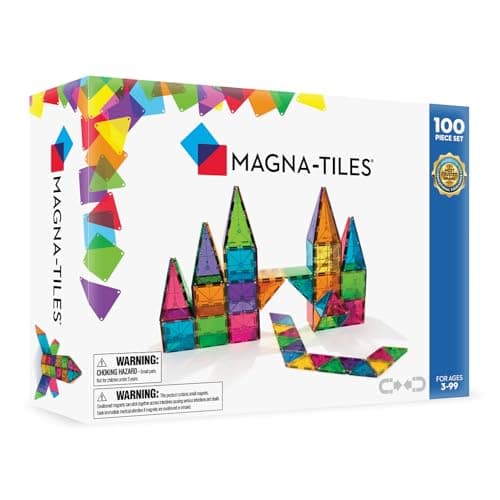
The one that earns a permanent spot
Magna-Tiles Classic 100-Piece Set
Age grade 3+
Open-ended, five-year age range, and it absorbs future purchases instead of competing with them.
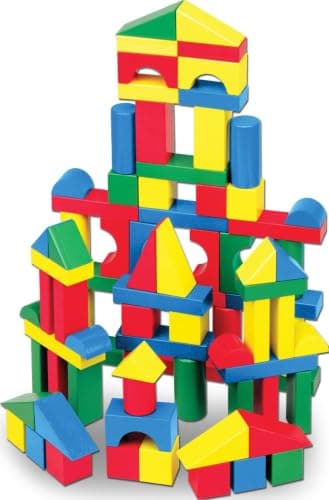
The set worth keeping out
Melissa & Doug Wooden Building Blocks, 100 Pieces
Age grade 2+
Nothing to break, decades of use, and a genuinely different activity at two and at six.
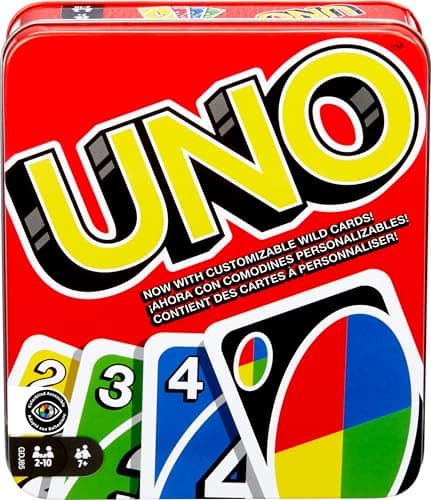
The whole toy, in a pocket
UNO Card Game
Age grade 7+
If the argument is fewer things, this is what a very good cheap thing looks like.
#ad · As an Amazon Associate we earn from qualifying purchases. How this works.
Questions
Questions people actually ask
How many toys should a child have?
Do fewer toys really improve play?
What should I do with the toys we already have?
Which toys should always be available?
Is it bad to buy toys at all?
Keep reading
Related
Receipts
Sources
- American Academy of Pediatrics — “Selecting Appropriate Toys for Young Children in the Digital Era” (clinical report)
- US Consumer Product Safety Commission — Toy Safety business guidance
We do not run a playroom test lab and we do not pretend to. Age grades, battery requirements and assembly notes are quoted from each manufacturer’s own product listing, read on September 7, 2026; prices come live from Amazon’s API and are stamped with the date they were checked. Where a maker publishes nothing, the page says “manufacturer does not publish this” rather than guessing. Read the full method.