Guides · Guides
What actually gets played with
Five properties predict whether a toy is still being used in six months, and price is not one of them. This is the closest thing to a general theory of toy buying that we are willing to commit to.
We earn a commission if you buy through our links. It does not change the price you pay and it does not decide our picks — our method is published in full, including the part where we say we have not played with these toys. How this works.
The five, in order
- The child sets the outcome. Open-endedness beats everything else combined. A toy that can be finished will be; a toy with no finish line is limited only by interest. See what open-ended means.
- It is available. Not owned — available. A toy in a cupboard, in pieces across three rooms, or requiring an adult to set it up is functionally not there. This is why storage predicts use so strongly.
- It connects to something else. Toys that combine with what the household already has get reinforced by every subsequent purchase. Standalone toys compete with everything instead.
- The difficulty is right, and moves. Too easy is boring, too hard is abandoned. Toys that are used differently at different ages, or that carry graded challenges, stay in the right band for years.
- Someone else is involved. Toys that produce interaction — games, walkie-talkies, anything played with a sibling or an adult — get pulled out far more often than solitary ones, which matches what the AAP emphasizes about play value.
What turns out not to matter
- Price. Several of the most-used toys we recommend cost under twenty dollars, and some of the most expensive things in the category are done in a month.
- Material. The wood-versus-plastic argument is mostly aesthetic. See wood against plastic.
- Educational claims. There is no relationship between the word on the box and the hours the toy gets used, and frequently an inverse one.
- Novelty. Actively negative. A toy that is interesting because it is new has spent its appeal within a fortnight.
- How well it demonstrates in a shop. Closed toys demonstrate brilliantly, because a demonstration is exactly what they are.
The one-question version
If you want a single test to run in a shop or on a listing: what does the child do on the tenth time? If the answer is “the same thing as the first time”, the toy is closed and its life is short. If the answer is “something different”, it is open, and it will still be there next year.
The household factors nobody counts
Two things outside the toy itself have an outsized effect. The first is how many toys are visible: with fewer out, each one gets used more. The second is whether an adult ever plays with it — a toy that has been played with jointly once gets picked up alone far more often afterwards. Neither costs anything, and both do more than upgrading a purchase would.
That second factor is the reason a board game outperforms its price so consistently: an adult is structurally required, so the joint-play condition is met every single time it comes out. Board games for kids, by age sorts the ones that work by what the child has to be able to do, and the four-year-old answer is not the one most lists give.
Why this page is on a site that sells toys
Because the conclusion is buy less and choose better, and that is a more useful thing to publish than another list. The commercial version of the same advice is on what is actually worth the money, which reaches the same place from the price side.
The toys
The toys this guide is about
Every one of these carries its manufacturer’s published age grade and a live Amazon price, read October 23, 2026. Full rankings live in the roundups linked above.
Scores on all five
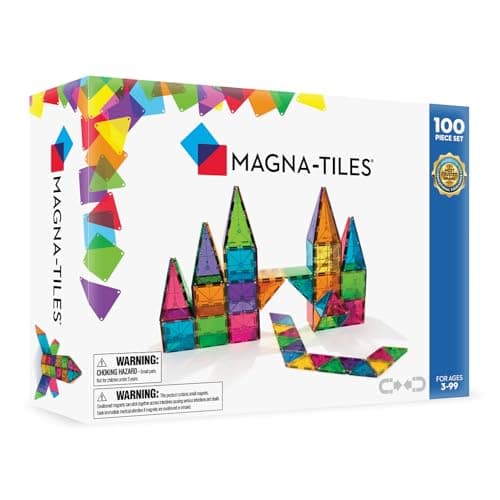
Magna-Tiles Classic 100-Piece Set
Age grade 3+
Open-ended, always available, connects to every expansion, used differently each year, and children build together.
Scores on the fifth
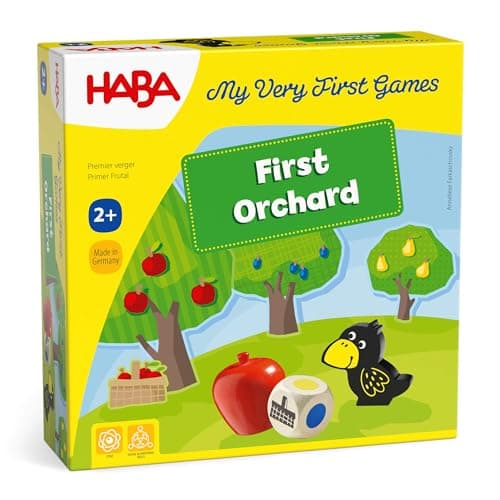
HABA My Very First Games — First Orchard
Age grade 2–4
Cooperative, so an adult is genuinely in the game — the factor most people leave out of the calculation.
Scores on the first
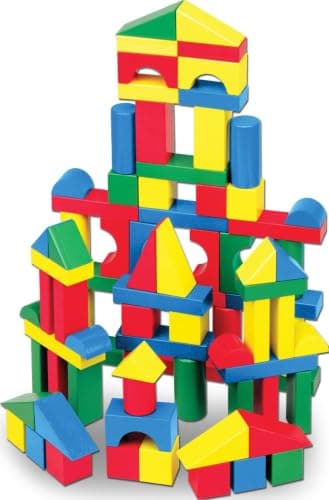
Melissa & Doug Wooden Building Blocks, 100 Pieces
Age grade 2+
No correct arrangement means no finish line, which is the property that outweighs the rest.
#ad · As an Amazon Associate we earn from qualifying purchases. How this works.
Questions
Questions people actually ask
What makes a child play with a toy for a long time?
Do expensive toys get played with more?
Why do children abandon new toys so quickly?
Does playing with your child really make a difference?
What is the single best test for a toy?
Keep reading
Related
Receipts
Sources
- American Academy of Pediatrics — “Selecting Appropriate Toys for Young Children in the Digital Era” (clinical report)
- US Consumer Product Safety Commission — Toy Safety business guidance
We do not run a playroom test lab and we do not pretend to. Age grades, battery requirements and assembly notes are quoted from each manufacturer’s own product listing, read on September 7, 2026; prices come live from Amazon’s API and are stamped with the date they were checked. Where a maker publishes nothing, the page says “manufacturer does not publish this” rather than guessing. Read the full method.