What changes at eighteen months
Four things, and all four change what is worth buying. They walk — properly, with their hands free, which means they can carry a toy from one room to another and will. They can aim: a hammer, a shape, a cup into another cup. They understand that objects go inside other objects on purpose, which turns nesting and posting from accidents into games. And they have opinions, loudly, about which toy they want.
What has not changed is the small-parts line. The federal rule behind the "not for children under 3" warning applies to an 18-month-old exactly as it applies to a one-year-old, and that is the single biggest reason a generic "best toddler toys" list is not usable at this age — a lot of what is on those lists is graded 3+ by the people who make it. Every pick on this page is graded 18 months or below by its own manufacturer, and the build fails if one is not.
How we chose, in order
1. The published grade has to cover eighteen months
Non-negotiable and automated. A pick whose maker grades it above eighteen months cannot appear on this page, which is why there are no magnetic tiles, no Play-Doh, no kinetic sand and no craft kits here — all of them are graded two or three and up, and all of them are genuinely excellent eight months from now.
2. It has to need the skills they just got, not the ones they had
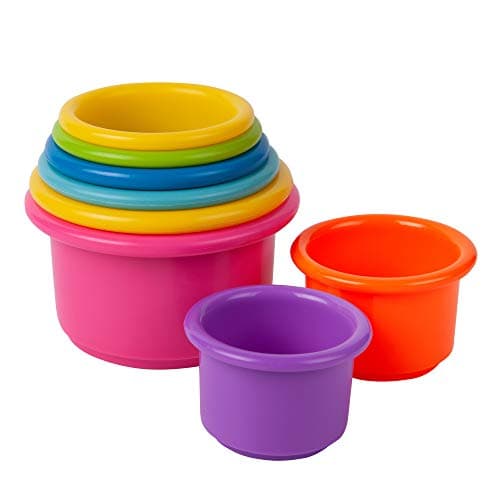
The test we applied to every candidate: does this toy do something different at eighteen months than it did at twelve? Stacking cups pass — the child moves from knocking the tower down to building it. A rattle fails. That one question is what separates this page from the one-year-old page, which shares some of the same products for completely different reasons.
3. It has to survive being thrown
Eighteen months is peak throwing. We weighted wood, thick plastic and fabric heavily and were skeptical of anything with a hinge, a screen or a battery door.
4. Somebody has to live with the noise
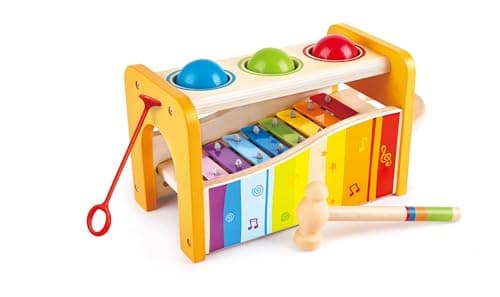
Two of the nine picks are loud — the pound-and-tap bench, which is loud because hammering is the entire toy, and the scoot-along on a hard floor. Both are flagged on the card. If the household is an apartment with neighbors below, our quiet toys that are not boring page is the better starting point.
The four toys an 18-month-old is nearly ready for
This is the useful part of an eighteen-month list, because the near-misses are what everybody buys by mistake:
- Magnetic tiles. Graded 3+ by every brand that makes them, for small-parts reasons involving magnets. The single most common premature toddler purchase on the market. They are worth the wait — our magnetic tile comparison covers the brands.
- Play-Doh and kinetic sand. Graded 2+ and 3+ respectively. Six months early and the child eats it; six months later it is one of the best things you can buy.
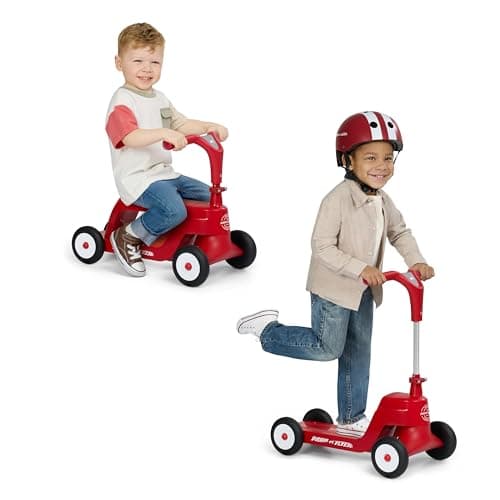
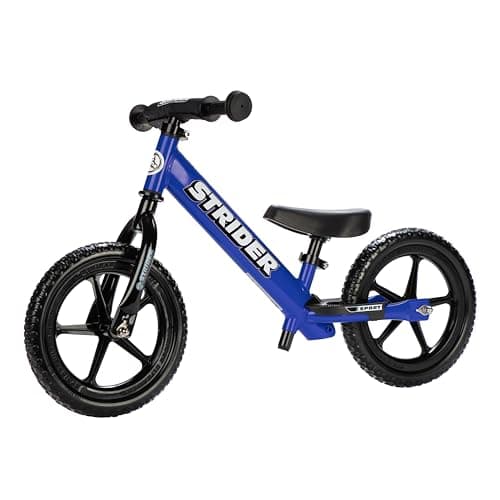
- A balance bike, for most children. Graded from twelve to eighteen months depending on model, but the real gate is inseam, not age. See balance bike vs tricycle for the measurement that decides it.
- Board games. The first genuinely workable one is graded 2 to 4 and is cooperative. At eighteen months, turn-taking is not yet a thing that exists. Our board games by age page starts where this page ends.
Batteries, at this age
Not one of the nine picks on this page requires a battery. That is partly a filter — we print the published battery count on every card and we prefer things that do not have one — and partly that an 18-month-old does not need a toy to do the work. A pound-and-tap bench does more for a toddler than a plastic console with twenty sounds, because the child supplies the energy. Our battery reality page has the running cost arithmetic if you want it.
How many of these to buy
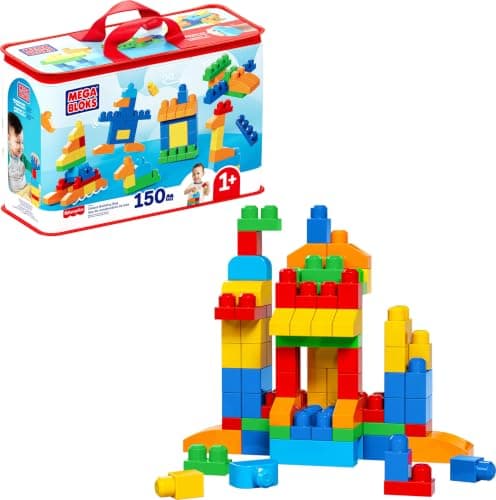
Two or three, not nine. The picks above are ranked, and a reasonable eighteen-month household has one big thing (bench, bricks or wheels), one small thing that lives in a bag, and one outdoor thing if there is any outdoors. Everything else is better bought at two, when half the toy shop becomes legal.
If you are picking a single present for an eighteen-month-old's birthday or for Christmas, the two occasion pages for this stage are birthday gifts for a 2-year-old — which covers the approach to two — and Christmas gifts for a 2-year-old. Buy slightly ahead at this age rather than slightly behind: an 18-month-old grows into a two-year-old toy in a season, and grows out of an 18-month toy in the same season.
For the stage below this one, the one-year-old page has the toys that are still being used. For the stage above, toys for a 2-year-old is where the magnetic tiles and the modeling compound finally arrive.
The one-question test for anything you are considering
Does the child do something to the toy, or does the toy do something to the child? At eighteen months the first kind gets played with for a year and the second gets played with for a fortnight. It is the same test we apply across the site, and it is laid out properly in what open-ended actually means — and run against the labels on the box in educational toys vs just-for-fun toys.
Reading the grade on a listing
Three numbers get printed on toddler listings and only one of them is the age grade: the manufacturer's grade, a "recommended" age in marketing copy, and sometimes a weight limit. Buy on the grade. Where a listing publishes two different figures we print the higher one, which is why one pick on our baby page says nine months when its own listing mentions six elsewhere.
If the child is big for their age
It changes the ride-on decision and nothing else. Inseam and confidence decide a balance bike; size has no bearing on the small-parts rule, because that rule is about what goes in a mouth, not about how tall the child is.
If you are buying for a nursery or a shared playroom
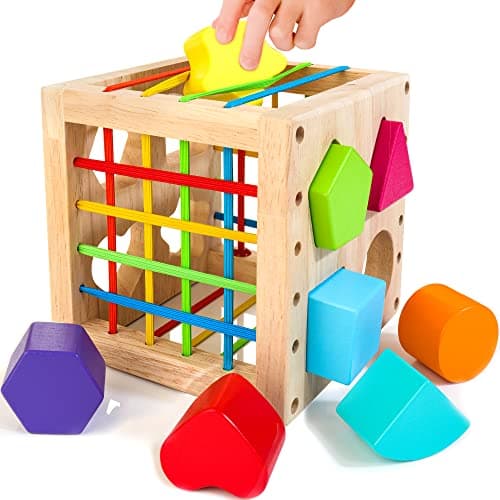
Avoid anything with a losable part count above about ten, which rules out the stacking cups as a shared toy and makes the bench and the sorter better bets. Our classroom and homeschool page covers shared-use buying in full.