The short verdict
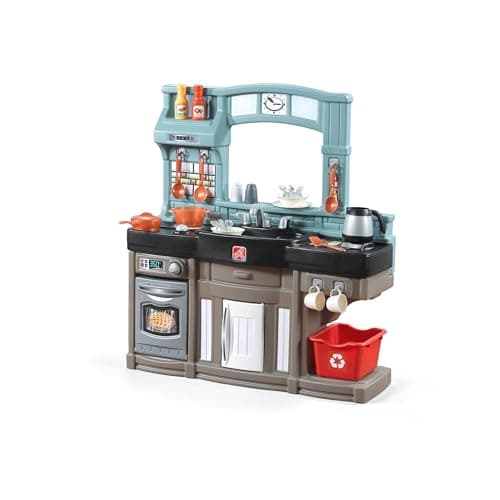
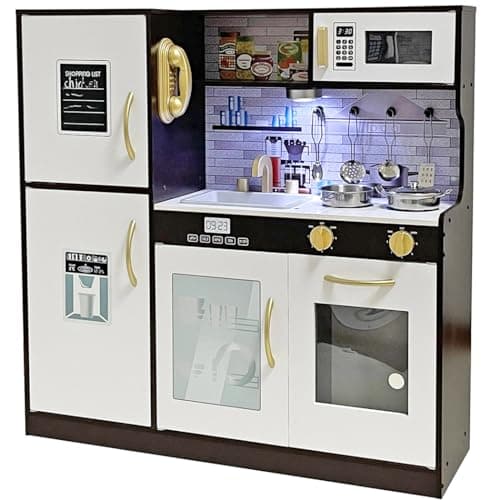
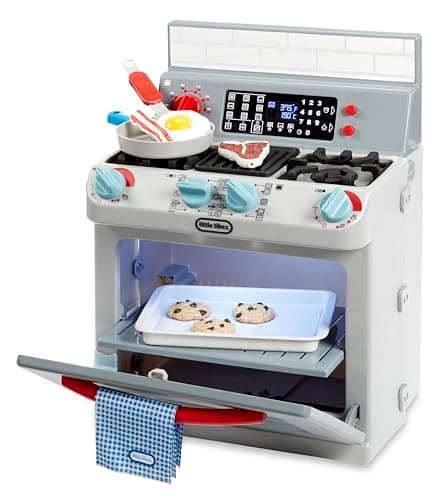
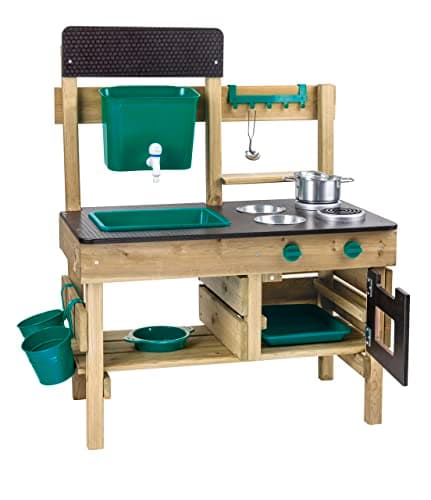
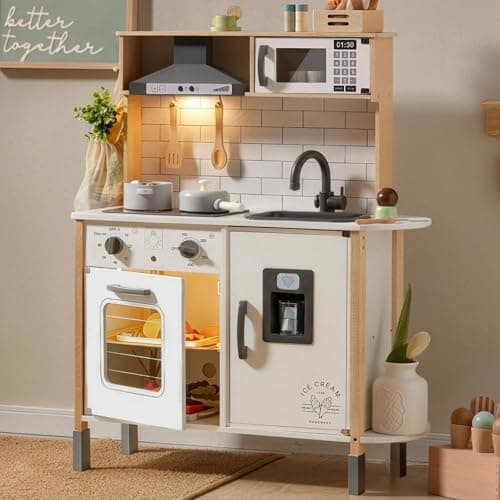
If it is going indoors and staying there, buy the Tiny Land height-adjustable wooden kitchen: three published height settings across a stated 3-to-8 range is the closest thing in this category to a one-purchase answer. If there are two or more children, or any chance of it going outside, buy the Step2 Best Chefs — double-walled molded plastic with a published three-year warranty, and graded 2+, the youngest full kitchen here. If the room genuinely has no space, stop looking at kitchens and buy the Little Tikes First Oven, which publishes a footprint of 15.5 by 11.5 by 20.5 inches. And if you have a yard and a relaxed attitude to mud, the Hape outdoor mud kitchen is the most interesting thing on this page and the only silent one.
Four things decide this, and none of them is the accessory count
Every listing in this category leads with a number of pieces. It is the least useful figure on the box, for the same reason the piece count on an art set is: accessories are cheap, interchangeable and replaceable from any other brand, and a child who runs out of play food will use real fruit. What you cannot change after the box is opened is the material, the footprint, whether the thing makes noise on its own, and the evening you spend building it.
1. Wood or molded plastic — and it is not a quality question
This is the first fork and it gets argued about on the wrong grounds. Wood is not automatically better; the two materials fail differently.
- Wood looks like furniture, which is most of why adults buy it, and it holds resale value — wooden kitchens sell second-hand years later, painted plastic ones mostly do not. It is also the one that marks. A wooden surface takes water rings, peeling paint and chipped edges, and once a panel is damaged it stays damaged.
- Molded plastic with color through the material rather than painted on cannot chip or peel its finish off, which is exactly what Step2 publishes about its double-walled construction. It can be hosed down, it survives a yard, and it is the format that reliably makes it to a third child. It is also impossible to make it look like anything other than what it is.
The honest test: if the kitchen is going in a living room you care about the look of, buy wood. If it is going in a playroom, a basement, a conservatory or a yard — or if a second child is coming — buy plastic and do not feel bad about it. The same reasoning runs through wooden against plastic blocks, where the conclusion is the same: the material is a decision about the household, not about quality.
2. The footprint, which almost nobody checks before buying
A play kitchen is furniture. It occupies the same square meter for years, and it is the single most common large gift that arrives in a house with nowhere for it to go. Published dimensions, where a maker gives them, are the most important numbers in this comparison, and the gap between the options is larger than most people expect: the Hape outdoor kitchen is published at 39 inches wide, and the Little Tikes oven at 15.5. That is not a small difference; it is the difference between rearranging a room and not.
Two practical notes. First, measure where it is going before you order, including whether a door still opens past it. Second, if you are buying this for someone else’s child, ask first. A play kitchen is a wonderful present and a space imposition at the same time, and the person who has to live with it should get a say — the same rule we apply on toys for small spaces and in grandparent-proof picks.
3. Whether it makes noise by itself
This is the quiet disaster of the category. Pretend cooking is one of the best self-directed play patterns there is — the child provides the narration, the sizzling and the timer — and most manufacturers have bolted an electronic burner onto it that provides those three things for her. Four of the five picks here advertise lights and sounds as a feature, which puts them in our loud bracket by rule, and not one publishes a volume figure or says whether the sound can be turned off. That absence is the finding, and it is the same absence we document across the whole site on noise ratings.
One of the five has nothing electronic in it at all: the Hape outdoor kitchen. If a silent play kitchen is the requirement and it has to be indoors, the honest answer is that we have not found one in a brand that also publishes an age grade — look for the words “no batteries required” on the listing, and read toys that need no batteries for why that phrase is the most reliable single filter in the entire toy aisle.
4. The assembly, which is always worse than the listing implies
Every full kitchen here is flat-pack and not one of these makers publishes an assembly time. Plan an adult evening for the wooden ones, a screwdriver, and a floor you can leave covered in panels. The plastic units generally go faster because there are fewer fasteners and no alignment to get wrong, and the Little Tikes oven is the only thing on this page the listing describes as easy to set up to its full size. If the gift is being opened on a birthday morning, build it the night before — the alternative is a two-hour build with an audience. We keep published assembly notes for every pick on the site precisely because this category hides them.
The five, on what actually differs
| Pick | Published grade | Material | Noise by itself? | Published size / warranty |
|---|
| Tiny Land, height-adjustable | 3–8 | Wood | Yes — lights and sounds, no volume published | Three height settings; no warranty published |
| Step2 Best Chefs | 2+ | Double-walled molded plastic, indoor/outdoor | Yes — burner lights and sounds, no volume published | 3-year limited warranty |
| Budget wooden kitchen with light | 3+ (listing also names 3–8) | Wood | A light rather than a sound feature | No warranty published |
| Little Tikes First Oven | 2+ | Plastic, one appliance only | Yes — four sounds plus a timer, no volume published | 15.5″ W × 11.5″ D × 20.5″ H |
| Hape outdoor mud kitchen | 3+ | Pressure-treated, anti-corrosive wood, outdoor | No — nothing electronic in the box | 39″ W × 30.3″ D |
The age grades, in plain words
Two of these are graded 2+ by their makers — the Step2 kitchen and the Little Tikes oven — and three are graded 3+. That matters more in this category than in most, because a play kitchen comes with a bag of small accessories, and play food is exactly the size and shape the federal small-parts rule exists for. Our position, which we do not bend: never buy below the manufacturer’s published grade, and if there is a child under three in the house, read the choking-hazard guide before the accessories come out of the box, regardless of what the kitchen itself is graded.
The upper end is the more interesting number. A kitchen with a published range that reaches seven or eight is a genuinely long purchase — pretend cooking is one of the few play patterns that survives starting school — which is why the height-adjustable option ranks first here even though it is not the most durable thing on the page.
What we would not buy
The kitchen bought primarily for the accessory count. “65 pieces” is forty pieces of plastic food and a colander. Accessories are the cheapest and most replaceable part of this purchase, available from any brand and interchangeable between them — a three-year-old with a wooden cutting set and a real colander is no worse off. Buy the structure, add the accessories later.
The tabletop kitchen as a space compromise. If space is the constraint, a single realistic appliance with a published footprint beats a shrunken full kitchen, because the thing that makes a play kitchen work is doors that open and a surface at the right height — and a miniature version of a whole kitchen has neither.
Anything where the age grade is not published at all. This is the reason the best-known name in the category is absent from this page. We resolved two KidKraft kitchens for this comparison and dropped both, because KidKraft publishes no age grade anywhere in the listing we can read, and we do not type age grades for toys. It is an awkward omission and it is the correct one; how we pick explains why that rule has no exceptions.
Where to go next
A kitchen is almost always bought for a child between two and five, so the best toys for a 3-year-old and for a 4-year-old are the pages that put it in context against everything else at that age. If the real brief is a big outdoor purchase, water tables compared is the same decision in a different category and shares the mud problem. And if noise is the thing you are trying to avoid, quiet toys that are not boring is the filtered list.