Guides · Guides
How much to spend on a child’s gift
The number is set by your relationship to the family, not by the child and not by the toy. Once that is clear the question gets much easier — and the second half of the answer is that in this category, price and how long a toy gets played with are barely related.
We earn a commission if you buy through our links. It does not change the price you pay and it does not decide our picks — our method is published in full, including the part where we say we have not played with these toys. How this works.
The number is about the relationship
The most common version of this question is a class birthday party: your child has been invited, you have never met the family, and you want to get it right. The honest answer is that the amount is a social convention rather than a judgment about the child, and in the US the usual range for a school-friend party gift is roughly $15 to $25. Spending more is not generous in any way the child registers — at a party with eighteen presents, the expensive one is not noticed — and it quietly raises the bar for every other parent in the class.
The tiers that follow are conventions, not rules, and they are the ones our own gift guides are built around:
- Class party, a child you do not know: $15 to $25. Gifts under $25 is that tier, and it is a genuinely good tier.
- A close friend, a godchild, a niece or nephew: $25 to $50. Gifts under $50 covers it.
- A main present from a parent, or a group gift from several relatives: $50 to $150 — gifts under $150.
- A grandparent’s present: whatever they like, but the constraint worth respecting is the parents’ living room rather than the budget. Grandparent-proof gifts exists for exactly that.
- A first birthday: lower than people expect, because a one-year-old has no idea what anything cost. First birthday gifts is written for that.
Price and play life are barely related
This is the part worth internalizing, and it is uncomfortable for a site funded by product links to say plainly. Several of the longest-lasting things we cover are among the cheapest: a deck of cards, a tin of matching cards, a hundred wooden blocks, a set of stacking cups. A number of the most expensive are the ones most likely to be ignored by February. The correlation between what a toy costs and how much it is used is weak enough that using price as a proxy for quality is actively misleading.
What does predict play life, in our experience of reading a great many listings: whether the child makes the decisions, whether it works across more than one year of the published age grade, and whether it fits with what is already in the house. What actually gets played with is the longer version, and toys worth the money goes tier by tier through where a price is doing something.
Where extra money does buy something
- A higher published limit. A rider weight limit or an upper age bound is a manufacturer stating how long their product works. That is the clearest thing money buys.
- Material. Hardwood, steel and urethane last; thin ABS does not. See toys that survive.
- A warranty in writing, and spare parts you can buy — the brand-premium argument on toy brands.
- A system rather than an object, where every future purchase makes the existing one better rather than competing with it.
Where it buys nothing
Size. A larger box is the most reliable way to feel like you spent enough and one of the least reliable ways to actually have. The licensed playset priced just under the round number is the classic example: it looks like the most present for the money and it is usually the least-played-with thing in the pile, because the characters arrive with the story already decided. The skip list names the pattern.
Three parties in one month
The practical problem is rarely one gift; it is four in six weeks. Two things make it manageable. Buy the same reliable thing repeatedly — a good card game or a craft consumable at the $10 to $15 mark is never wrong and never duplicated in a way that matters. And buy it in advance, in a small pile, rather than at 8pm the night before, which is the single most expensive hour in the toy-buying calendar.
When you cannot ask the parents
Then spend at the bottom of your range and buy for the household rather than the child: quiet rather than loud, contained rather than messy, small rather than bulky, and no assembly. Our cards print a noise rating, a mess rating and the maker’s published age grade for exactly this situation, because those three facts are what decide whether a gift is a pleasure or a problem in somebody else’s house. If you know nothing except the occasion, the birthday guides by age are the safest starting point, and gifts for a friend’s kid is written from precisely that position.
The honest summary
Set the number by the relationship, then spend it on one thing rather than three. A single well-chosen item at $25 beats three at $8 nearly every time, and the argument for that is on one good toy instead of five. If you are buying at Christmas rather than for a birthday, the Christmas guides apply the same tiers to a pile of presents rather than one.
The toys
The toys this guide is about
Every one of these carries its manufacturer’s published age grade and a live Amazon price. Full rankings live in the roundups linked above.
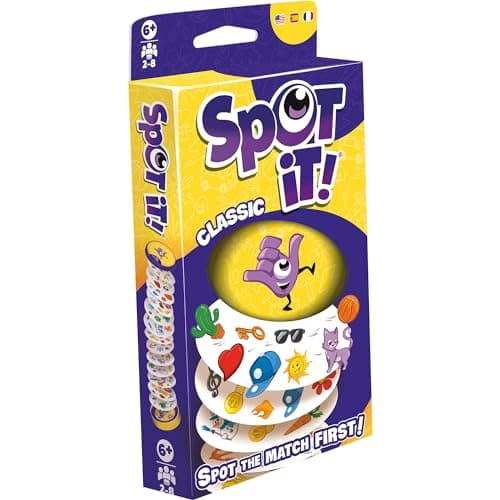
The bottom tier, and genuinely good
Spot It! Classic Card Game
Age grade 6+
Graded 6+, two to eight players, in a tin that fits a coat pocket. It is the class-party answer: cheap, never duplicated in a way anybody minds, and played for years. Fast visual scanning favors some children heavily, so one child may win most rounds.
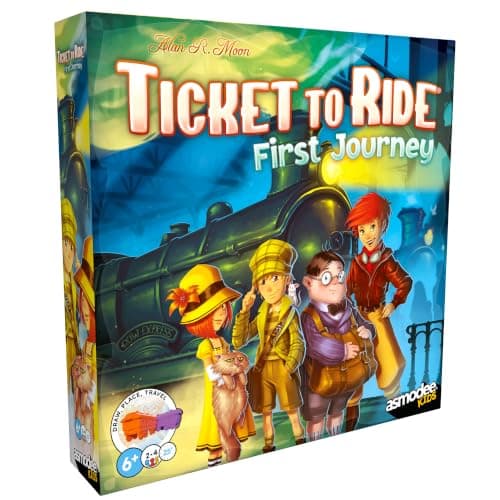
The middle tier, spent well
Ticket to Ride: First Journey
Age grade 6+
Graded 6+. A real board game with simplified rules that adults do not have to endure, which is what makes it get played rather than shelved. The small plastic trains are the pieces that vanish, and a full set is needed to play.
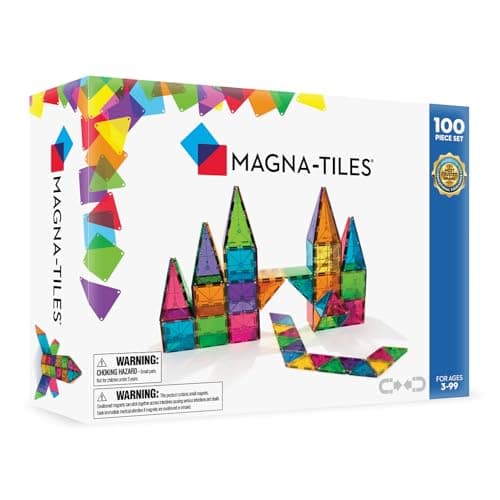
The main-present tier, and why it costs that
Magna-Tiles Classic 100-Piece Set
Age grade 3+
Graded 3+, with a published lifetime warranty against manufacturing defects — which is most of what the price is. A hundred flat pieces, a two-minute tidy-up, and a toy still being built with two Christmases later. Never for an under-three.
#ad · As an Amazon Associate we earn from qualifying purchases. How this works.
Questions
Questions people actually ask
How much should I spend on a child's birthday gift?
Is $20 enough for a kid's birthday present?
Does a more expensive toy last longer?
How much do grandparents usually spend?
What should I buy when I cannot ask the parents?
Keep reading
Related
Receipts
Sources
- American Academy of Pediatrics — “Selecting Appropriate Toys for Young Children in the Digital Era” (clinical report)
- US Consumer Product Safety Commission — Toy Safety business guidance
- 16 CFR Part 1501 — the federal small-parts regulation behind the “not for children under 3” warning (eCFR)
We do not run a playroom test lab and we do not pretend to. Age grades, battery requirements and assembly notes are quoted from each manufacturer’s own product listing, read on September 7, 2026; prices come live from Amazon’s API and are stamped with the date they were checked. Where a maker publishes nothing, the page says “manufacturer does not publish this” rather than guessing. Read the full method.