The short answer
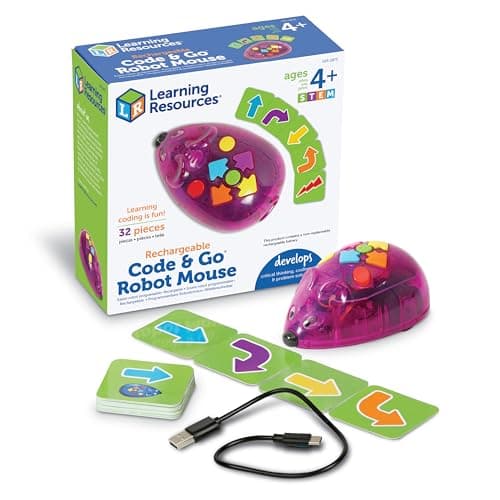
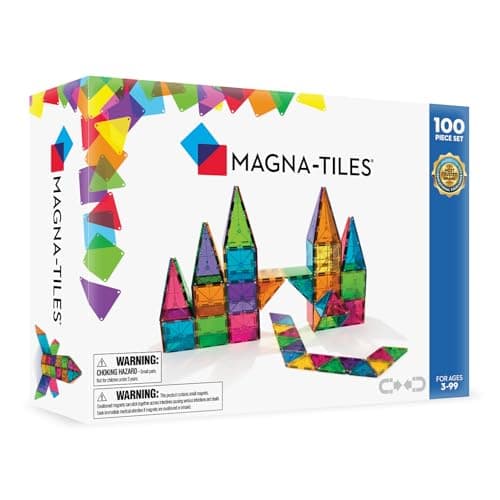
Buy the microscope if you want the thing that six specifically unlocks — graded 5 to 12, and the first STEM toy on this list a child can run start to finish without an adult. Buy the Code & Go Robot Mouse if you want coding and you do not want a tablet, because it is the one in this aisle whose maker prints “no screens required” on the box. Buy Magna-Tiles if you want one purchase that is still in daily use at ten, and accept the price per piece.
Every pick here is graded by its manufacturer at six years or younger. That is not a style choice — it is the one rule this site does not bend, and the build fails if a page written for a given age ranks a toy its maker graded above it. We have not played with these toys; our method is published in full.
What actually changes at six
The STEM aisle is organized around a capability the boxes never name: can the child follow a sequence of steps without an adult reading them out. Below that line, every kit is a tray of parts and a disappointed afternoon. Above it, the same kit is the best toy in the house. Six is where most children cross it, and that single change makes three categories eligible that were pointless a year earlier.
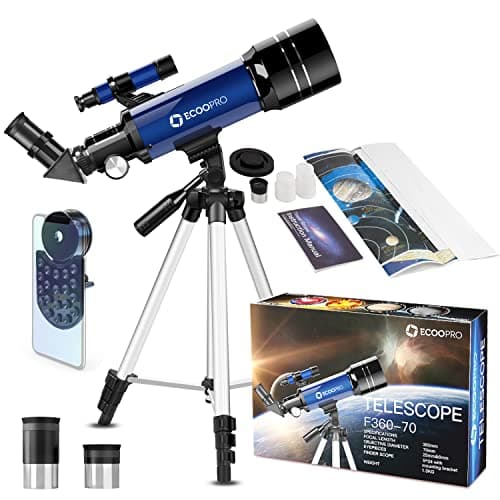
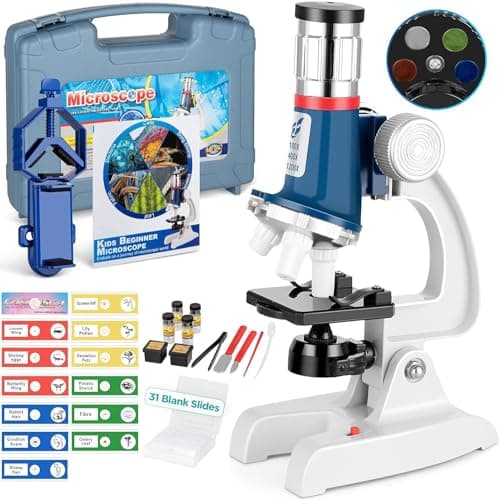
Optics become worth buying. A microscope and a telescope both demand the same two things — position something carefully, then look at it patiently — and both of those are new at six. The same purchase at four is an adult operating equipment while a child stands next to them.
Instruction-manual builds become possible. A six-year-old can read a numbered pictorial manual, find the piece in the pile, and keep going for an hour. That is why a 6+ LEGO set is on this page and no themed set is on the four-year-old version of it.
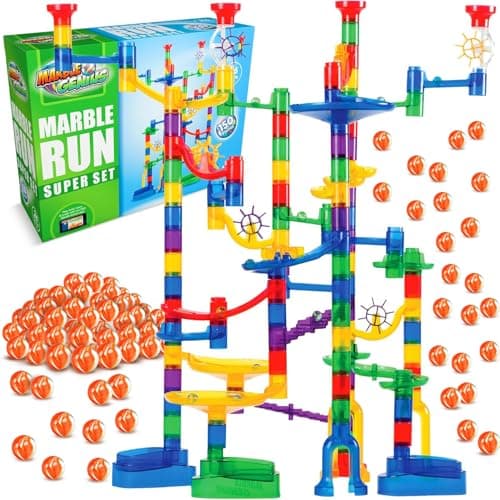
Prediction replaces trial and error. The physics toys do not change; the child does. A four-year-old adjusts a marble run until it works. A six-year-old tells you what will happen before they let go of the marble, and is annoyed when they are wrong. That is the beginning of a hypothesis, and it is worth more than anything printed on a box.
What has not changed at six is the 8+ shelf, and that is the single most common buying mistake at this age — see the skip list further down.
The four questions we used
1. Does the manufacturer grade it at six or below?
This is a gate, not a preference. Age grades on toys are set against the federal small-parts rule and the ASTM F963 toy safety standard, so they describe a hazard profile as much as a difficulty level — which is why no amount of supervision turns an 8+ kit into a 6+ kit. Everything above is graded 6+, 5 to 12, 4 to 8, 4+ or 3+, exactly as the maker publishes it.
2. Can the six-year-old start it alone?
A toy that needs an adult to begin gets used when an adult is free, which in most households is not often. Six of the seven picks here are opened and started by the child. The telescope is the exception and we have said so in its entry rather than pretending otherwise — somebody has to align it the first few nights.
3. Is there a result the child can see and change?
This is what separates a science toy from a science-themed toy. The slide comes into focus, the marble clears the gap or does not, the mouse turns left because the card said left, the tower holds. Anything whose outcome is hidden, delayed by a week, or decided by a battery is doing the thinking for the child.
4. Does it survive the child getting better at it?
Six is young enough that a two-year toy is a bad buy. Magnetic tiles, the wooden marble run, the microscope and the telescope all get more interesting as the child gets more capable. The plastic marble run is honest about its 4-to-8 window, and the LEGO City set is a one-time build that becomes a play set afterward.
What each one actually teaches
| Pick | Published grade | What a six-year-old gets from it | Noise |
|---|
| 58-piece kids’ microscope kit | 5 to 12 | Observation and focus; the idea that detail exists below the eye | Quiet |
| Code & Go Robot Mouse | 4+ | Sequencing and debugging, with no screen | Quiet |
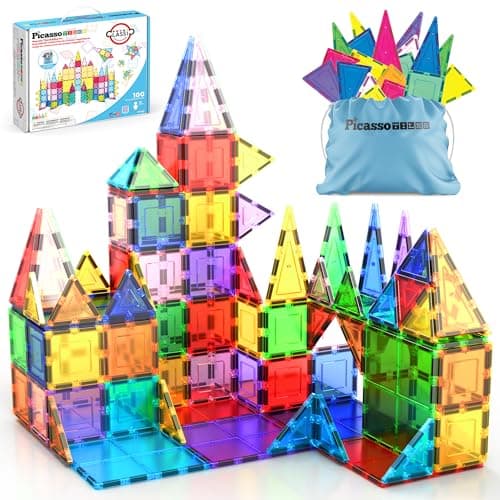
| Magna-Tiles Classic 100 | 3+ (maker says 3 to 99) | Geometry, symmetry and structure, by hand | Quiet |
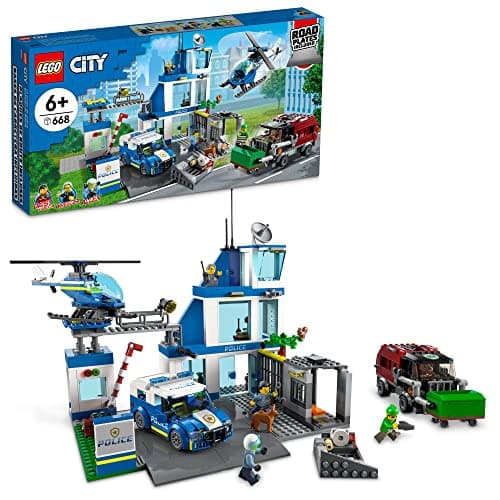
| LEGO City 60316 | 6+ | Following a technical sequence to completion, alone | Quiet |
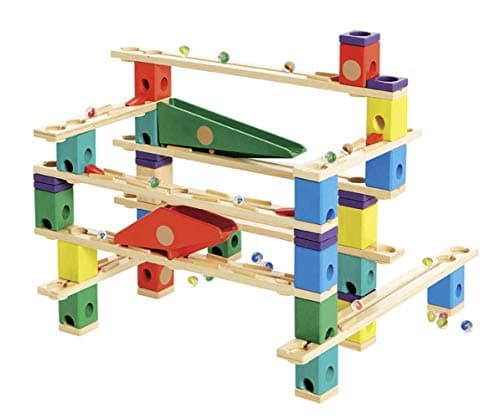
| Hape Quadrilla wooden run | 4+ | Routing: holding a hidden path in your head | Some noise |
| 70mm refractor telescope | 5 to 12 | Patience, and the moon as an object rather than a picture | Silent |
| 150-piece plastic marble run | 4 to 8 | Prediction: height becomes speed, a gap becomes a failure | Some noise |
The grades in that table are the manufacturers’ own published wording. The noise column is our reading of what each listing describes, not a measurement — almost nobody in this category publishes a decibel figure, which is itself the finding on how loud is that toy, actually.
What is still two years early at six
Skip the circuit kits. Both Snap Circuits sets in our registry are graded 8+ by their maker, and the grade is not caution — the parts are small and the project book assumes fluent reading. They are excellent purchases in two years, and the difference between the two versions is on Snap Circuits Jr. versus Classic.
Skip the chemistry sets and crystal-growing kits. Graded 10+ by their makers, for the reading plus the chemicals. There is no junior edition of a six-year-old working through an 80-page manual.
Skip the logic-puzzle games for now. The marble logic game we rank is graded 8 to 12 and the published challenge cards start where a six-year-old stops. A child who loves the marble run will love it in two years.
Skip the rock tumbler and the solar robot kit. 8+ and 8 to 13 respectively. The tumbler also runs for days at a time and is loud enough that people keep it in a garage, which is its own argument at this age.
Skip anything whose STEM content is a screen. A tablet app with a plastic accessory is an app. The sorted version of that argument, including the few tech toys that genuinely work without a screen, is on tech toys without screens.
Batteries, noise and the small-parts question
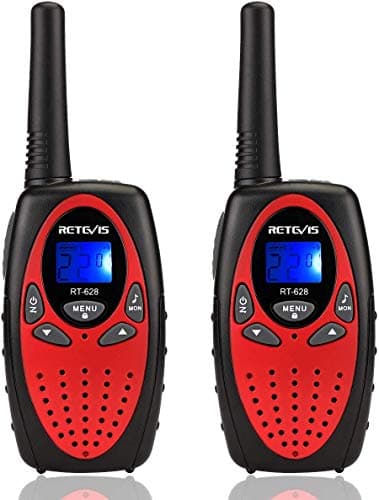
Four of the seven need no power at all: the magnetic tiles, both marble runs and the telescope. The robot mouse recharges over USB, so it is a powered toy with no battery bill. The microscope takes 2 AA batteries for its LED that the maker does not include — and a microscope with a dead light on the morning it is opened is the single most common way this gift fails. The walkie-talkies in the also-consider list need three AAs per handset. We keep the running list on the battery reality check.
On safety, the marble runs and the LEGO City set are the three to think hardest about in a house with a younger sibling. Marbles are the textbook small part, a half-built run cannot be lifted onto a shelf, and a 600-piece model lives at floor level for days. If there is a baby crawling on the same carpet, buy the microscope or the magnetic tiles and come back to the rest. What the under-3 warning on a box actually means is on what “not for children under 3” actually means.
If you are choosing between the tiles and the bricks
The most common question we get at this age is not which STEM toy but which building system — and at six, a household often already owns one from the toddler years. If you are weighing a tub of large bricks against a set of magnetic tiles, Magna-Tiles versus DUPLO goes through the two side by side, including what happens to each one as the child turns six.
If you are buying for an occasion rather than restocking
The same picks sorted for a single present rather than a shortlist are on birthday gifts for a 6-year-old and Christmas gifts for a 6-year-old. For everything a six-year-old plays with rather than just the science end, go to the full 6-year-old age page. If the interest is lasting rather than seasonal, toys for the STEM kid is the shortlist written around the child, and STEM toys by age, 3 to 12 is the ladder this page sits on.