Guides · Guides
Toys for a classroom or a homeschool room
A classroom buyer has constraints a parent does not. Thirty children share the thing, nobody owns it, pieces vanish permanently, and there is no adult free to do the fiddly step. That changes which toys are good — and several household favourites are quietly terrible at it.
We earn a commission if you buy through our links. It does not change the price you pay and it does not decide our picks — our method is published in full, including the part where we say we have not played with these toys. How this works.
The short answer
Buy things with no batteries, no consumables and no critical piece. In practice that means open-ended materials and a small number of very robust games. Magnetic tiles (graded 3+) are the single best classroom purchase in our registry; a co-operative first game graded 2 to 4 is the best thing for a preschool room; a self-correcting letter puzzle graded 4+ is the best early-literacy buy; and a co-operative path-building game graded 5+ is the best thing for a group of five-to-seven-year-olds who are still learning to lose.
Everything below is judged against the constraints of shared use rather than against what a single child at home would enjoy most, because those two lists are genuinely different.
The four rules of a shared-use toy
1. A lost piece must not end the toy
This is the first and biggest filter. A hundred wooden blocks losing four blocks is still a hundred-block set. A twelve-shape sorter losing the trapezoid is broken for good, and a circuit kit that loses one jumper is a tray of parts. The test is simple: is the set redundant, or does every piece have exactly one job? Redundant sets belong in a classroom; single-purpose sets belong at home where one family is responsible for them.
2. No batteries
A battery toy in a group setting fails in a way that a battery toy at home does not. Thirty children use it ten times as hard, cells die mid-week, and there is no adult with a screwdriver and a spare AA at ten in the morning. A dead battery toy is also worse than no toy, because it occupies the shelf and generates a daily disappointment. None of the picks below needs a cell. Battery reality prints the count and type for every product on this site, which is the fastest way to apply this rule to anything not on this page.
3. No consumables
Anything that gets used up becomes a recurring purchase from a budget that does not have one. Fuse beads, modelling compound, paint-by-number canvases and water beads are all excellent toys and all poor classroom stock for the same reason. The exception is a craft activity that IS the lesson for a day and is budgeted as such — a deliberate choice rather than an accidental subscription.
4. No adult needed at the critical step
A kit whose final step needs an iron, a hot glue gun or an adult’s hands does not work with a group, because the adult can do it once, not twenty-five times. A good classroom toy is finishable by the child alone, which also happens to be what makes it worth having.
What a classroom needs that a home does not
Three more things, in rough order of how often they get overlooked.
It has to be interruptible. School runs on bells. A toy that takes ten minutes to set up and produces something that must be dismantled is a bad fit for a twenty-minute block. Materials win again here: a tile build can be abandoned mid-structure with no loss.
It has to work for two or six children at once. Most household toys assume one child, or one child and an adult. A co-operative game — everyone against the board — is the format that scales down to two and up to six without a rules change, and it sidesteps the thing a classroom genuinely cannot afford, which is a loser in every round.
It has to store flat and visibly. A toy that lives in an opaque tub is a toy nobody chooses. This is unglamorous and it is the real reason some excellent purchases never get used.
The age grade is still the rule
Everything here carries its maker’s published age grade, quoted verbatim in the cards below, and a classroom is the one setting where that number needs more respect rather than less: a mixed-age room means the youngest child present sets the limit, not the average. If there are two-year-olds in the room, the small-parts rule applies to everything on the shelf regardless of who it was bought for — see the choking hazard guide and how toy safety standards are set, which covers what ASTM F963 does and does not require.
One honest limit on this page: we are a toy site, not a curriculum publisher, and we have no data on learning outcomes for any of these products. Nothing below is recommended on the basis of educational research, because the manufacturers do not publish any that would support it. These are picks that survive shared use — which is the question this page is actually able to answer.
The four against the shared-use rules
| Pick | Maker’s age grade | Batteries | Does a lost piece end it? |
|---|---|---|---|
| Magna-Tiles Classic, 100 pieces | 3+ (“builders ages 3–99”) | None | No — a hundred tiles are fully redundant |
| HABA First Orchard | 2–4 | None | No — a round still plays one fruit short |
| M&D Self-Correcting Alphabet Puzzles, 52 pcs | 4+ | None | No — a missing letter is a visible gap, not a dead set |
| Race to the Treasure! | 5+ | None | Partly — the path tiles are the game, so keep the box closed |
Age grades are each maker’s published figure and the battery column is from the listing. The last column is our judgment about redundancy, which is the property that decides whether a toy survives a group. Live prices are below with the date they were read.
Four that survive a group
Each of these passes all four shared-use rules: nothing to charge, nothing to use up, no piece whose loss ends the set, and no adult required at the critical moment.
The toys
The toys this guide is about
Every one of these carries its manufacturer’s published age grade and a live Amazon price, read October 11, 2026. Full rankings live in the roundups linked above.
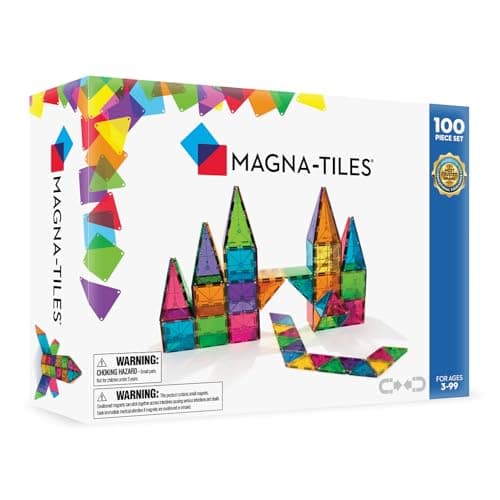
The single best classroom purchase here — ages 3+
Magna-Tiles Classic 100-Piece Set
Age grade 3+
Graded by the maker for builders 3 and up. It passes every shared-use rule at once: a hundred tiles losing six tiles is still a tile set, there is no power, nothing is consumed, and a build can be abandoned when the bell goes with nothing lost. It also works for one child or six without a rules change, which almost nothing else does. The honest note for a budget-holder: this is the most expensive thing per piece on the page, and the case for it is cost per year rather than cost per tile. Check the magnet-grade warnings and store it where under-threes cannot reach it.
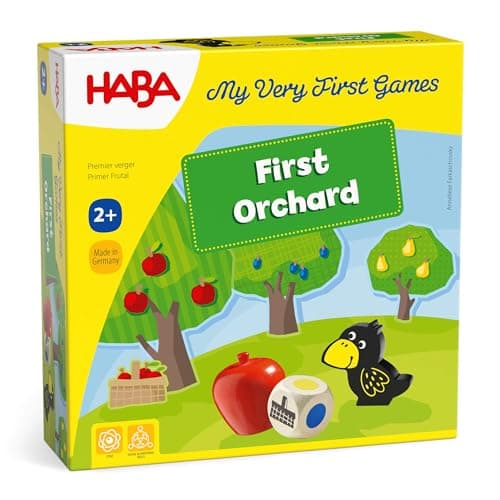
Best for a preschool room — ages 2 to 4
HABA My Very First Games — First Orchard
Age grade 2–4
HABA publishes 2 to 4, and it is co-operative: everyone plays against the raven, so no two-year-old loses and nobody cries at the end of a five-minute game. The wooden fruit is chunky, there is nothing to break, and a missing pear does not stop a round. For a room with two- and three-year-olds this is the most useful game we carry. It is also the clearest example of why the age grade needs respect in a mixed room — the pieces are large for a reason, and that reason is the youngest child present.
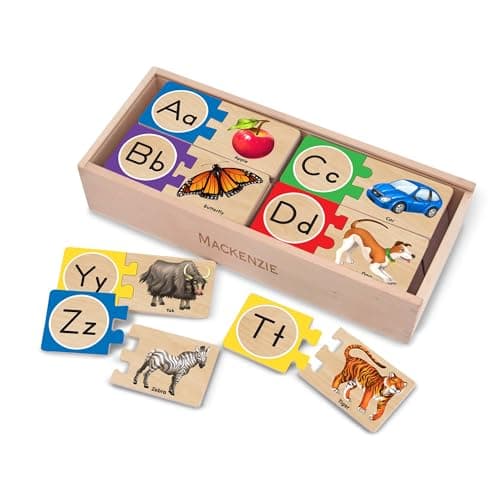
Best early-literacy buy — ages 4+
Melissa & Doug Self-Correcting Alphabet Puzzles
Age grade 4+
Graded 4+, 52 pieces, self-correcting: each letter only fits its own slot, so a child working alone gets told they are right by the puzzle instead of by a teacher who is with someone else. That property is worth more in a classroom than any feature on the box. It stores in its own box, needs no power, and a lost letter is a visible, replaceable gap rather than a dead set. Skip it for a child already reading — it is a matching toy, not a reading one, and it will be insulting rather than easy.
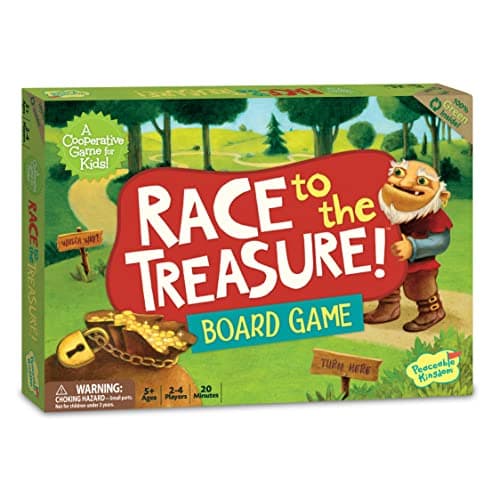
Best for five to seven in a group — ages 5+
Peaceable Kingdom Race to the Treasure!
Age grade 5+
Graded 5+ and built for 2 to 4 children co-operatively: the players build a path together and beat the ogre or lose together. In a room where several children are still learning to lose, a game with no individual loser is not a soft option, it is the difference between a game that gets played and one that ends in an argument. Cards and tiles only, no power, nothing consumed. The limit is honest: with a group that enjoys competing, a co-operative game can feel flat, and then Blokus or Connect 4 is the better shelf.
#ad · As an Amazon Associate we earn from qualifying purchases. How this works.
Questions
Questions people actually ask
What toys are best for a preschool classroom?
Why avoid battery toys in a classroom?
What board games work for homeschooling?
Do these picks have evidence of learning outcomes?
Keep reading
Related
- What open-ended actually meansThe property that makes a toy work for one child or six without a rules change.
- Toys that need no batteriesThe whole-site version of the first rule on this page.
- Board games by ageIncluding which of them are co-operative, which matters most in a group.
- Toys that surviveDurability judged across the registry — the other half of the shared-use question.
Receipts
Sources
- American Academy of Pediatrics — “Selecting Appropriate Toys for Young Children in the Digital Era” (clinical report)
- ASTM F963 — Standard Consumer Safety Specification for Toy Safety
- CPSC — Small Parts regulations for toys and children's products
- US Consumer Product Safety Commission — Toy Safety business guidance
We do not run a playroom test lab and we do not pretend to. Age grades, battery requirements and assembly notes are quoted from each manufacturer’s own product listing, read on September 7, 2026; prices come live from Amazon’s API and are stamped with the date they were checked. Where a maker publishes nothing, the page says “manufacturer does not publish this” rather than guessing. Read the full method.