
By kid
Six kinds of kid, six honest shortlists
Age tells you what a child can handle. It does not tell you what they will actually pick up. These are the six patterns most children fall into, and the toys that fit each one.
We earn a commission if you buy through our links. It does not change the price you pay and it does not decide our picks — our method is published in full, including the part where we say we have not played with these toys. How this works.
Start here
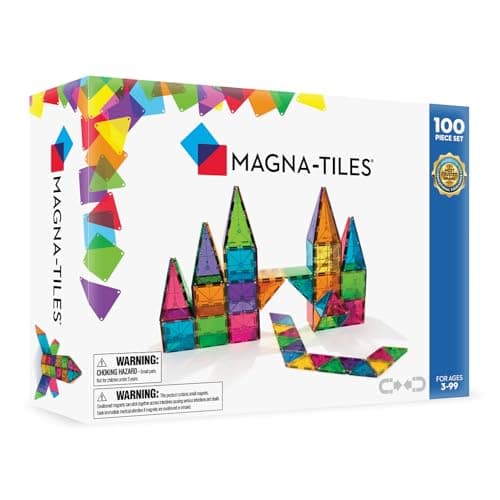
Toys for the builder
Our top pick: Magna-Tiles Classic 100-Piece Set — The expensive one, and the one that is still being built with two Christmases later. Magna-Tiles publishes a lifetime warranty against manufacturing defects, which is not a thing most toy brands are willing to put in writing.
MAGNA-TILES grades it 3+. Facts read from the manufacturer’s listing on September 7, 2026.
Age tells you what they can do. It does not tell you what they will pick up.
Two seven-year-olds in the same class will use the same afternoon completely differently. One will build something and knock it down and build it again. One will draw the same character forty times. One will not sit down at all. Buying by age gets you a toy that is safe and roughly the right difficulty; buying by temperament gets you the toy they actually reach for on a Tuesday.
Six patterns cover most children, and most children are two of them at once. That is fine — the overlap is where the good gifts are. A child who is both a builder and a collector wants a construction system with expansion sets. A child who is an artist and screen-free wants something with no batteries and a lot of paper.
The six, and what each one is really asking for
The builder wants a system, not a model. The distinction matters: a model gets built once and displayed, a system gets rebuilt every week for three years. Magnetic tiles, bricks, wooden blocks and rod-and-connector sets are all systems. A licensed set with a single intended build is a model, however good it looks in the box.
The artist wants supplies rather than kits. A kit produces one predetermined object and then it is over; supplies produce whatever the child had in mind. The exception is the kit that teaches a technique — a weaving loom, a set of watercolor pencils — because the technique outlasts the kit.
The screen-free kid is usually a household decision rather than a child’s preference, and the toys that succeed there have a physical feedback loop good enough to compete with a tablet. Sand, dough, marble runs, magnetic tiles and audio players all qualify. A quiet wooden puzzle, honestly, does not — not against a screen.
The STEM kid is the easiest category to sell to and the easiest to get wrong. The failure mode is a kit with twelve experiments, all of which are done in one Saturday, after which it is a box of empty tubes. Buy the systems — electronics sets with hundreds of projects, telescopes, microscopes — rather than the one-afternoon kits.
The outdoor kid needs equipment that matches a specific surface. A scooter with small hard wheels is useless on rough pavement; a balance bike needs somewhere flat and traffic-free; a splash pad needs an outdoor tap. More outdoor gifts fail on logistics than on the child not liking them.
The collector wants to complete something. This is the pattern behind trading cards, figure ranges, and the child who wants the specific fourteenth animal. The good news is that collectors are easy to buy for; the bad news is that a range is designed to expand and you are now in it.
How to tell which one you have
Ask what they did with the last good present. If they rebuilt it, you have a builder. If they drew it, an artist. If they took it outside, an outdoor kid. If they immediately asked what else there was in the set, a collector. If they took it apart to see how it worked, a STEM kid, and you should be pleased rather than annoyed.
If you genuinely do not know — because you are the aunt and you see them twice a year — go to the gift-giver pages, which are written for exactly that situation and lean on things that work regardless of temperament.
Everything in this section
All of toys by kid
Best for a builder
Toys for the builder
Ten construction picks from age one to ten, arranged as a progression rather than a pile — tiles, bricks, rods, marbles and gears.
Top pick: Magna-Tiles Classic 100-Piece Set · age grade 3+
$108.35See it on Amazon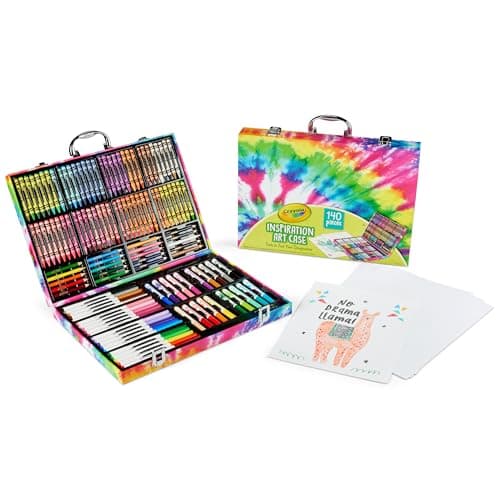
Best for an artist
Toys for the artist
Ten picks for the child who makes things, sorted by how much of it ends up on the floor — from genuinely mess-free to gloriously not.
Top pick: Crayola Inspiration Art Case, 140 Pieces · age grade 5+
$29.99See it on Amazon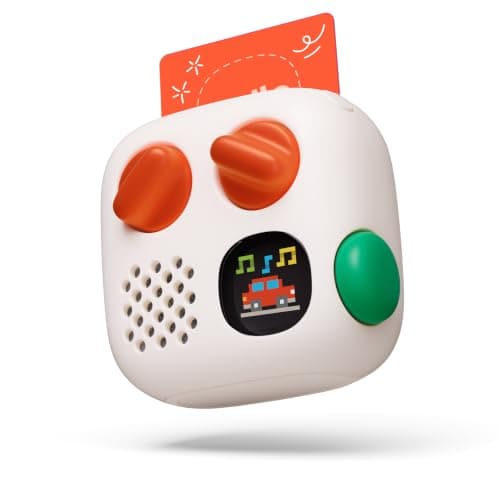
Best screen-free pick
Toys for the screen-free kid
Ten screen-free picks chosen for what actually makes a child put a tablet down: immediate feedback, other people, or a result.
Top pick: Yoto Mini Screen-Free Audio Player · age grade 3+
$109.99See it on Amazon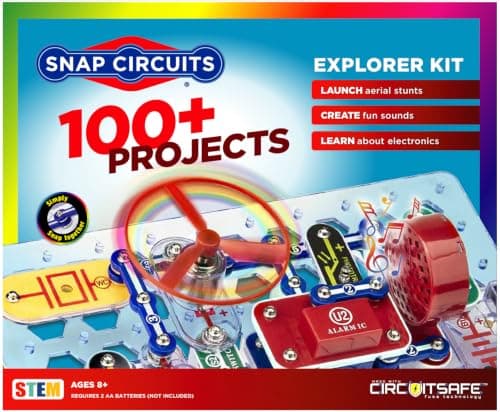
Best STEM pick
Toys for the STEM kid
Ten STEM picks divided by the only useful test: does the child build something that works, or watch something happen?
Top pick: Snap Circuits Jr. SC-100 Electronics Kit · age grade 8+
$39.99See it on Amazon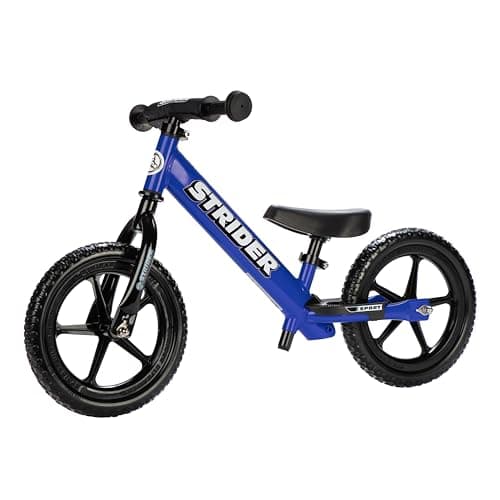
Best outdoor pick
Toys for the outdoor kid
Ten outdoor picks from a first balance bike to a scooter that lasts to secondary school, rated on what survives being left on the lawn.
Top pick: Strider 12 Sport Balance Bike · age grade 1–4
$149.99See it on Amazon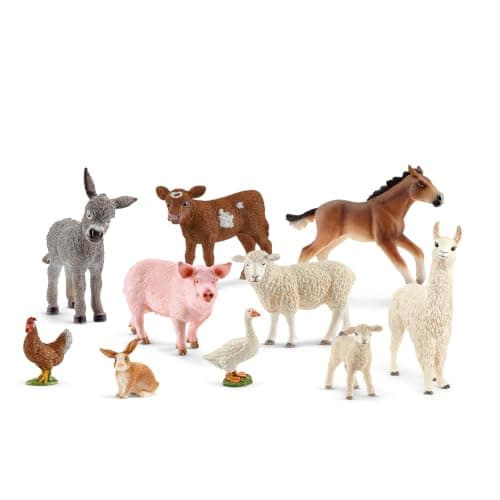
Best for a collector
Toys for the collector
Nine picks for the collecting child — open systems that grow honestly, rather than blind boxes designed to be incomplete.
Top pick: Schleich Farm World Animal Bundle, 10 Pieces · age grade 3+
$44.18See it on Amazon