The short answer
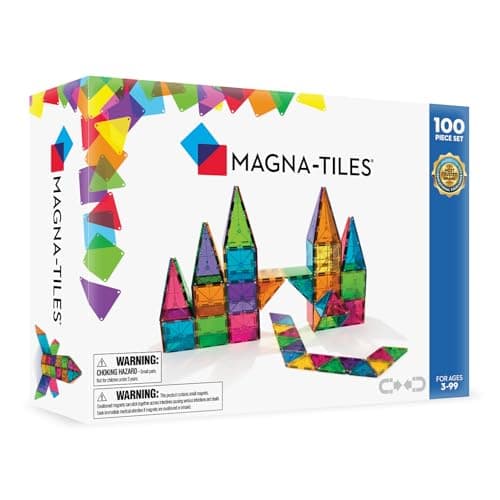
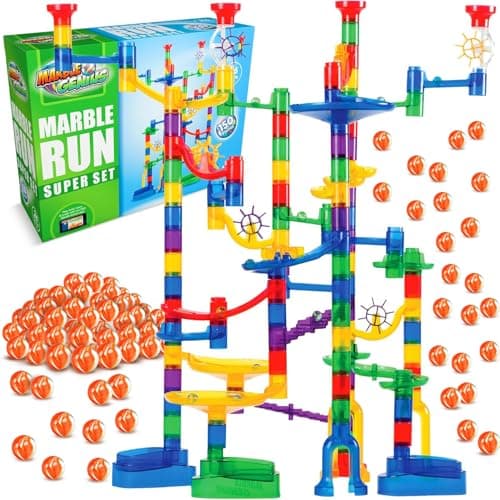
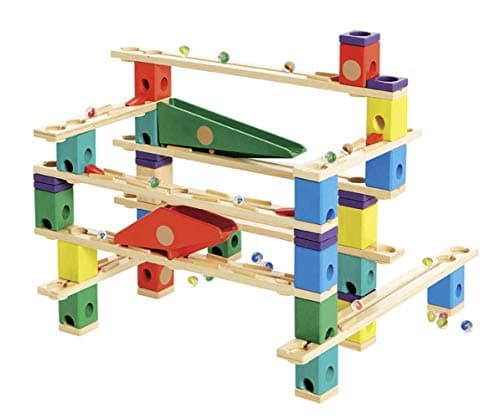
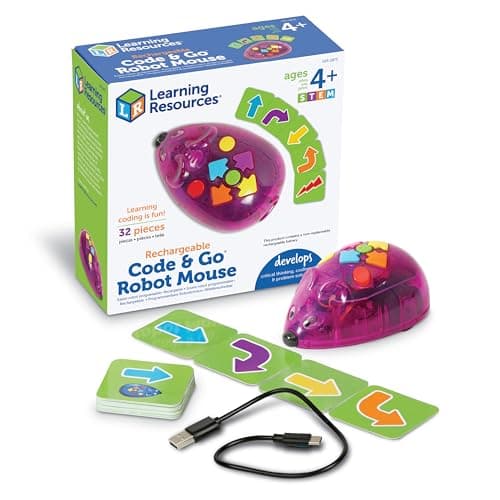
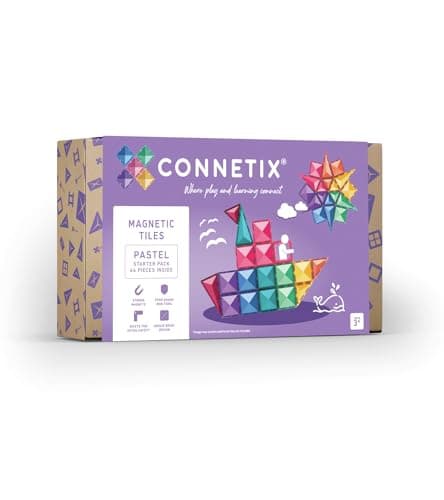
Buy the Magna-Tiles if you want one thing that is still in use at seven, and accept that you are paying four times per piece what the copies cost. Buy the Code & Go Robot Mouse if you specifically want coding, because it is the only one in this whole aisle graded 4+ whose maker prints “no screens required” on the box. Buy the 150-piece marble run if you want the most physics per dollar, and buy it only if there is no crawling baby in the house.
Every pick here is graded by its manufacturer at four years or younger. That is not a style choice — it is the one rule this site does not bend, and the build fails if a page written for a given age ranks a toy its maker graded above it. We have not played with these toys; our method is published in full.
Why four is the hardest age to buy STEM for
Walk the aisle and you will notice something: almost every box with STEM printed on it is graded 6, 8 or 10 and up. That is not marketing caution. A chemistry set, a circuit kit, a crystal-growing tray and a rock tumbler all share a requirement a four-year-old does not meet — somebody has to read a manual and follow a sequence of steps in order. Hand that box to a four-year-old and you have handed them a tray of parts and a disappointed afternoon.
So the shelf splits into two bad options and one good one. The bad options are the kit bought three years early, which sits in a cupboard, and the toddler cause-and-effect toy — the pop-up, the shape sorter, the light-up button — which a four-year-old solved last year. The good option is a material with a rule inside it: magnets that snap only one way, a marble that only runs downhill, a brick that only connects on the studs, a screw that only goes in clockwise. The rule does the teaching, the child does the experimenting, and nobody has to read anything.
That is the filter behind all seven picks above, and it is why none of them is a kit. If you want the version of this argument that runs across every age rather than just four, it is on STEM toys by age, 3 to 12.
The four questions we used
1. Does the maker grade it at four or below?
This is a gate, not a preference. Age grades on toys are set against the federal small-parts rule and the ASTM F963 toy safety standard, and they describe a hazard profile as much as a difficulty level — which is why no amount of supervision turns a 6+ set into a 4+ set. Everything on this page is graded 4+, 3+, 3 to 5, 4 to 8 or 2 to 4, exactly as the manufacturer publishes it.
2. Can the child start without reading, and without an adult running the session?
A four-year-old will play with something for forty minutes if they can start it alone. The robot mouse is the one pick here where an adult is genuinely on the floor at the start, and we have said so in its entry rather than pretending otherwise. Everything else — the tiles, the bricks, the marble runs, the rocket, the drill — a child opens and begins.
3. Is there a visible consequence?
This is what separates a science toy from a toy. The tower falls, the marble misses the gap, the rocket goes higher when the stomp is harder, the mouse turns left when the card said left. A four-year-old does not need the word hypothesis; they need a result they can see immediately and change. Anything where the outcome is hidden, delayed or decided by a battery is doing the thinking for them.
4. Will it still be interesting at six?
The expensive picks earn their price here. Magnetic tiles, real bricks and the wooden marble run all get more interesting as the child gets more capable, because none of them has a finish line. The plastic marble run is honest about its 4-to-8 window. The take-apart vehicles are graded 3 to 5 and that is roughly how long they last.
What a four-year-old actually learns from each one
| Pick | Published grade | What the rule in it teaches | Noise |
|---|
| Code & Go Robot Mouse | 4+ | Sequence: the order of the steps changes the outcome | Quiet |
| Magna-Tiles Classic 100 | 3+ (maker says 3 to 99) | Geometry and magnetic polarity, by hand | Quiet |
| 150-piece plastic marble run | 4 to 8 | Height becomes speed; a gap becomes a failure | Some noise |
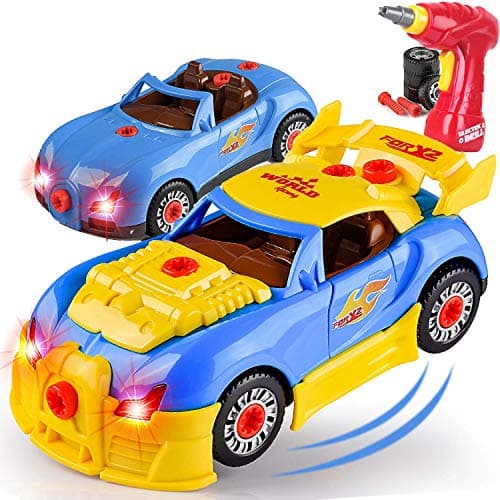
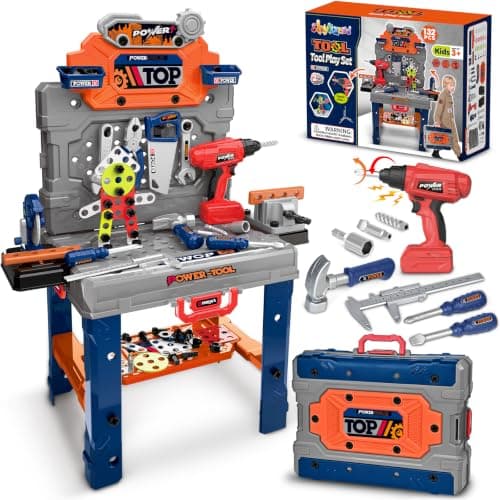
| Take-apart vehicles with drill | 3 to 5 | Fasteners, assembly order, what is inside a machine | Loud |
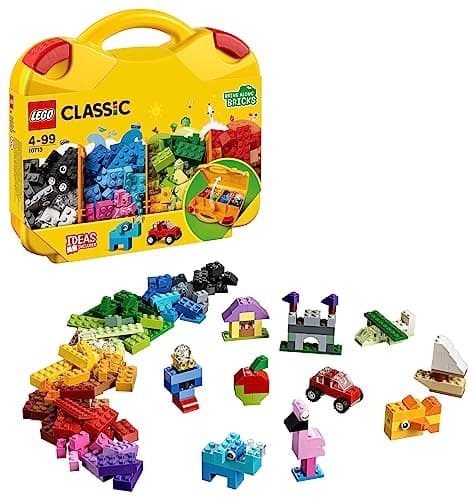
| LEGO Classic Creative Suitcase | 4+ | Structure: what holds and what does not | Quiet |
| Stomp Rocket Jr. | 3+ | Force and angle, outdoors, with no batteries | Some noise |
| Hape Quadrilla wooden run | 4+ | Routing: designing a path rather than following one | Some noise |
The grades in that table are the manufacturers’ own published wording. The noise column is our reading of what each listing describes, not a measurement — almost nobody in this category publishes a decibel figure, which is itself the finding on how loud is that toy, actually.
What to skip at four
Skip the circuit kits. The two in our registry are graded 8+ by their maker, and the reason is not caution — a four-year-old cannot follow a wiring diagram, and the parts are small. They are excellent purchases in four years.
Skip the chemistry and crystal sets. Graded 10+ and 10+ respectively, for the same reason plus the chemicals. There is no junior version of a four-year-old reading an 80-page manual.
Skip the microscope and the telescopes for now. Ours are graded 5 to 12, 5 to 12 and 8 to 12. A microscope at four is a thing an adult operates while the child waits, and waiting is the opposite of what we are buying for. The full comparison, for when the child is old enough, is on kids’ science kits, compared.
Skip anything whose STEM content is a screen. A tablet app with a plastic accessory is an app. The sorted version of that argument, including the handful of tech toys that genuinely work without a screen, is on tech toys without screens.
Batteries, mess and the small-parts question
Three of the seven need nothing at all: the tiles, the bricks and the stomp rocket, which its maker states is entirely kid-powered. The robot mouse is rechargeable over USB, so it is a powered toy with no battery bill. The take-apart set and the tool bench in the also-consider list both run on AA batteries the manufacturers do not include, and that is the single most common reason a STEM gift is unusable on the morning it is opened. We keep the running list on the battery reality check.
On mess and safety, both marble runs are the items to think hardest about. Marbles are the textbook small part, a half-built run cannot be put on a high shelf, and both sets carry their makers’ 4+ grades for exactly that reason. If there is a younger sibling crawling on the same floor, buy the tiles or the bricks instead and come back to marbles in two years. What the under-3 warning on a box actually means is on what “not for children under 3” actually means.
If you are buying for an occasion rather than restocking
The same seven picks sorted for a single present rather than a shortlist are on birthday gifts for a 4-year-old and Christmas gifts for a 4-year-old. For everything else a four-year-old plays with — not just the science end — go to the full 4-year-old age page. And if the child is a builder first and a scientist second, which at four is most of them, toys for the builder is the shortlist written around that.