Guides · Guides
Gifts for kids that are not toys
Two different people search for this. One has a child with a full toy box; the other has been told by a parent, politely, that the house cannot take another plastic object. Both want the same thing: something a child is genuinely pleased to unwrap that does not end up in the pile.
We earn a commission if you buy through our links. It does not change the price you pay and it does not decide our picks — our method is published in full, including the part where we say we have not played with these toys. How this works.
The short version
The non-toy gifts that work fall into five categories: a real tool rather than a toy version of one, audio instead of a screen, a private place to write, something consumable, and something that is really an experience with an object attached. If you want one answer for a child of eight to twelve, buy a real instrument of some kind — a telescope, a camera, a microscope — because the gift is the capability rather than the thing. If you want one answer for a tired household, buy audio.
Why “not a toy” is a better brief than it sounds
Children work out surprisingly early which of their possessions are the real versions of adult objects, and those are the ones that get looked after. A toy camera is a toy. A camera is a camera. The same goes for a telescope, a notebook with a lock, a magnifying glass, a set of real binoculars. The gift is not the object, it is the permission — you are trusted with this — and that is why these are the presents children remember being given rather than the ones they remember owning.
It is also the honest answer for a household at capacity. A parent who says “please, nothing else plastic” is not being difficult; they are describing a storage problem. Anything in the five categories below either lives on a shelf as one object, gets used up, or isn’t a physical thing at all.
The five categories
| Category | Why it works | Best age for it |
|---|---|---|
| A real instrument — telescope, camera, microscope, binoculars | The gift is a capability rather than an object, and the child reads it as being trusted | 8–12 mostly, 5+ for a microscope |
| Audio — a screen-free story player | It is the one thing a tired child can operate alone that is not a screen. Parents are more grateful for this than for anything else on the list | 3–12 |
| A private place to write — a locking journal | From about eight, privacy becomes a real need, and almost nobody gives a child any. One thin object, no storage cost | 8–12 |
| Consumables — paper, dough, beads, thread, film | Cannot be duplicated by another relative, cannot already be in the cupboard, and vanishes rather than accumulating | Any |
| An experience with an object attached — tickets plus the small thing that represents them | The best of all of these and the one this site earns nothing from. A child needs something to open, which is what the object is for | Any |
Clothes, money and books — the three everyone asks about
Clothes are the classic non-toy gift and the classic non-toy failure, with one exception: the specific item the child has asked for by name. A chosen jacket is a great present. An unchosen one is a parcel that produces a polite face.
Money is a perfectly honest answer for a child over about ten, and a flat one under that, because there is nothing to open. A small consumable plus the money is reliably better received than the money alone — and if you do not know what to spend, how much to spend on a child’s gift covers the conventions by relationship.
Books are a genuinely good non-toy gift and we do not cover them, because this site reviews toys and we are not going to pretend to a reading list we have not built. Treat their absence from this page as a limit of the site rather than a verdict.
What we would skip
The toy version of a real thing. A plastic camera that takes a 0.3-megapixel photograph is worse than no camera, because the child has been given the shape of the gift without the capability, and they notice. Also skip the “experience” voucher with nothing to unwrap — the experience may well be better than any object, but a six-year-old handed an envelope at a party has been given a piece of paper. Wrap something small alongside it. And skip the subscription nobody will cancel; it is a gift to yourself for one month and a standing charge on somebody else’s card for eleven. The skip list has the general pattern, and gifts for the kid who has everything is the roundup version of this page.
If the real problem is volume
Then the most useful thing you can give is fewer, better things, and we have written the argument out properly: how many toys a child actually needs covers what happens to play when a room has thirty toys available in it, and toy rotation is the fix that involves throwing nothing away. For a household that has asked for nothing plastic, small-space toys is the page that filters on footprint rather than on price.
The toys
The toys this guide is about
Every one of these carries its manufacturer’s published age grade and a live Amazon price, read October 5, 2026. Full rankings live in the roundups linked above.
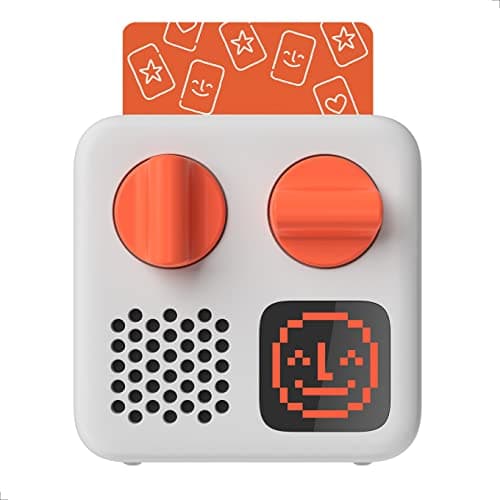
The best non-toy gift for a tired household
Yoto Mini Screen-Free Audio Player
Age grade 3–12
Graded 3 to 12 and explicitly screen-free: a physical card goes in and a story plays, with no feed, no autoplay and no account. It is the one object on this list a child can operate entirely alone without a screen, which is why parents rate it above everything else here. The honest cost is the card library rather than the player.
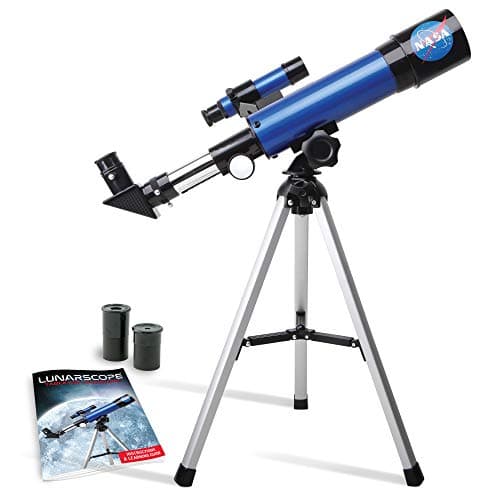
A real instrument, which is the whole point
NASA Lunar Telescope for Kids
Age grade 8–12
Listed for ages 8 to 12, with a tripod and a finder scope. It is the clearest example of the category: the gift is a capability rather than an object, and a child who is handed a real telescope reads it as being trusted. It needs a clear night and a first session with an adult, and light pollution is the thing that decides how good it is.
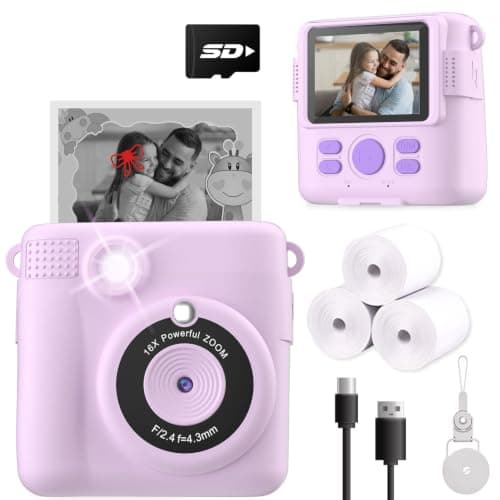
A camera rather than a toy camera, and it prints
Instant Print Camera for Kids
Age grade 3–12
Listed for ages 3 to 12 and charged over USB-C rather than running on disposable batteries. The printing is what makes it a gift rather than a gadget — the output is a physical object the child can give to somebody, which is the half of photography a phone removed. The paper is a consumable, so budget for refills with the gift.
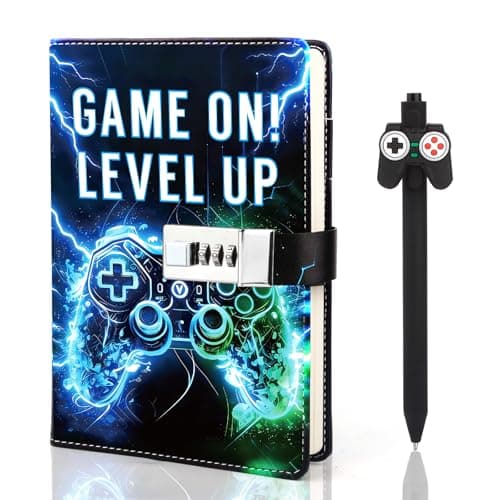
Privacy, which almost nobody gives a child
Kids Diary with Lock
Age grade 8–12
Listed for ages 8 to 12, with a lock and a pen included. From about eight, having somewhere nobody else reads is a real need, and this is one thin object with no storage cost at all. The lock is a small lock and a determined sibling will manage it — the privacy is a convention the household agrees to, which is worth saying out loud when it is given.
#ad · As an Amazon Associate we earn from qualifying purchases. How this works.
Questions
Questions people actually ask
What can I buy a kid that is not a toy?
What do you buy an 8-year-old boy who does not want toys?
Are clothes a bad gift for a child?
Is giving money a good gift for a kid?
What is the best non-toy gift for a whole family?
Keep reading
Related
- Gifts for the kid who has everythingThe roundup version of this page, with rankings.
- How many toys does a child needWhat happens to play when a room has thirty toys in it.
- How much to spend on a child's giftThe conventions by relationship, if money is the question.
- Small-space toysFiltered on footprint rather than on price.
- Toy rotationThe fix that involves throwing nothing away.
Receipts
Sources
- American Academy of Pediatrics — “Selecting Appropriate Toys for Young Children in the Digital Era” (clinical report)
- US Consumer Product Safety Commission — Toy Safety business guidance
- 16 CFR Part 1501 — the federal small-parts regulation behind the “not for children under 3” warning (eCFR)
We do not run a playroom test lab and we do not pretend to. Age grades, battery requirements and assembly notes are quoted from each manufacturer’s own product listing, read on September 7, 2026; prices come live from Amazon’s API and are stamped with the date they were checked. Where a maker publishes nothing, the page says “manufacturer does not publish this” rather than guessing. Read the full method.