Guides · Guides
Toy storage that works
Storage is not a tidiness question, it is a life-expectancy question. The most common death of a perfectly good toy is dispersal — pieces in three rooms, so nobody starts it.
We earn a commission if you buy through our links. It does not change the price you pay and it does not decide our picks — our method is published in full, including the part where we say we have not played with these toys. How this works.
Storage is a toy’s life expectancy
Good toys rarely break. What kills them is dispersal: half a construction set under a sofa, a third in a bedroom, the rest in a bag somewhere. A set that requires a ten-minute gathering operation before it can be used does not get used, and within a couple of months the child has stopped thinking of it as available.
This is why sets that ship with a case, a bag or a tub outlive sets that ship in cardboard, and why a large clear tub is sometimes a better present for a builder than another kit.
Two rules that do most of the work
- Every set has a home, and the home is a container. Not a shelf, not a corner — a specific box that specific thing lives in. Containers with lids, so they stack and so small parts stay out of a younger sibling’s reach.
- Putting away must be easier than taking out. If tidying requires sorting into categories, it does not happen. If it requires dropping things into an open bin, it does. Bias every decision toward the second.
What works, and what looks good in photographs
- Open bins on a low unit. The workhorse. A child can reach them, use them and return things to them without help, which is the entire specification.
- Lidded, stackable boxes for rotation. Opaque, so the contents are genuinely out of mind. See toy rotation.
- Shallow trays for small-part sets. Beads, figures, marbles. A deep box means digging; a shallow tray means seeing.
- Wall shelves for anything with small parts. Height is the simplest control in a mixed-age household, and it doubles as display.
- Picture labels. A photo or a drawing on the front of each bin means a three-year-old can put things back correctly, years before they can read a word.
What does not work: elaborate sorting systems with a compartment per category. They are maintained by an adult for about three weeks and then collapse into one large mixed bin, which is what should have been bought in the first place.
The mixed-age problem
In a household with a toddler and an older child, storage is doing safety work as well as tidiness work. Small-part sets go up — on a shelf, in a lidded box, above reach — and come down for supervised sessions in a defined place. Explaining the reason to the older child honestly works considerably better than a rule with no explanation. See the choking hazard guide.
Where to put the boxes
Rotation boxes do not have to be in the child’s room and are usually better if they are not — a wardrobe top, under a bed, a loft, a garage. The only requirement is out of sight and easy enough to reach that a swap takes ten minutes rather than an afternoon. A system stored somewhere genuinely inconvenient stops being used by February.
Storage as a present
It sounds like a joke present and it frequently is not. For a builder with a large collection in three bags, a proper tub or a shallow sorting tray gets more use than another set would. For a collector, a display shelf is a real gift. Both are cheap and both extend the life of everything the child already owns.
The toys
The toys this guide is about
Every one of these carries its manufacturer’s published age grade and a live Amazon price, read October 23, 2026. Full rankings live in the roundups linked above.
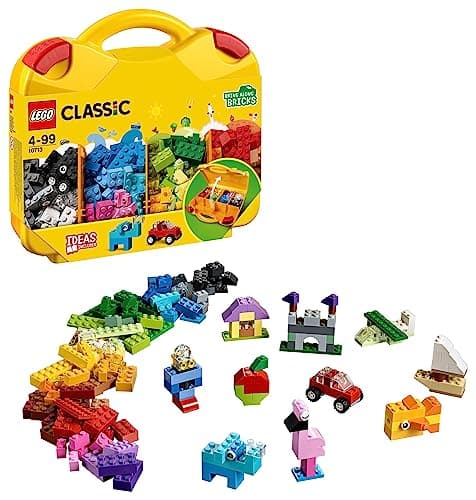
The set whose storage is the box
LEGO Classic Creative Suitcase 10713
Age grade 4+
The case is why this specific set survives — loose bricks disperse, contained ones come back out.
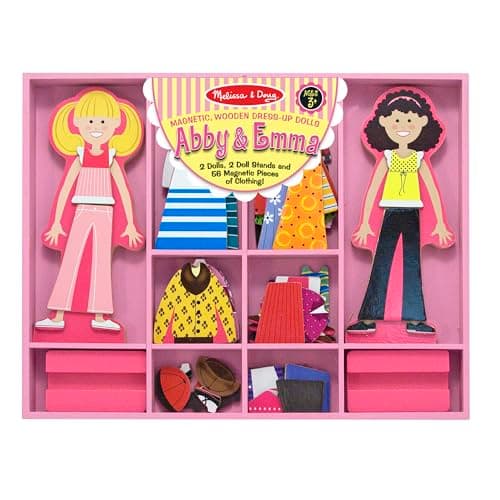
Storage built into the toy
Melissa & Doug Magnetic Wooden Dress-Up Dolls
Age grade 3–6
The pieces live on the board, which removes the loose-parts problem entirely.
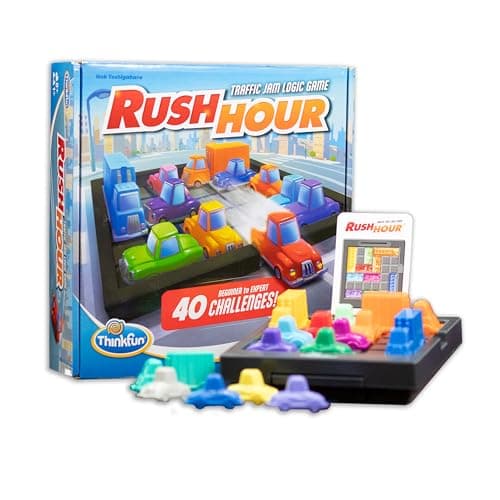
Packs itself away
ThinkFun Rush Hour Traffic Jam Logic Game
Age grade 8+
Everything lives in the grid, which is why it gets brought out repeatedly.
#ad · As an Amazon Associate we earn from qualifying purchases. How this works.
Questions
Questions people actually ask
What is the best toy storage system?
How do you get children to tidy up their toys?
Should toy storage be in the bedroom?
How do you store toys with small parts safely?
Is storage worth buying as a gift?
Keep reading
Related
Receipts
Sources
- CPSC — Small Parts regulations for toys and children's products
- American Academy of Pediatrics — “Selecting Appropriate Toys for Young Children in the Digital Era” (clinical report)
We do not run a playroom test lab and we do not pretend to. Age grades, battery requirements and assembly notes are quoted from each manufacturer’s own product listing, read on September 7, 2026; prices come live from Amazon’s API and are stamped with the date they were checked. Where a maker publishes nothing, the page says “manufacturer does not publish this” rather than guessing. Read the full method.