Skip to content
Windup & Wonder

Guides · Guides

Tech toys with no screen in them

This is a specific and badly served request: the child wants something that lights up, moves, transmits or runs code, and the adult has decided the house has enough displays. The answer is not a wooden puzzle. It is the category of toys that are properly electronic and have no screen at all — and there are more of them than the toy aisle suggests.

By Stephen V.Updated How we pick
#ad

We earn a commission if you buy through our links. It does not change the price you pay and it does not decide our picks — our method is published in full, including the part where we say we have not played with these toys. How this works.

The short answer

The picks, at a glance

#ToyBest forAge gradeNoisePrice
01Best overall, and the one that takes the tablet's place rather than competing with it3–12Loud$59.99Amazon
02Best for actual coding with nothing to install4+Quiet$39.99Amazon
03Best for a child who wants to build the electronics, not operate them8+Some noise$25.49Amazon
04Best for a child who wants something that moves fast6–12Loud$23.99Amazon
05Best for getting two children out of the house6–12Loud$13.19Amazon
06Best powered toy with nothing to buy afterwards8–13Quiet$14.22Amazon
07Best for the child who wants an instrument rather than a toy5–12Silent$27.53Amazon
08Best for a child who likes mechanisms more than electronics8–12Quiet$18.99Amazon

#ad · Prices come live from Amazon’s API and were last checked October 7, 2026. Where we have no verified live price we show none — we would rather leave a gap than print a number that has gone stale. Age grades are the manufacturer’s own; noise is our reading, not a measurement.

The short verdict

For most households, buy the Yoto Mini: Yoto publishes it as screen-free, it is graded 3 to 12, and it is the only thing on this page that occupies the same slot in a day that a tablet does. If the request is specifically coding, buy the rechargeable Code & Go Robot Mouse — it is the one product here whose manufacturer prints “no screens required” on its own listing. If the child is eight or older and the interest is really in how electronics work rather than in operating them, buy Snap Circuits Jr. and skip the rest of the page. And if you want a powered toy with no ongoing cost at all, the solar robot kit is the answer, with one real condition attached: it needs direct sunlight to do anything.

Three different things get sold as “screen-free tech”

The phrase covers three categories that behave nothing like each other, and most of the disappointment in this niche comes from buying one while wanting another.

  1. Screen-free by design. The product could have had a display and deliberately does not, because the absence is the feature. A card-driven audio player is the clearest example: the child chooses, and there is nothing to scroll past on the way.
  2. Screen-free because it is analog electronics. Circuits, motors, radios, optics. There was never a display in the design because the thing the toy does is physical. This is the biggest and most under-shopped group.
  3. Screen-free because the screen is somewhere else. A coding robot programmed from a tablet app, a camera whose photos are reviewed on a phone, a toy that needs an account set up on a laptop. These are frequently marketed as screen-free and are not — the display just moved into the adult’s hand.

Everything on this page is in group one or group two. Group three is the trap, and the test for it is one question: can the toy be used, start to finish, by a child alone in a room with no other device present? If the answer needs an app, it is group three.

The “no AI” question, and what you can honestly check

A real and rising version of this search asks for interactive toys without AI. We take that seriously and we are going to be precise about it, because this is a place where it would be very easy to tell you what you want to hear.

No toy listing in our registry publishes an AI disclosure. Not one. There is no standard requiring it, no seal for it and no agreed definition of the term as applied to a toy, so any page that tells you flatly that a particular toy “contains no AI” is telling you something it cannot know. We are not going to do that. What we can do is the same thing we do with age grades and battery counts: report the properties the manufacturer does print, and name the four that actually decide the question.

  1. Is there a microphone? This is the single most useful check, because voice features are the main route by which a toy becomes a thing that listens. A listing that advertises voice commands, recording or “talk to it” features has a microphone; a listing that mentions none usually has none, and nothing on this page advertises one.
  2. Is there a camera? Same logic, different sense, and much easier to verify because a camera is always a selling point and therefore always on the listing.
  3. Does it need an app or an account to work at all? Not to set up — to work. This is the dividing line between a toy and a service with a toy attached, and it is printed, because a maker who needs you to download something says so.
  4. Does it need Wi-Fi? A toy that never reaches a network cannot send anything anywhere, whatever is inside it. Connectivity is advertised when it exists, because it is a feature.

Run those four checks and you have answered the real question underneath “no AI” — which is almost never a question about algorithms and almost always a question about whether a plastic object in a child’s bedroom has a microphone in it. Of the eight picks here, the six analog ones (circuits, radio, RC car, solar robot, microscope, gear machines) have nothing to connect with in any direction. The two that are properly digital are the audio player and the coding mouse, and in both cases the play loop itself is physical: a card, or a row of button presses. Where a listing says nothing about connectivity, we say it says nothing — that is a gap in what the maker publishes, and we will not fill it with a reassurance.

What decides whether a screen-free tech toy survives

Four things, in roughly this order of importance. None of them is the feature list.

1. Where the power comes from

This is the most predictive single fact about an electronic toy and almost nobody shops on it. Disposable AA cells mean a recurring cost and a dead toy at the worst possible moment; rechargeable over USB means neither. Solar means neither and a hard weather dependency. The maker prints this, and our battery reality page prints the count and type for every pick on the site because listings bury it.

2. Whether the interaction is physical

A screen holds attention through immediate response, and the screen-free toys that compete are the ones where something happens the instant the child acts: a card goes in and audio starts, a switch closes and a bulb lights, a button sequence runs and the robot moves. Toys that make the child wait lose to a tablet every time, which is most of why “educational electronic” toys end up in a cupboard.

3. Whether it needs a second person

Walkie-talkies are brilliant and useless, depending entirely on this. So are most co-op games. It is worth deciding before you buy, because a toy that requires a sibling or a neighbor and has neither is not a toy — and the box never mentions it.

4. Whether the noise is the child’s or the toy’s

Electronic toys are where this distinction earns its keep. A speaker a child controls and an RC motor are both loud, and only one of them is under anyone’s control. We rate all of it from the manufacturer’s own listing on our noise ratings page, including the finding that almost no toy maker publishes a decibel figure at all.

The eight picks on the facts that differ

PickPublished gradePowerWhat the child actually does
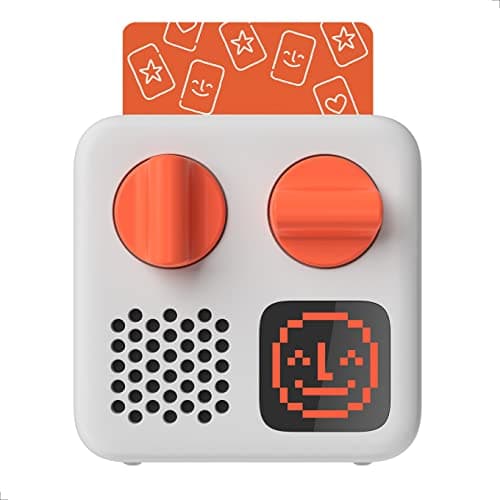
Yoto Mini3–12RechargeableChooses a card, pushes it in, listens
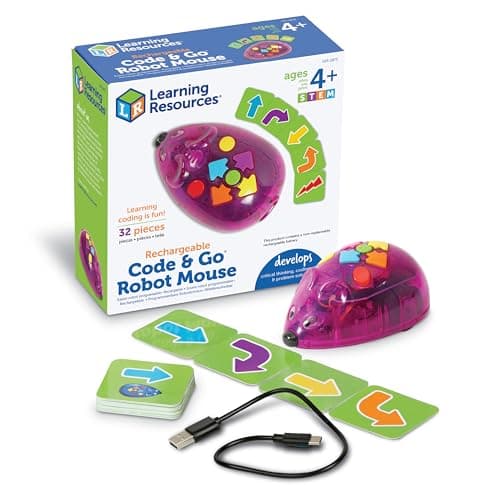
Code & Go Robot Mouse4+Rechargeable over USBBuilds a button sequence, lays a route, runs it
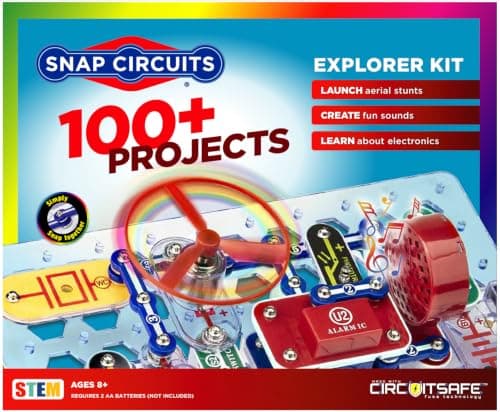
Snap Circuits Jr. SC-1008+Batteries, not includedSnaps components to a grid until the circuit works
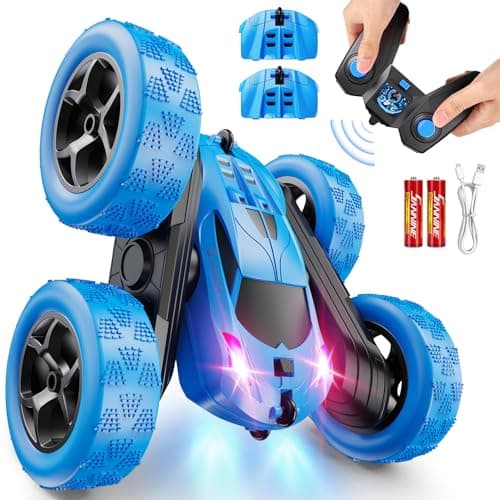
4WD remote control stunt car6–12Car rechargeable; 2 AA for the remoteDrives and flips it, indoors or out
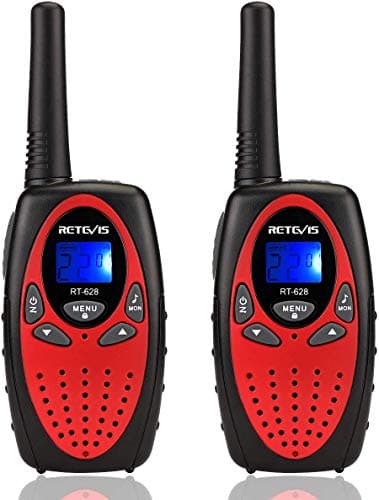
Retevis RT628 walkie-talkies6–123 AA per handset, not includedGoes somewhere else and talks
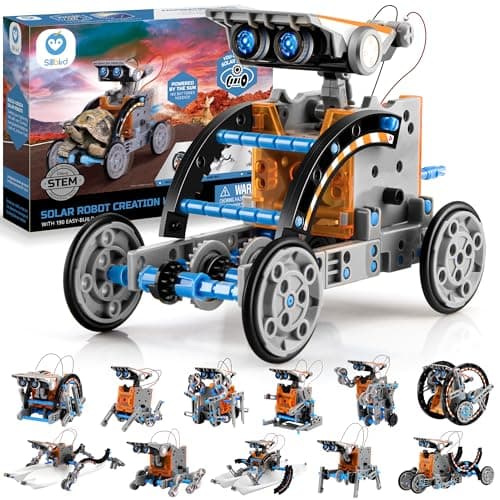
12-in-1 solar robot kit8–13Solar panelBuilds one of twelve robots, takes it into the sun
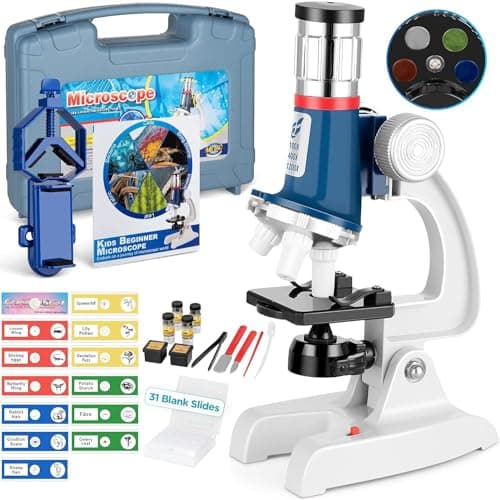
58-piece microscope kit5–122 AA for the LED, not includedMounts a slide and focuses
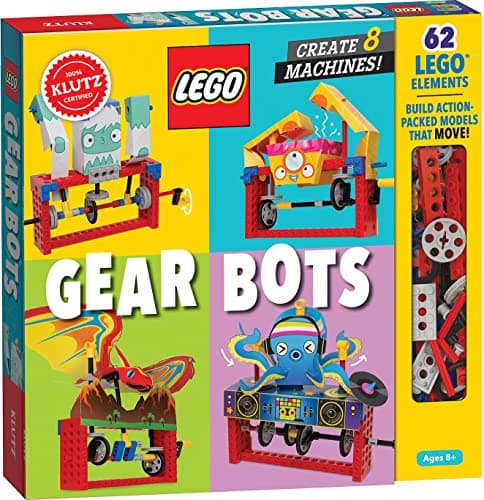
Klutz LEGO Gear Bots8–12NoneBuilds gear machines, reads why they work

What we would not buy in this category

Two things, both of which are sold hard into exactly this search.

The tablet-shaped “learning device”. A plastic slab with a small low-quality display, a few hundred built-in activities and a stylus. It is marketed to the parent who wants an alternative to a tablet, and it is a tablet with worse software and no upgrade path. If the objection to a screen is the screen, this does not solve it; if the objection is the content, a real device with real parental controls is the better answer.

The novelty electronic bundle. Fifteen small gadgets in a bag at a price that cannot support fifteen of anything. These are the worst build quality in the category, and the pattern is reliable: two of the fifteen are interesting and thirteen are dead by February. One good object beats a kit, which is the same conclusion we reach in one toy instead of five.

Where to go next

If what you actually want is to reduce screen time generally rather than to buy electronics specifically, toys for the screen-free kid is the broader list and most of it is analog. Toys that need no batteries is the hard version of that filter. If the child in question is a teenager, educational gifts for 13-to-17-year-olds covers the same instinct at an age where most of this page is graded too young. And if you are choosing between two specific electronics kits, Snap Circuits Jr. against Classic is the head-to-head.
In detail

Every pick, in full

01
YOTO Yoto Mini Screen-Free Audio Player

Best overall, and the one that takes the tablet's place rather than competing with it

Yoto Mini Screen-Free Audio Player

YOTO

Yoto publishes this as screen-free and graded 3 to 12, and the interaction is a physical card: the child picks one, pushes it in, and a story plays. That matters more than the spec sheet, because the slot a tablet occupies in a house is a specific one — quiet time, the car, the twenty minutes before sleep — and almost nothing else fills it. Be clear-eyed about two things: it is a speaker, so it is as loud as the child sets it, and the cards are the real cost of ownership. The player is the cheap part.

Age grade:
3–12
Batteries:
manufacturer does not publish a battery requirement
Noise:
Loud
Mess:
Contained
Assembly:
manufacturer does not publish an assembly time
Price:
$59.99 as of October 7, 2026

Age grade, battery and assembly wording are quoted from YOTO’s own product listing, read on September 7, 2026. The manufacturer’s exact words: “Ages 3-12”. Noise and mess are our reading, not a measurement — we have not played with this.

What it gets right

  • Screen-free by design, with a physical card for each story — no feed, no autoplay, no algorithm
  • Published 3 to 12 range and it genuinely spans it, because the content changes rather than the device
  • Rechargeable and portable, so it works in a car and at a grandparent's house

What it doesn’t

  • Cards are proprietary and the library adds up fast — the player is the cheap part
  • The volume limit is a setting, not a hardware limit, and children find settings

How loud

It is a speaker, so it is exactly as loud as the child sets it. There is a volume limit, and headphone output, which together are why it is here rather than on the loud-toys list.

How much mess

The player is one object. The cards are the small pieces, and they need a box.

Skip this if…

…nobody will buy cards. The player alone is a nice-looking speaker with very little on it, and the ongoing card cost is the real price of ownership.

$59.99See it on Amazon

$79.9925% off

Price checked October 7, 2026. Toy prices move constantly, especially in December — Amazon’s price at checkout is the one that counts.

#ad · we may earn a commission from this link to Yoto Mini Screen-Free Audio Player

02
Learning Resources Code & Go Robot Mouse, Rechargeable

Best for actual coding with nothing to install

Code & Go Robot Mouse, Rechargeable

Learning Resources

Graded 4+, and Learning Resources prints “no screens required” on the listing itself rather than leaving us to infer it. The child presses direction buttons on the mouse to build a sequence, lays out a route with the thirty coding cards, and then watches the thing either work or fail — which is the entire point, because a failed sequence is the lesson. It charges over USB, so it is a powered toy with no batteries to buy. The honest limit: this version is the mouse and the cards, which the maker sells as an add-on to the activity sets, so there are no maze walls in the box.

Age grade:
4+
Batteries:
manufacturer does not publish a battery requirement
Noise:
Quiet
Mess:
Contained
Assembly:
manufacturer does not publish an assembly time
Price:
$39.99 as of October 7, 2026

Age grade, battery and assembly wording are quoted from Learning Resources’s own product listing, read on September 7, 2026. The manufacturer’s exact words: “Ages 4+”. Noise and mess are our reading, not a measurement — we have not played with this.

What it gets right

  • Rechargeable over a USB cord, so this is a powered toy with no AA batteries to buy, ever
  • Learning Resources states “screen-free coding fundamentals” and “no screens required” on the listing — the claim is the maker's, not ours
  • Thirty double-sided coding cards and an activity guide are in the box, which is what turns button-pressing into sequencing

What it doesn’t

  • No maze walls, tunnels or cheese wedge — the maker lists this version as a replacement or add-on for the Code & Go activity sets
  • Graded 4+, but planning a route before running it is the entire activity, so at four an adult is on the floor too

How loud

Learning Resources advertises no sound feature on this listing at all — what it advertises is screen-free coding. The noise is a small motor on a hard floor.

How much mess

One mouse, a charging cord and thirty cards. The cards are the only thing that goes missing.

Skip this if…

…you want the maze. This is the rechargeable mouse plus cards, which Learning Resources sells as an add-on or replacement for the activity sets — buy an activity set if you want walls and tunnels in the box.

$39.99See it on Amazon

$49.9920% off

Price checked October 7, 2026. Toy prices move constantly, especially in December — Amazon’s price at checkout is the one that counts.

#ad · we may earn a commission from this link to Code & Go Robot Mouse, Rechargeable

03
Snap Circuits Snap Circuits Jr. SC-100 Electronics Kit

Best for a child who wants to build the electronics, not operate them

Snap Circuits Jr. SC-100 Electronics Kit

Snap Circuits

Graded 8+ with over a hundred published projects, and there is no display, no app and no code — just components that snap to a grid until a thing lights, spins or sounds. This is the pick for the child whose interest in “tech” is actually an interest in why it works, and it is the one toy here that answers that literally. Two honest warnings: batteries are required and not included, and the manual is essential — a lost manual turns a hundred projects into a tray of parts.

Age grade:
8+
Batteries:
manufacturer does not publish a battery requirement
Noise:
Some noise
Mess:
Contained
Assembly:
manufacturer does not publish an assembly time
Price:
$25.49 as of October 7, 2026

Age grade, battery and assembly wording are quoted from Snap Circuits’s own product listing, read on September 7, 2026. The manufacturer’s exact words: “Ages 8+”. Noise and mess are our reading, not a measurement — we have not played with this.

What it gets right

  • Over a hundred projects with a real progression, so it is months of activity rather than an afternoon
  • No soldering, no exposed wiring — the design removes every reason an adult would say no
  • Published 8+ grade, and the projects teach actual circuit concepts rather than dressing them up

What it doesn’t

  • Batteries required and not included; check the manual before wrapping it
  • The manual is essential, and a lost manual makes the kit nearly useless

How loud

Some projects build a siren or an alarm, and those are as loud as you would expect. Most are silent. No decibel figure is published.

How much mess

Modular parts on a grid base, all of which fit in the tray. The base is the workspace.

Skip this if…

…the child will not follow a diagram. Snap Circuits is a build-from-instructions kit, and freestyling it produces nothing that works.

$25.49See it on Amazon

$32.9923% off

Price checked October 7, 2026. Toy prices move constantly, especially in December — Amazon’s price at checkout is the one that counts.

#ad · we may earn a commission from this link to Snap Circuits Jr. SC-100 Electronics Kit

04
QUNREDA 4WD Remote Control Stunt Car

Best for a child who wants something that moves fast

4WD Remote Control Stunt Car

QUNREDA

Graded 6 to 12, 4WD, and the manufacturer describes the car as rechargeable with 2 AA batteries needed for the remote. Of everything on this page, this is the one that most obviously reads as a tech toy to a child — it is fast, it flips, it has lights — while containing no display of any kind. It is also the loudest and the least durable thing here. Motor whine on laminate has no volume control, run time is short, the recharge is long, and a stunt car meets a wall at speed repeatedly.

Age grade:
6–12
Batteries:
2 AA batteries for the remote, and a screwdriver for e
Noise:
Loud
Mess:
No mess
Assembly:
Easy assembly
Price:
$23.99 as of October 7, 2026

Age grade, battery and assembly wording are quoted from QUNREDA’s own product listing, read on September 7, 2026. The manufacturer’s exact words: “Ages 6-12”. Noise and mess are our reading, not a measurement — we have not played with this.

What it gets right

  • Car is rechargeable, so only the remote needs disposable batteries
  • 4WD and stunt-capable, which means it works on carpet and grass rather than only on a smooth floor
  • Published 6 to 12 grade and simple enough for the younger end to drive immediately

What it doesn’t

  • Remote needs 2 AA batteries that are not included, and a screwdriver for the battery compartment
  • Run time is short and the recharge is long, which is the honest complaint about every RC toy

How loud

Motor whine and plastic on hard floors. There is no volume control on a motor.

How much mess

One car, one remote.

Skip this if…

…you have hard floors and downstairs neighbors. An RC car on laminate at head height is one of the loudest things in this guide.

$23.99See it on Amazon

$39.9940% off

Price checked October 7, 2026. Toy prices move constantly, especially in December — Amazon’s price at checkout is the one that counts.

#ad · we may earn a commission from this link to 4WD Remote Control Stunt Car

05
Retevis Retevis RT628 Walkie Talkies for Kids

Best for getting two children out of the house

Retevis RT628 Walkie Talkies for Kids

Retevis

Published for 6 to 12 year olds, 3 AA batteries per handset and none included. Walkie-talkies are the one item in this category that changes where play happens rather than just what it looks like: two children with handsets separate, and separating is the thing a screen never makes them do. There is no account, no pairing and no subscription — they just work. Two caveats worth more than the spec sheet: real range indoors is far shorter than the number on the box, and this is useless with only one child in the house.

Age grade:
6–12
Batteries:
Requires 3 AA batteries (not included)
Noise:
Loud
Mess:
No mess
Assembly:
manufacturer does not publish an assembly time
Price:
$13.19 as of October 7, 2026

Age grade, battery and assembly wording are quoted from Retevis’s own product listing, read on September 7, 2026. The manufacturer’s exact words: “for 6-12 Year Old”. Noise and mess are our reading, not a measurement — we have not played with this.

What it gets right

  • Gets children moving apart and communicating, which is a genuinely different play pattern
  • No subscription, no pairing, no account — they simply work
  • Published 6 to 12 range and the controls are simple enough for the younger end

What it doesn’t

  • Three AA batteries per handset, not included, and they drain when left switched on
  • Real-world range is far shorter than the advertised figure once there are walls involved

How loud

Speakers with a volume dial, plus a call-tone button that children press repeatedly. No published sound level.

How much mess

Two handsets and a belt clip each.

Skip this if…

…there is only one child. Walkie-talkies need a second person and an adult will not keep it up past day two.

$13.19See it on Amazon

$21.9940% off

Price checked October 7, 2026. Toy prices move constantly, especially in December — Amazon’s price at checkout is the one that counts.

#ad · we may earn a commission from this link to Retevis RT628 Walkie Talkies for Kids

06
Sillbird 12-in-1 Solar Robot Building Kit

Best powered toy with nothing to buy afterwards

12-in-1 Solar Robot Building Kit

Sillbird

Graded 8 to 13, twelve published builds from one parts set, and the power source is a small solar panel rather than a cell. It is the cleanest answer on this page to the complaint behind most battery-toy regret: there is no ongoing cost and nothing to run out. It is also the pick with the most specific failure mode in the whole registry — it needs real direct sunlight. Given in midwinter in a dark climate, a solar robot that will not move is a bad first impression a toy may never recover from.

Age grade:
8–13
Batteries:
manufacturer does not publish a battery requirement
Noise:
Quiet
Mess:
Contained
Assembly:
manufacturer does not publish an assembly time
Price:
$14.22 as of October 7, 2026

Age grade, battery and assembly wording are quoted from Sillbird’s own product listing, read on September 7, 2026. The manufacturer’s exact words: “Ages 8-13”. Noise and mess are our reading, not a measurement — we have not played with this.

What it gets right

  • Solar-powered, so there is no battery cost and nothing to run out on Christmas afternoon
  • Twelve published builds from one parts set, which is real rebuild value
  • Published 8 to 13 grade with genuine assembly difficulty at the top end

What it doesn’t

  • Needs actual direct sunlight; on an overcast January day it does nothing at all
  • Small plastic parts that snap off if a build is forced

How loud

Small motor whirring. There is no speaker and no sound feature.

How much mess

Many small plastic parts during assembly. They belong in the box and the box has compartments.

Skip this if…

…you are giving it in midwinter in a dark climate. A solar robot that will not move is a bad first impression that the toy may never recover from.

$14.22See it on Amazon

$24.9943% off

Price checked October 7, 2026. Toy prices move constantly, especially in December — Amazon’s price at checkout is the one that counts.

#ad · we may earn a commission from this link to 12-in-1 Solar Robot Building Kit

07
Uarzt 58-Piece Kids Microscope Kit

Best for the child who wants an instrument rather than a toy

58-Piece Kids Microscope Kit

Uarzt

Graded 5 to 12, metal-bodied, with LED illumination and prepared slides, on 2 AA batteries the maker does not include. A microscope is the oldest screen-free technology there is and it still beats a tablet at the one thing the tablet is usually used for — looking closely at something. The metal body is the reason this one is here rather than the plastic microscopes at the same price: focus holds. The slides are glass, so at the young end of that published range an adult sits down with it for the first few sessions.

Age grade:
5–12
Batteries:
Requires 2 AA batteries (not included)
Noise:
Silent
Mess:
Contained
Assembly:
manufacturer does not publish an assembly time
Price:
$27.53 as of October 7, 2026

Age grade, battery and assembly wording are quoted from Uarzt’s own product listing, read on September 7, 2026. The manufacturer’s exact words: “Ages 5-12”. Noise and mess are our reading, not a measurement — we have not played with this.

What it gets right

  • Metal body rather than the plastic toy microscopes at the same price, so focus actually holds
  • Prepared slides included, so there is something to look at immediately
  • Published 5 to 12 range makes it a genuinely long-lived purchase

What it doesn’t

  • Requires 2 AA batteries, not included, for the LED
  • Glass slides in a kit graded from five needs an adult present the first few times

How loud

Nothing but an LED.

How much mess

Slides and small tools in a case. The slides are glass, which is the thing to supervise.

Skip this if…

…the child is at the young end and unsupervised. Focusing a microscope is fiddly and glass slides break — five-year-olds need company for this one.

$27.53See it on Amazon

$36.8925% off

Price checked October 7, 2026. Toy prices move constantly, especially in December — Amazon’s price at checkout is the one that counts.

#ad · we may earn a commission from this link to 58-Piece Kids Microscope Kit

08
Klutz Klutz LEGO Gear Bots Activity Kit

Best for a child who likes mechanisms more than electronics

Klutz LEGO Gear Bots Activity Kit

Klutz

Graded 8 to 12, and it belongs on this page as the honest edge case: it is techy with no electronics in it at all. The LEGO-compatible parts build gear-driven machines and the book explains what the gears are doing, which is a rarer thing than a kit that merely supplies steps. Buy it for the child who asks how things work. Do not buy it for a child who will not read the book — half the value is on the page, and skipped, this becomes a small and expensive bag of bricks.

Age grade:
8–12
Batteries:
manufacturer does not publish a battery requirement
Noise:
Quiet
Mess:
Contained
Assembly:
manufacturer does not publish an assembly time
Price:
$18.99 as of October 7, 2026

Age grade, battery and assembly wording are quoted from Klutz’s own product listing, read on September 7, 2026. The manufacturer’s exact words: “for 8-12 years”. Noise and mess are our reading, not a measurement — we have not played with this.

What it gets right

  • The book explains mechanism rather than just supplying steps, so something is actually learned
  • Parts are LEGO-compatible and fold into a collection the child already has
  • Published 8 to 12 grade matches the reading level as well as the build difficulty

What it doesn’t

  • The projects are finite — once all of them are built, it becomes a small parts bag
  • Needs a child who will read the book; skipping it turns the kit into ordinary bricks

How loud

Gears turning. Nothing electronic.

How much mess

Small LEGO-compatible parts, and they belong in the box the kit came in. Easy to keep together if you are firm about it on day one.

Skip this if…

…the child does not read for pleasure. Half the value here is on the page, and a kit-only approach makes it a small and expensive LEGO set.

$18.99See it on Amazon

$24.9924% off

Price checked October 7, 2026. Toy prices move constantly, especially in December — Amazon’s price at checkout is the one that counts.

#ad · we may earn a commission from this link to Klutz LEGO Gear Bots Activity Kit

How we picked

Toys we claim to have played with: 0

Every toy site tells you they tested forty toys with a focus group of real children. We have not played with any of these, and we say so. Here is what we do instead: we read the manufacturer’s own listing and print its published age grade word for word, we record the battery requirement and the assembly note where the maker publishes one and say plainly when it does not, we pull the price live from Amazon so it is never a number we remembered, and we name one thing on every list we would not buy.

The noise and mess ratings are our judgment from what the listing describes — not measurements. Almost no toy manufacturer publishes a decibel figure, which is itself worth knowing. The full method is published, including what disqualifies a toy.

Questions

Questions people actually ask

Are there interactive toys for kids with no screen at all?
Plenty, and they are mostly in the analog-electronics aisle rather than the tech aisle: circuit kits, walkie-talkies, RC vehicles, solar robots, microscopes, card-driven audio players. The test for whether a toy is genuinely screen-free is whether a child can use it alone in a room with no other device present.
How can I tell whether a toy has AI in it?
You usually cannot, because no toy listing publishes an AI disclosure and there is no standard requiring one. What is printed, and what answers the real question, is whether the toy has a microphone, has a camera, needs an app or account to function, or needs Wi-Fi. A toy with none of the four has nothing to listen with and nowhere to send anything.
Is a coding robot screen-free if it is programmed from an app?
No. That is the most common version of the trap: the display moved into an adult’s hand, and in practice the child ends up on the tablet. A genuinely screen-free coding toy is programmed on the toy itself, with buttons or physical cards.
What is the best screen-free tech toy for a 3-year-old?
A card-driven audio player is the one thing in this category graded that low — the Yoto Mini is published for ages 3 to 12. Almost everything else here is graded 5+ or 8+, and we never recommend below a manufacturer’s own age grade. Read how age grades work before buying up.
Do screen-free electronic toys still need batteries?
Most do, and the power source is the fact worth shopping on. Rechargeable over USB means no ongoing cost; disposable AA cells mean a recurring one and a dead toy at a bad moment; solar means neither, plus a real dependence on direct sunlight. Battery reality prints the count and type for every pick on this site.

Keep reading

Receipts

Sources

We do not run a playroom test lab and we do not pretend to. Age grades, battery requirements and assembly notes are quoted from each manufacturer’s own product listing, read on September 7, 2026; prices come live from Amazon’s API and are stamped with the date they were checked. Where a maker publishes nothing, the page says “manufacturer does not publish this” rather than guessing. Read the full method.