The short answer
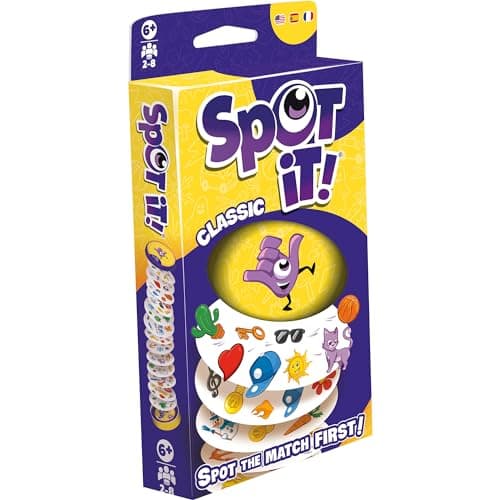
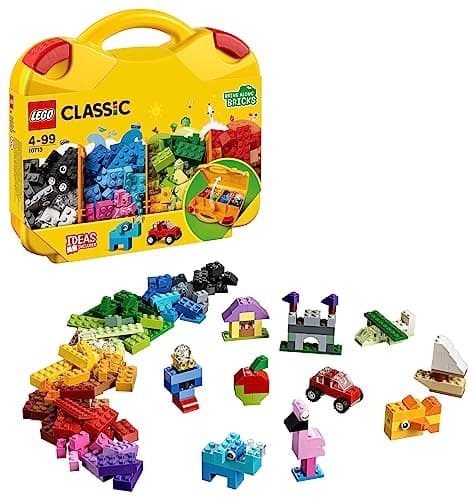
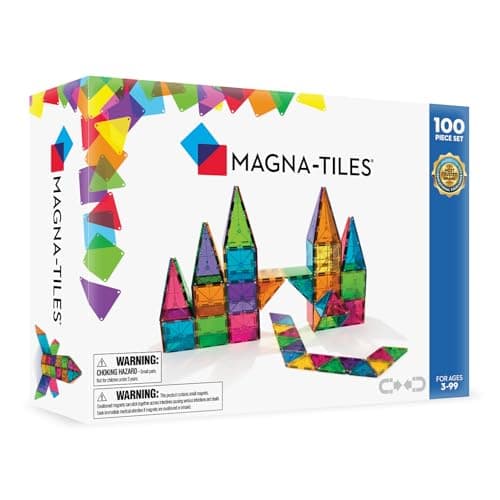
Look at which kind of hour your house is short of. If the problem is a child who cannot occupy themselves for twenty minutes, buy a toy — magnetic tiles graded 3+ or the LEGO Classic suitcase graded 4+, both of which have no finish line. If the problem is that nobody in the house does anything together, buy a game, and buy Spot It first: graded 6+, two to eight players, rules in one sentence, ten minutes a round.
Below about five, the answer is almost always a toy, and the single exception is a cooperative game where nobody loses. We have not played with any of these; our method is published in full.
What actually separates the two
The dividing line is not price, not the aisle and not whether the word educational is on the box. It is whether the thing has an end state.
A game has one. It has a winner, a published running time, a minimum and maximum number of players, and a set of rules somebody has to know before anybody can start. When it finishes, it is finished, and the pieces go back in the insert. A toy has none of that. A hundred magnetic tiles have no winner and no last page; a child starts, stops, and nothing was interrupted. That one structural difference produces every practical consequence below.
A toy buys solitary hours. A game buys shared ones.
This is the whole purchasing decision and it is nearly always possible to answer honestly in ten seconds. A game cannot be played alone, which means every game you own is also a small demand on an adult’s evening or on a sibling’s cooperation. A toy asks for nobody. Households that are short of adult attention need toys; households where the child is alone a lot and nobody plays together need games. Buying three more of whichever you already have plenty of is the most common way a shelf fills up with unused things.
They fail in opposite directions.
A toy fails by being too closed — one action, one trick, five minutes and done. That is the entire problem with the novelty end of the toy aisle, and the test is whether you can describe the whole thing in four words. A game fails differently: it fails because it needs a skill the child does not have yet. Usually that skill is not reading. It is losing. The readiness ladder for that is on board games by age, and it is the single most useful thing to read before buying a game for a child under six.
Cost per hour runs the other way to the price tag.
Open-ended toys are expensive up front and cheap per hour, because a five-year run spreads the price over a very long time. Games are cheap up front and more expensive per hour, because each one delivers a fairly fixed number of twenty-minute sessions before the surprises are used up — which is why a household ends up with eight of them. Neither is better value; they are value in different shapes.
Which to buy, age by age
| Age | Buy | Because | Our pick |
|---|
| Under 2 | Toys only | No turn-taking, no rules, and nothing published works | See the baby and 1-year-old pages |
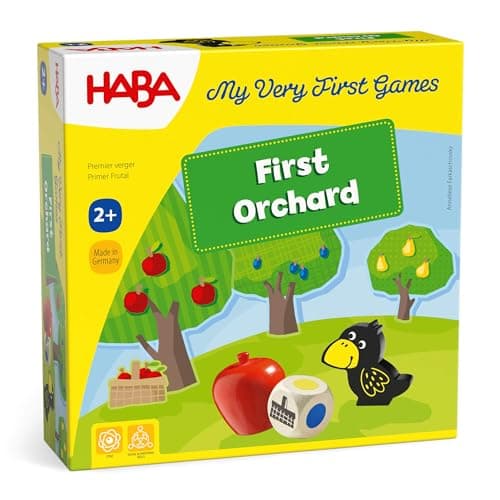
| 2 to 4 | Toys, plus one cooperative game | Turn-taking is learnable; losing is not, yet | Magnetic tiles, and First Orchard graded 2 to 4 |
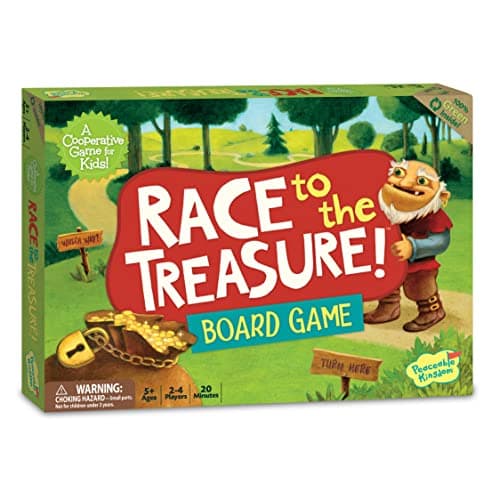
| 5 to 6 | The first competitive games | A child can now lose a round without the evening ending | Spot It (6+), or Race to the Treasure (5+) |
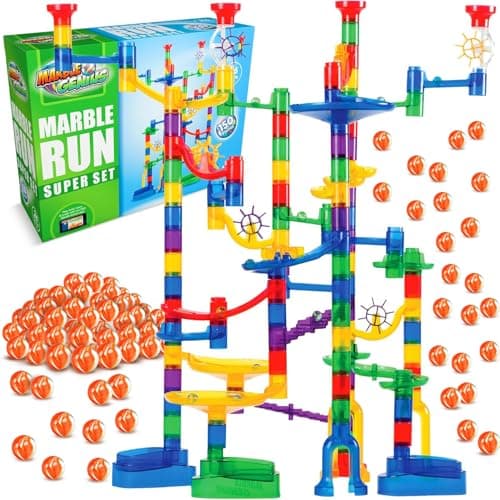
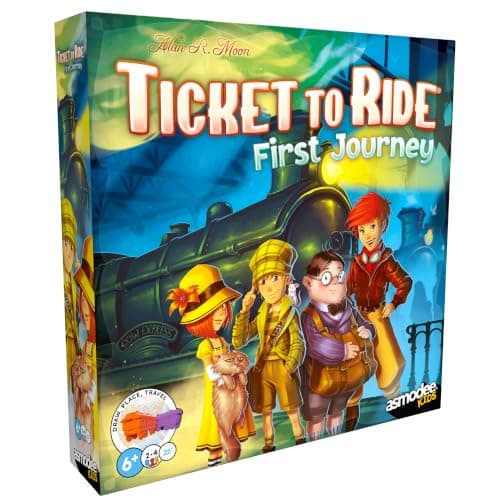
| 6 to 8 | Both, deliberately | Games become a family habit; toys get deeper, not simpler | Ticket to Ride: First Journey (6+) and a marble run (4 to 8) |
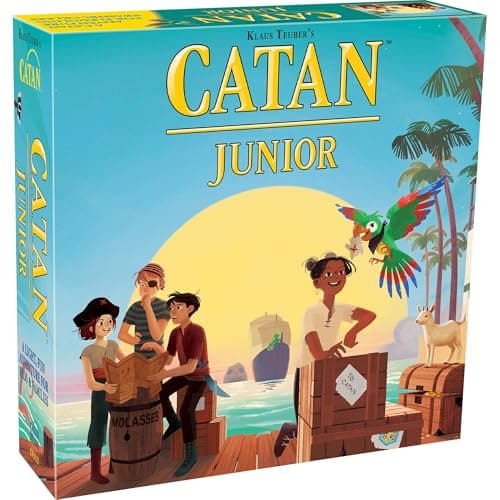
| 8 to 12 | Games overtake | Strategy is the draw, and open-ended toys narrow to one or two deep ones | Catan Junior (6+) upward, plus real bricks |
Every grade in that table is the manufacturer’s own published wording. We never list a toy or a game below the age its maker set, which is a rule enforced by this site’s build rather than by a writer remembering.
The three questions that decide it in a shop
1. Who will be in the room?
If the honest answer is “the child, on their own, most of the time”, every game you buy becomes a request. Buy the toy. If the answer is “two siblings who need something to do together that is not an argument”, buy the game — and buy one that plays with exactly two, because a game for four is useless on a Tuesday. The two-player shortlist is on board games for two players.
2. How long is the gap you are filling?
Games are sold with a running time and it is usually accurate — ten minutes for a card game, thirty for Catan Junior. That makes them the better buy for a defined gap: before dinner, on a train, the hour before bed. Toys have no running time at all, which makes them better for an undefined Sunday and worse for twenty minutes, because packing a half- built thing away is the part children resist.
3. Can it be left out?
A toy mid-build occupies floor. A game in its box occupies a shelf. In a small home that is not a detail, it is the decision — and it is why card games in tins outperform every beautiful wooden thing in an apartment. The filtered list is toys for a small space.
Where the distinction breaks down
Three honest exceptions, because the line is not perfectly clean.
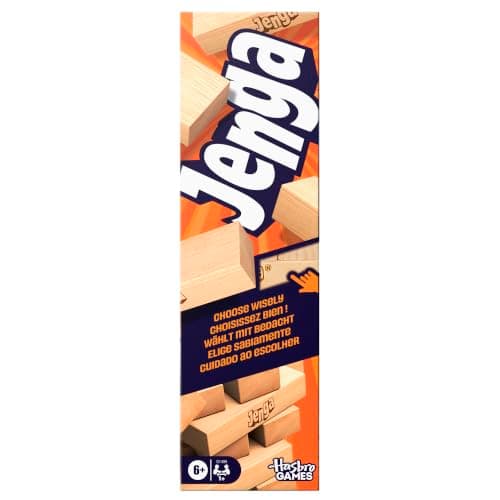
Jenga is both. Graded 6+, fifty-four hardwood blocks: a game when two people take turns, a toy when one child stacks alone. Worth owning for exactly that reason, and loud enough at the collapse that an apartment or a sleeping baby next door decides it for you.
A marble run is a toy that scores you. The marble either makes the gap or it does not. That visible pass-or-fail is normally a game property, and it is why marble runs hold attention like games do while needing nobody else in the room.
Construction sets with instructions are closer to games than toys. A licensed set with a step-by-step booklet has an end state and a correct answer — it is completed, then it is a decoration. That is a perfectly good purchase, but it is not the open-ended one, and it is why the themeless suitcase of bricks outranks a themed set here despite being less exciting to unwrap. More on that in what open-ended play actually means.
Two traps
The “educational” tiebreaker. Nobody certifies a toy or a game as educational — there is no test and no standard, only a word printed on a box — so it is useless as a way of choosing between the two. The full version of that argument, with the three questions that do predict what a child learns, is on educational toys vs just-for-fun toys.
Buying the game for the child and not the household. A game graded 6+ that needs three players, a table and forty minutes is a purchase about your family, not about your child. Be honest about whether that evening exists. If it does not, a card game in a tin and an open-ended toy will both get used, and the handsome box will not.
Small parts, on both sides
Game pieces are small parts and people forget it because a board game does not look like a choking hazard. Train pieces, path tiles, wooden fruit and marbles all sit on a floor at some point in an evening. Every pick on this page carries its maker’s published grade, and the two with marbles are the ones to think hardest about if a baby shares the room — a half-built marble run cannot be put on a high shelf. What the under-3 warning actually means, and the federal rule behind it, is on what “not for children under 3” actually means.
If you have already decided it is a game, the full head-to-head is best board games for kids, by age. If you have decided it is a toy and want the one-thing-instead-of-five case, that page is here. And if the gift is going to a child’s friend rather than your own, the shortlist built around needing a second person is best friend gifts for kids.