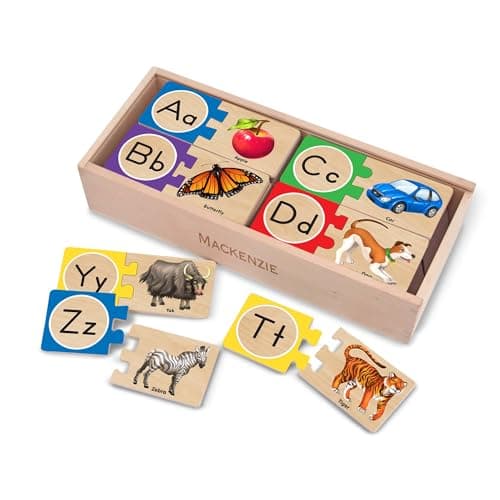
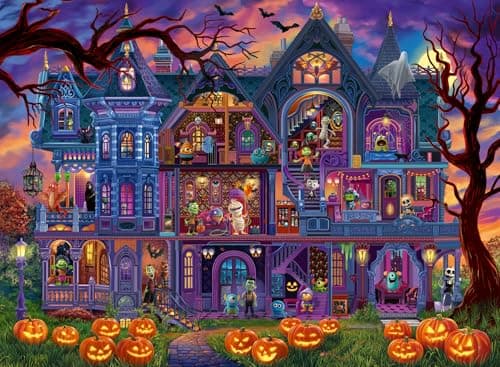
The verdict: the top pick is Ravensburger’s 100-piece XXL jigsaw, and it is for a six to eight-year-old doing a puzzle in one sitting — oversized pieces a child’s hands can seat properly, and die-cutting precise enough that a nearly-right piece does not go in. The budget pick is the Melissa & Doug self-correcting alphabet set, the cheapest puzzle in our registry: graded 4+, and each piece pairs with exactly one other, so a child working alone finds out they are right without asking anybody.
Every age grade here is the manufacturer’s own, and the prices come live from the price layer with the date they were checked printed under the table above. We have not done these puzzles; the method is published.
Piece count is the whole decision
Get this wrong and the puzzle is never attempted twice. Too easy and it is finished once and ignored; too hard and the child quietly decides puzzles are not for them, which is a surprisingly durable conclusion.
A rough ladder, which matches the published grades on this page closely:
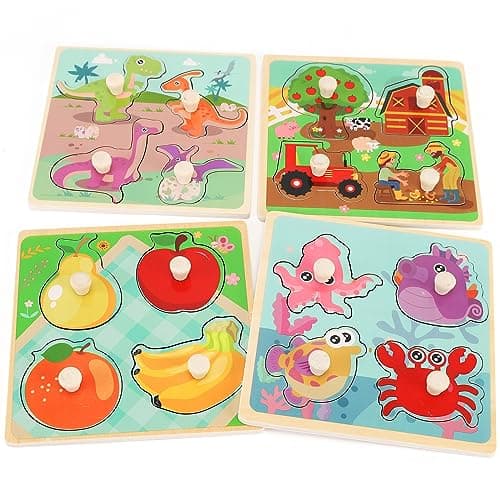
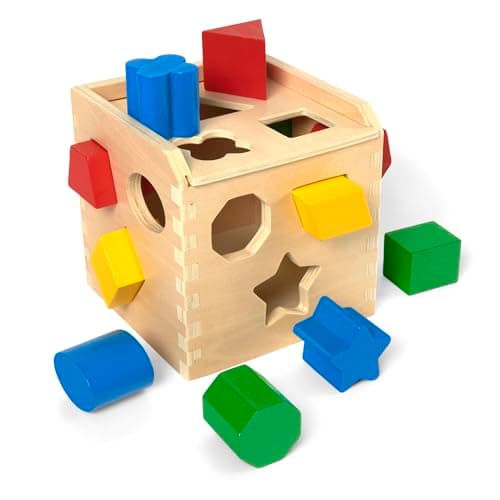
- 2–3 years: peg puzzles and shape sorters. Four to twelve pieces, each with its own hole.
- 3–4 years: chunky jigsaws of 12 to 24 pieces, ideally with a picture of the finished puzzle to work from.
- 5–6 years: 35 to 60 pieces. This is where edge-first strategy starts to be usable.
- 6–8 years: 100 pieces, oversized. The sweet spot for a single sitting.
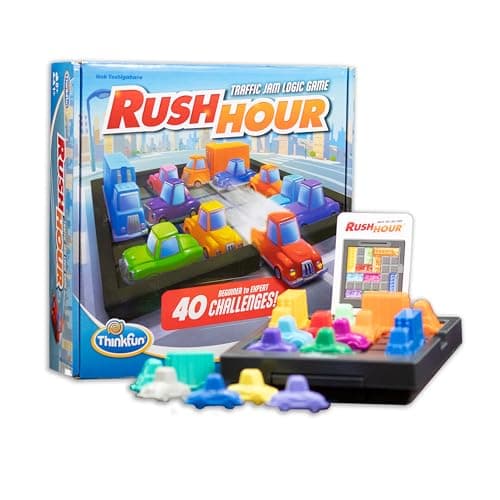
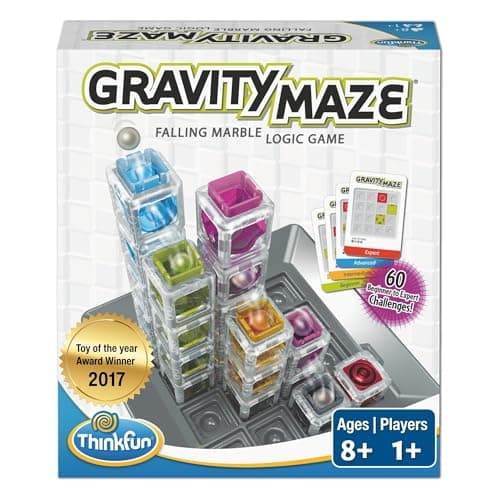
- 8–12 years: 200 to 500 pieces, or logic puzzles, which scale by difficulty rather than by count.
The one adjustment worth making: if the child has not done a jigsaw recently, drop a rung. A child who finishes something easily asks for a harder one; a child who stalls does not ask again.
Why the expensive brands actually are better, in this one category
We are generally sceptical of brand premiums, and jigsaws are the exception worth naming. The variable is die-cutting precision. On a cheap puzzle the pieces are cut from a repeating grid, which means several pieces are close enough in shape to be interchangeable — a wrong piece will sit in a hole and look almost right. For an adult that is mildly annoying. For a six-year-old it is the thing that ends the puzzle, because they placed it correctly as far as they can tell and the picture still does not work.
A well-cut puzzle only accepts the right piece. That is the entire premium, it is real, and it is why Ravensburger leads this page.
The second variable is board thickness. A thin board bows, pieces pop out when the puzzle is moved, and a part-finished puzzle that cannot be moved is a puzzle that gets swept up.
Jigsaws and logic puzzles are different products
They get sold together and they do opposite things, which matters if you are buying for a child who has already told you they do not like puzzles.
A jigsaw is a search task: scan, match, repeat. It is calming, it is largely a matter of persistence, and it has a definite end. Children who like it tend to like it quietly, for a long time.
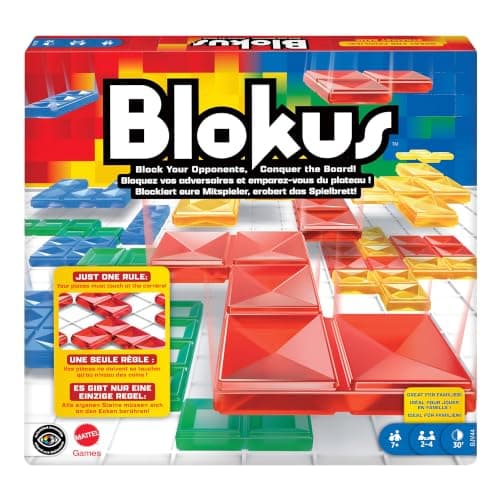
A logic puzzle — Rush Hour, Gravity Maze — is a reasoning task with a difficulty ladder. There is no scanning; there is a wrong move and a right one, and you find out which by trying. Children who find jigsaws dull often take to these immediately, because the structure is exactly that of a video game level.
If a child has rejected jigsaws, the logic puzzles are not a compromise, they are a different offer. There is more on that loop — failure as the information — on the marble run comparison and toys for the STEM kid.
What puzzles are actually good for
Less than the boxes claim, and more than sceptics assume. The honest list: sustained attention on a single task, which is rare in a toy; visual discrimination, which is a real pre-reading skill; and the specific experience of a problem that is definitely solvable, which is a useful thing for a child to have met before they meet problems that are not.
What puzzles do not do is make a child smarter in a general way, and anybody selling that is selling something. The American Academy of Pediatrics is clear that the predictor of a toy’s value is interaction rather than the category it sits in — a puzzle done beside an adult who talks about it does more than the same puzzle done alone.
What we would skip
Floor puzzles with twenty-four enormous pieces for a six-year-old. The piece count is the difficulty, not the size, and a child that age reads giant pieces as being for babies.
Puzzles without a reference picture. A child needs to see what they are building. A box with only a logo on it is a design choice made against the user.
Anything sold in a bag rather than a box. Puzzles live and die by storage, and a bag guarantees a lost piece. More of the general pattern is on the skip list.