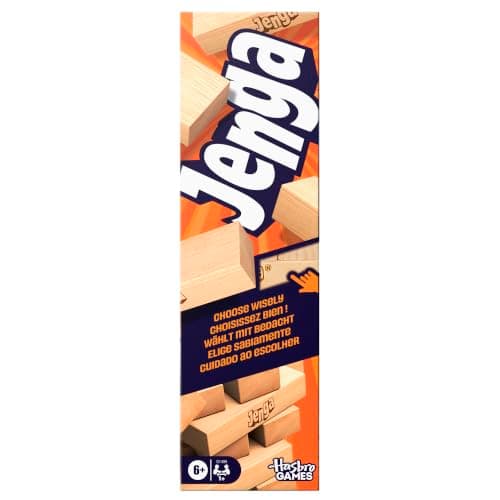
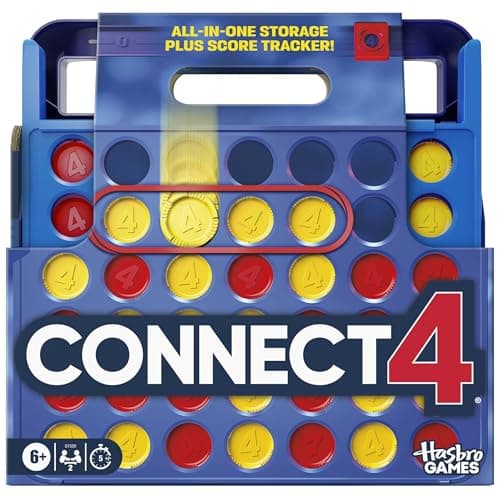
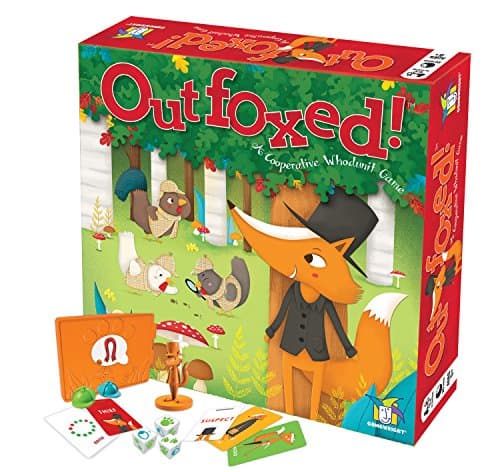
The verdict: the top pick is Outfoxed!, and it is for the family with a six to nine-year-old who want a game that does not end in a sulk — graded 6+, cooperative, and a real deduction puzzle rather than a roll-and-move. The budget pick is Connect 4, the cheapest board game in our registry: graded 6+, three minutes a round, and the only game here a child will ask to play again immediately because the first one barely took any time.
Everything ranked below was under the line at the last price check, and that date is printed under the table above. Every age grade is the publisher’s own wording. We have not played these games with a focus group of children and we are not going to pretend otherwise — the method is published.
Why $25 is not the compromise tier for board games
In most toy categories, a price ceiling costs you something real. In board games it mostly does not, and the reason is what is in the box. A children’s game is cardboard, a handful of wooden or plastic pieces, and a rulebook. None of that is expensive to make. What pushes a game over $25 is usually one of three things: a licence, a large plastic insert, or a designer game aimed at adults with a children’s edition attached.
The practical result is that several of the best-regarded children’s games in the world sit comfortably under this line, and the expensive shelf is mostly adult games and branded ones. If you are buying for a child under about ten, the budget is not the constraint. Matching the game to the table is.
The four questions that decide which of these you want
1. How many people are playing?
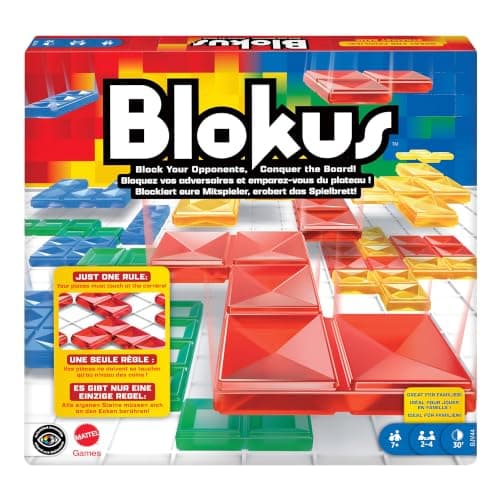
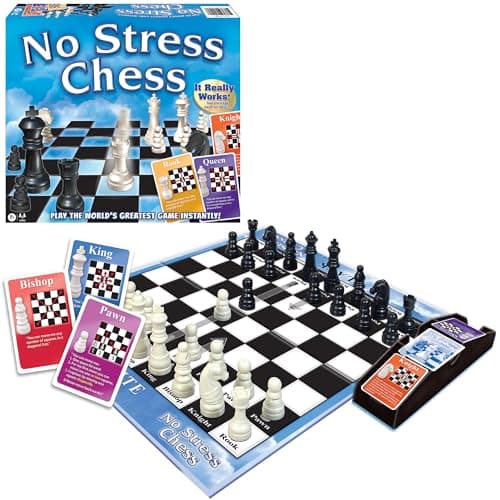
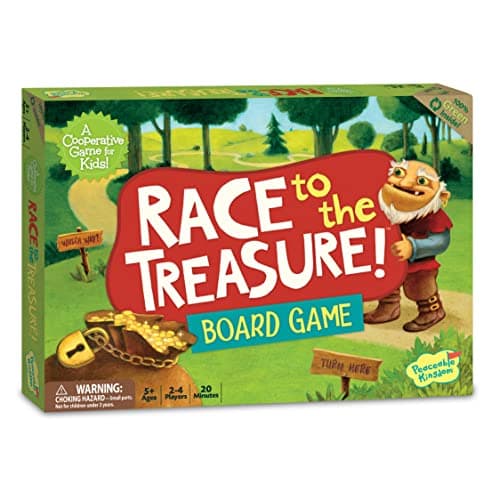
This eliminates more games than anything else and almost nobody asks it first. Connect 4 and No Stress Chess are strictly two-player. Blokus wants exactly four. Outfoxed! and Race to the Treasure! take two to four and work at any of those counts. If the usual table is three people, check this column before anything else.
2. Does somebody have to lose?
The cooperative games on this page — Outfoxed! and Race to the Treasure! — are here because of a specific failure mode. A five-year-old who loses a competitive game at seven in the evening ends the evening. A table playing against the board removes that entirely, and the child still has to think just as hard. This is the single most useful thing to know when buying for a household with a sensitive child or a wide age gap.
3. How long is a round, honestly?
Not how long the box says. A game that takes forty minutes with adults takes an hour with a seven-year-old and will not be finished. Everything on this page runs between three and thirty minutes, which is deliberate: a short game that gets played twenty times beats a better game that gets played twice.
4. Can an adult stand playing it repeatedly?
This is the hidden variable in every family game purchase, and it is why Blokus, chess and Outfoxed! are on this list while several worthy children’s games are not. If the adult is enduring it, the game gets quietly lost in a cupboard move.
What a board game does that a toy does not
It is worth being specific, because “games teach turn-taking” is true and nearly useless. The genuinely distinct thing a board game does is impose a shared, visible rule set on a group, which is the first context in which a child meets the idea that a rule applies to everybody including the adult and including the person who is losing. Enforcing a rule against yourself in front of a seven-year-old teaches more than any cooperative mechanic.
The second thing is slower and more interesting: a game with real decisions teaches a child that a bad outcome can follow a good decision and vice versa. Blokus and chess do that without luck; Outfoxed! does it with. Which of those a particular child can tolerate is worth knowing before you buy. We argue the wider version of this — when a game beats a toy as a present at all — on toys vs games.
Reading the age grades on a game box
Game age grades work differently from toy age grades and the difference matters. On a toy, the grade is largely a safety judgment driven by the federal small-parts rule. On a game it is mostly a judgment about reading, counting and attention span, with small parts applying only to the components.
That means a 7+ game is often playable by a capable six-year-old in a way a 3+ toy is never safely usable by a two-year-old. We still do not recommend below a published grade — the rule is structural on this site and explained here — but if you are judging the gap yourself, the question to ask is whether the child can hold the goal in mind for the length of a round. For a fuller map of which game suits which year, theboard games by age page runs the same catalogue from three to twelve.
What we would skip under $25
Licensed versions of games you already know. The character skin is the whole price difference and the game underneath is usually a worse edition.
Pure roll-and-move. A game with no decision in it is a random number generator with a board attached. Children notice sooner than adults expect.
Anything advertising a hundred games in one box. It is one board, a bag of counters and a leaflet. The count is the marketing.