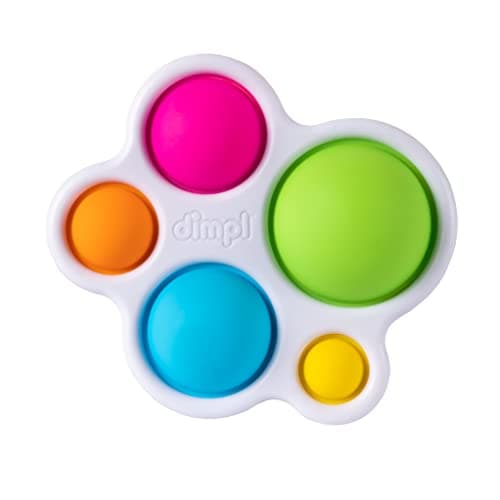
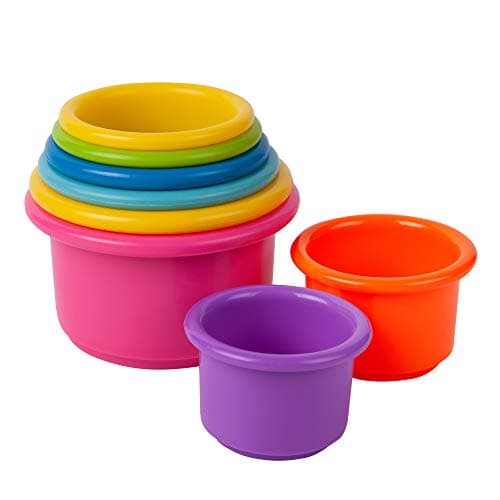
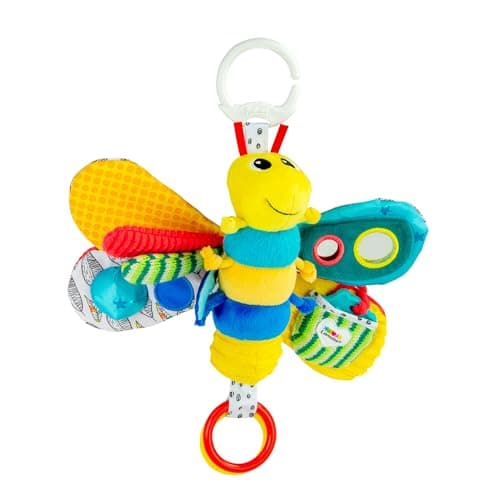
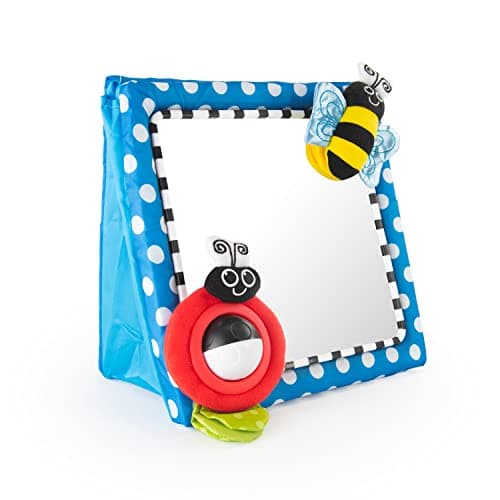
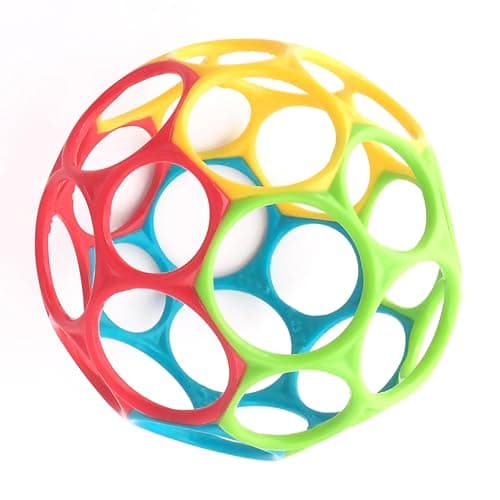
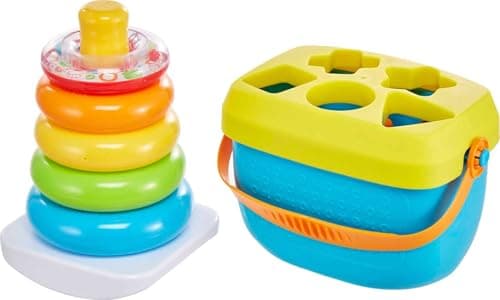
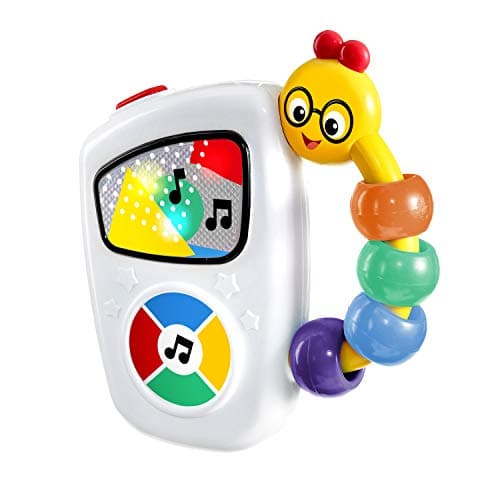
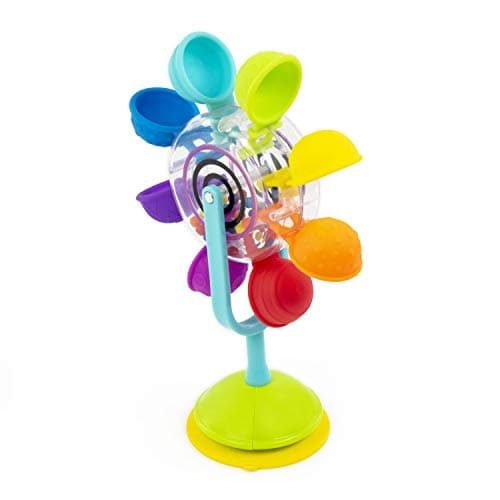
The verdict: the top pick is the Fisher-Price Baby’s First Blocks & Rock-a-Stack set, and it is for the buyer who wants one box to cover most of the first year and some of the second — graded 6 months and up, two classic toys in one, no batteries. The budget pick is the Bright Starts Oball, the cheapest toy on this page and the one most likely to still be in use in a year: graded from 0 months, unbreakable, washable, and built around the only grip a newborn actually has.
Every toy ranked here is graded by its own manufacturer at twelve months or younger, and every one of them was under the line at the last price check — the date is printed directly under the table above, and the number on each button is live rather than remembered. Amazon moves toy prices daily and hardest in November, so if one has crossed the line since we looked, the button will show you that rather than our claim about it. We have not played with these toys; our method is published in full.
Why the baby aisle is the one place a budget barely costs you anything
In almost every other category on this site, spending more buys something real: more pieces, better materials, a longer run before the child outgrows it. The first year is the exception, and it is worth understanding why before you spend.
A baby under twelve months cannot follow instructions, cannot build to a plan, and has no interest in a theme. What they are doing is simpler and more demanding: working out that objects exist when you cannot see them, that an action causes a result, that a hand can be aimed. The toys that serve that are made of one idea — a ring that goes on a post, a bubble that pops through, a cup that fits inside another cup — and one idea is cheap to manufacture. The expensive end of the baby aisle is almost entirely furniture: play gyms, activity centres, walkers, bouncers. Those are real products with real uses, but they are not what a baby plays with, they are what a baby is put in.
The practical consequence is that a $25 ceiling in this aisle costs you very little. It rules out the big plastic furniture and essentially nothing else.
Buy by the month, not by the year
The single most common mistake on a baby gift is buying for “a baby” when the difference between a two-month-old and an eleven-month-old is larger than the difference between a four-year-old and an eight-year-old. A rough map of the first year, in the terms the published grades actually use:
- 0–3 months. The baby cannot hold anything on purpose. Everything useful is something to look at, something that clips on, or something to lie on. High contrast is not marketing — very young eyes genuinely resolve it first.
- 3–6 months. Grabbing starts, then mouthing. Anything bought now goes in the mouth, so washable is the specification that matters and everything else is secondary.
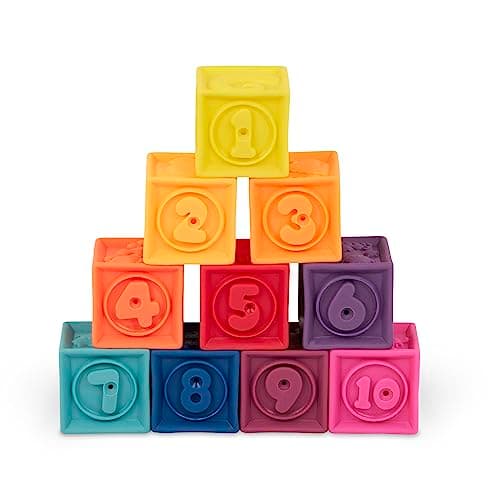
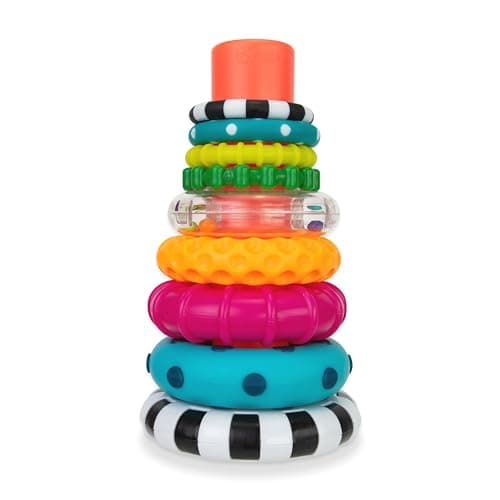
- 6–9 months. Sitting up, and the beginning of cause and effect. This is where stacking rings, soft blocks and anything that reacts to being banged come into their own.
- 9–12 months. Deliberate aim, pulling up, putting one object inside another. Nesting cups, pop-up toys and anything with a lid start working here.
The grade on the box is a floor rather than a target. We never recommend below it — the build fails if a page written for a given age ranks a toy its maker graded above it — and the reason is set out in age grades explained. For a fuller list by month rather than by price, start at toys for a baby, 0–12 months.
The under-three rule, which is not optional
Everything on this page is graded for under-threes, which means every one of them is made to the federal small-parts rule — no component that fits inside the test cylinder that approximates a young child’s throat. That is 16 CFR Part 1501, it is a legal requirement rather than a guideline, and it is the reason an otherwise excellent toy carries a 3+ grade that looks over-cautious.
The risk in a household is rarely the baby’s own toys. It is an older sibling’s: a bag of small bricks, a board game with counters, a craft kit with beads. If the baby has a brother or sister over four, the floor is the problem rather than the shopping list, and the choking hazard guide covers how to split a shared room without banning everything.
What we would skip under $25
Anything with a speaker and a volume you cannot change. The cheap end of the battery aisle is where the loudest toys live, because a speaker is cheaper than a mechanism. Almost no manufacturer publishes a decibel figure, which is itself the finding on our noise ratings page.
Big multi-piece sets at a suspiciously low price. In this aisle a low price per piece usually means thin plastic with a seam, and a seam on a toy that is permanently in a mouth is the one failure mode worth avoiding.
Anything sold on developmental claims. The American Academy of Pediatrics is unusually direct about this: what predicts a toy’s value is whether it produces interaction with a person, not what is printed on the box. A cup and an adult beats an educational toy and an empty room, every time.
If the budget is the real constraint
Two things genuinely help. The first is secondhand: baby toys are the best case in the whole category because they are barely used before they are outgrown, they are built to be washed, and the only checks worth doing are the recall database and any battery compartment — the full method is here. The second is to buy fewer things and rotate them, which costs nothing and works better than it has any right to: toy rotation explains the mechanism, and how many toys a child needs is the argument behind it.