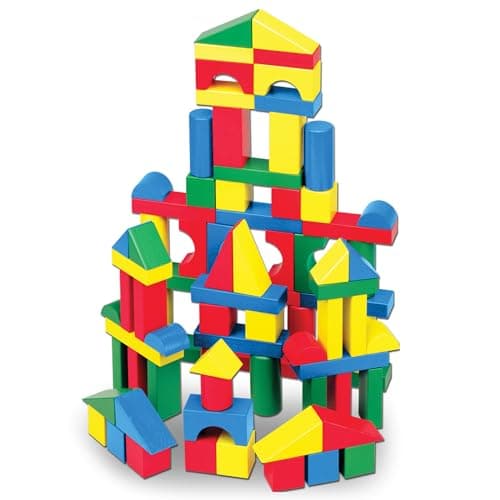
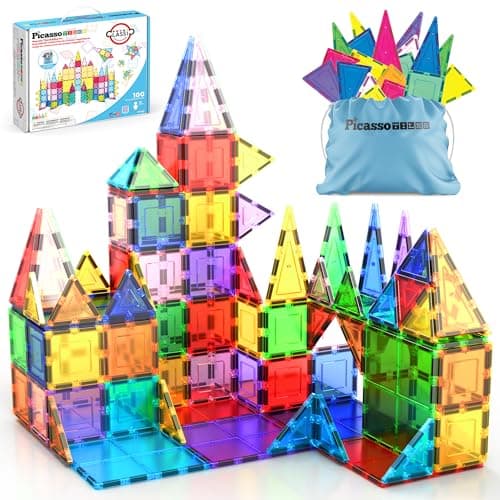
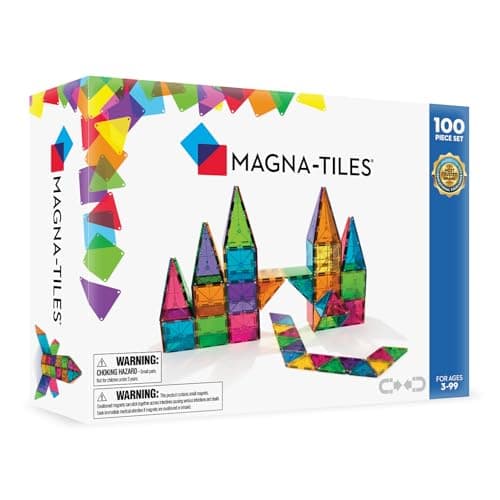
The verdict: the top pick is PicassoTiles 100-piece clear set, and it is for the buyer who wants the same object for less money — same published 3+ grade, same hundred-piece count, and in practice it interlocks with the original. The budget pick is Melissa & Doug’s 100-piece wooden block set, the cheapest open-ended building set in our registry by a wide margin: graded 2+, so it starts a year earlier than any magnetic tile, and it shares the half of the appeal that matters — no instructions and no finish line.
Every age grade on this page is the manufacturer’s own published wording, and prices come live from Amazon with the date they were checked printed under the table above. We have not played with any of these, and our method is published in full.
What Magna-Tiles are actually known for
Worth stating plainly, because an alternatives page is useless if it does not say what is being replaced. MAGNA-TILES publishes the Classic 100 set for builders ages 3 to 99 and describes itself as the original magnetic building brand. Three things come up repeatedly and they are not equally important to everyone:
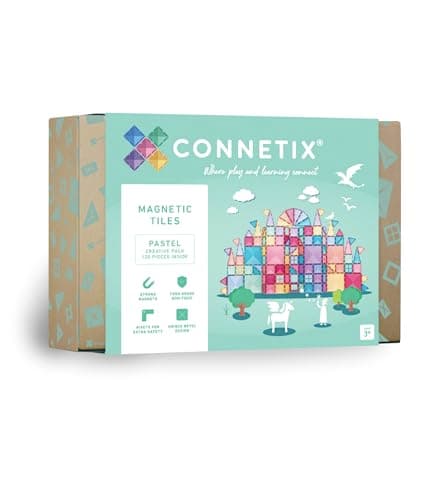
- The bevelled edge. The tiles are chamfered, which is what makes a structure throw coloured light across a floor in sunshine. It is the single feature people miss most when they switch, and it is the reason the premium brands can charge a premium at all.
- Magnet strength. Stronger magnets mean tall structures lean less and come apart less when carried. It shows up in builds above about a foot and almost nowhere below that.
- The warranty. MAGNA-TILES publishes a lifetime warranty against manufacturing defects. For a toy whose most common failure is a cracked seam releasing a magnet, a written warranty is a real thing to be buying.
None of that is marketing noise and we are not going to pretend it is. What it is, is separable: if you want the light, Connetix matches it. If you want the format and the piece count, PicassoTiles matches those. If you want open-ended building and the magnets were incidental, wooden blocks do it for a fraction of the money.
Do the cheaper tiles interlock with the originals?
In practice yes, for the mainstream brands including PicassoTiles and Connetix, because the category has converged on a common tile size and a common magnet polarity arrangement. The magnets in these tiles rotate inside the shell, so polarity sorts itself out and tiles from different makers snap together.
Two caveats worth having before you top up a set. Tile thickness varies very slightly between brands, so a wall of mixed tiles can look uneven; and because magnet strength varies, a tall structure built from mixed tiles is weakest exactly where the cheaper tiles are. Neither matters for a floor-level build and both matter at height.
Nobody publishes a compatibility guarantee, including the premium brands, so treat this as a practical observation rather than a specification. The head-to-head ranking of the three tile brands we stock is on the magnetic tiles comparison.
The magnet safety point, which applies to every brand equally
This is the part of the category worth being careful about, and it has nothing to do with price. Magnetic tiles work because each tile holds magnets inside a sealed plastic shell. The hazard is not the tile; it is a loose magnet, because swallowing two separate magnets can allow them to attract through intestinal tissue — a genuine surgical emergency, and the reason the US Consumer Product Safety Commission has a mandatory standard for loose high-powered magnets.
Three practical consequences. First, the 3+ grade on every tile set on the market is doing real work and we will not recommend below it. Second, a cracked tile is not a cosmetic problem — it is the failure mode, and a cracked tile goes in the bin rather than back in the box, whatever it cost. Third, this is the one place a warranty has genuine value, because the thing it covers is the thing that matters. The general version is in the choking hazard guide, and toy safety standards covers which rules apply to what.
When the answer is not a tile at all
A surprising share of people searching for a cheaper Magna-Tile do not need magnetic tiles. Two cases come up constantly:
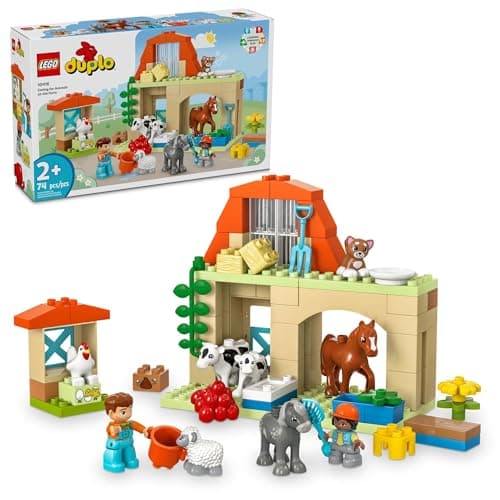
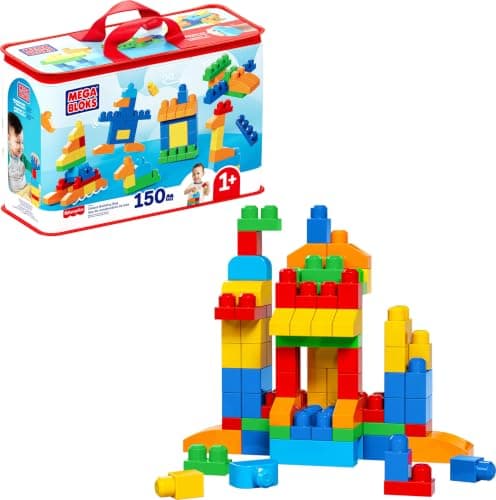
The child is under three. Every magnetic tile on the market is graded 3+. If you are buying for a two-year-old, the alternatives are DUPLO from two and MEGA BLOKS from one, and no amount of shopping around changes that. DUPLO against Mega Bloks is the page for that decision, and Magna-Tiles against DUPLO is the one for choosing a system from three.
The appeal was open-ended building, not magnets. If what you liked was that there are no instructions and no correct answer, that is a property of blocks generally rather than of magnets specifically, and plain wooden blocks deliver it for a fraction of the price. What magnets add is speed: a three-year-old gets a standing structure in seconds rather than minutes, which is why they win at that age. By five that advantage has narrowed considerably.
What we would not buy
Unbranded tile sets with no published age grade. A magnetic tile whose maker will not print an age grade is a product whose maker has not told you what standard it was tested against, and on this site a missing grade disqualifies a pick outright.
Enormous bargain sets sold mainly on piece count. In this category a very low price per piece usually means a thinner shell, and the shell is the thing holding the magnet in. More of the general pattern is on the skip list.