This is not a list of things that came out this year. We cannot verify a release date, and a release date has never once been a reason to buy a toy. This is the shortlist of what is worth buying in 2026 — the ten that are still being played with in March.
We earn a commission if you buy through our links. It does not change the price you pay and it does not decide our picks — our method is published in full, including the part where we say we have not played with these toys. How this works.
Top pick
Magna-Tiles Classic 100-Piece Set
Best toy of 2026 overall, graded for builders 3 to 99 · MAGNA-TILES grades it 3+.
#ad · we may earn a commission · prices come live from Amazon and were last checked November 25, 2026. Where we have no verified live price we show none.
#ad · Prices come live from Amazon’s API and were last checked November 25, 2026. Where we have no verified live price we show none — we would rather leave a gap than print a number that has gone stale. Age grades are the manufacturer’s own; noise is our reading, not a measurement.
The verdict: the best toy of 2026 is the Magna-Tiles Classic 100-piece set, published for builders aged 3 to 99 — the widest honest age range of anything we rank, the fastest success for a three-year-old, and a two-minute clean-up. The budget pick is Connect 4, graded 6+: the cheapest thing on this page and the one most likely to be played on a Tuesday.
Every age grade below is the manufacturer’s own published wording, and every price comes live from the price layer with the date it was checked printed beside it. We have not played with any of these toys and we do not pretend to have our method is published in full.
What “best toys of 2026” usually means, and what it means here
Most lists under this heading are release lists. They rank what the industry launched and what retailers are pushing, which is useful information if you work in the industry and almost useless if you are buying one present. We are not going to do that, for two reasons, and both of them are about honesty rather than taste.
The first is that we cannot verify a release date. Amazon listings do not reliably publish one, repackaged toys appear as new products, and a 2026 edition of a 1974 game is both new and not new. Anything we told you about what launched this year would be a guess dressed as a fact, and this site does not do that.
The second is that novelty is a bad buying signal. The question a gift-giver actually has is not “what is new” — it is “what will still be out of the cupboard in March.” Those are nearly opposite questions. The toy that dominates a December trending list is, more often than not, the one with the highest resale volume in February.
So this is a shortlist of what is worth buying in 2026: ten toys, currently on sale, each one chosen because it has a published age grade we can quote, a mechanism that does not wear out, and a drawback we are willing to print.
The five tests a toy had to pass to be on this page
A published age grade. The manufacturer has to state an age in its own words. Not an estimate, not our judgment — their wording, which we quote. Anything without one is disqualified from every ranked list on this site, and the reason is a safety rule, not a style rule.
Play life beyond the first month. The test is whether the toy is different on the fiftieth use. Construction systems, open-ended objects and games with real strategy pass. Anything whose whole content is revealed on day one does not.
It survives a sibling, a foot and a year. Hardwood, high-density plastic, FSC beech, a published warranty. Eight of the ten picks here have nothing electronic in them at all, which is the single biggest predictor of a toy still working next Christmas.
An honest noise and mess reading. Every pick carries ours, and they are judgments from the manufacturer’s own listing rather than measurements — we own no sound meter and we say so on the noise ratings page.
A real reason not to buy it. Every product on this site carries a “skip this if” line that has to be disqualifying rather than polite. If we could not write one, the toy came off the list.
The ten, by who you are buying for
A one-year-old: the pound-and-tap bench, graded 12 months to 3 years. Nothing else here is graded that low, and the reason is small parts rather than difficulty. The full year is on toys for 1-year-olds.
A two-year-old: wooden railway, or the Bilibo. Railway if the collection is meant to grow; the Bilibo if the house already has too many pieces.
A three- to five-year-old: magnetic tiles, and this is the band where they are unbeatable. If the budget is tight, buy piece count over brand. If the present should be a sensory material rather than a construction set, the swaps are on Play-Doh alternatives.
A four- to seven-year-old: the first real brick box. No theme, no model, a lidded bin.
A six- to nine-year-old: the family game, or the scooter. The game is the cheaper gift and the one that involves the adults.
An eight- to twelve-year-old: the electronics kit, or the scooter that is graded to twelve. This is the age where a toy has to be a real version of a real thing, and the STEM shelf for 10 to 12 covers the rest of it.
What we would not buy in 2026
A toy because it is trending. Trend lists measure attention, not play life, and the item at the top of one in late November is frequently the one in a charity bag by Easter. If the child has explicitly asked for the trending thing, buy it — a present they asked for is a different product from a present you chose — but do not let a list tell you a toy is good because it is popular.
A 32-piece magnetic tile starter pack. It is the most common first purchase in the category and the one that convinces a household the child does not like building. Thirty-two tiles makes one small box and nothing else; magnetic tiles do not start working until around a hundred.
Anything electronic sold as developmental for a baby under one. A toy that lights up and sings is doing the work the baby should be doing, and the pediatric guidance on that is clearer than the marketing suggests. The alternative shelf is on wooden toys for babies and toddlers.
And any set bought below its printed grade on the theory that the child is advanced. The grade on a brick set or a tile set is a small-parts judgment under the federal small-parts rule, not an assessment of skill — the full explanation is on the choking-hazard guide. If the budget rather than the age is the constraint, the honest version of this page with a hard ceiling is gifts under $25.
In detail
Every pick, in full
01
Best toy of 2026 overall, graded for builders 3 to 99
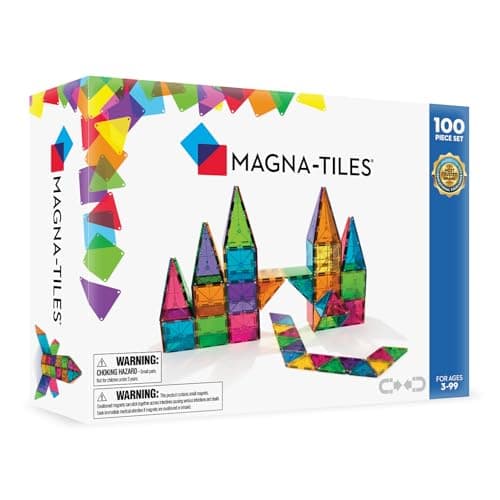
Magna-Tiles Classic 100-Piece Set
MAGNA-TILES
Magna-Tiles publishes the Classic 100-piece set for builders aged 3 to 99, and that range is the whole argument. It is the only toy we rank that a three-year-old succeeds with on the first afternoon and a nine-year-old is still finding new structures in — the magnets join one way round, so there is no failure mode, and a flat square net folding into a solid cube is a real geometric idea a child discovers rather than is taught. A hundred large flat pieces also go back into a bin in about two minutes, which is the tidiest clean-up on this page. Magna-Tiles publishes a lifetime warranty against manufacturing defects, which very little else in this bracket puts in writing. The honest catch is the money: roughly four times the price per piece of the copies, and a hundred pieces stops feeling generous the moment two children want to build separately.
Age grade:
3+
Batteries:
manufacturer does not publish a battery requirement
Noise:
Quiet
Mess:
Contained
Assembly:
manufacturer does not publish an assembly time
Price:
$83.99 as of November 25, 2026
Age grade, battery and assembly wording are quoted from MAGNA-TILES’s own product listing, read on September 7, 2026. The manufacturer’s exact words: “builders ages 3-99”. Noise and mess are our reading, not a measurement — we have not played with this.
What it gets right
+Lifetime warranty against manufacturer's defects, published on the listing — almost nothing else in this price bracket carries one
+Age grade of 3+ but the manufacturer describes the set as built for ages 3 to 99, which is the honest range: adults build with these too
+Made from food-grade MABS plastic that the maker states is free from BPA, phthalates and latex
What it doesn’t
−Roughly four times the price per piece of the copies, and the copies are magnetic tiles too
−One hundred pieces sounds like a lot until two children want to build separately
How loud
Nothing electronic in the box. The loudest sound it makes is a tower coming down.
How much mess
A hundred big flat pieces. They go back in a bin in under two minutes, and none of them hurt to step on.
Skip this if…
…you are buying for a child under three. The age grade is 3+ and these are exactly the flat, swallowable-magnet shape the small-parts rule exists for — no amount of supervision makes an under-three set out of a 3+ set.
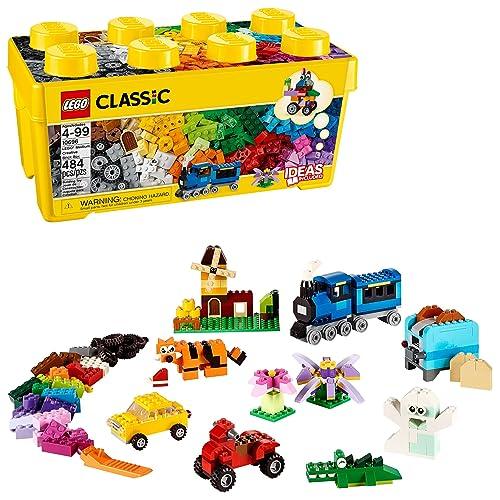
LEGO publishes this Medium Creative Brick Box for ages 4 to 99 — 484 pieces in 35 colors, with a lidded storage bin. It is the right answer to the question most people get wrong by about two years in either direction: standard bricks bought for a two-year-old are a small-parts problem, and DUPLO bought for a five-year-old is an insult. Four is when real bricks become correct, and this is the correct first box, because there is no theme, no minifigure and no model to rebuild — it is a box of parts, which is what gives it a five-year run while a licensed set is built once and shelved. The bin is the quiet reason it ranks this high: the toy arrives with its own answer to where it lives. Honest limits: no minifigures and no shelf appeal, and 484 loose bricks in one open compartment is a dig rather than a search.
Age grade:
4+
Batteries:
manufacturer does not publish a battery requirement
Noise:
Quiet
Mess:
Contained
Assembly:
manufacturer does not publish an assembly time
Price:
$21.42 as of November 25, 2026
Age grade, battery and assembly wording are quoted from LEGO’s own product listing, read on September 7, 2026. The manufacturer’s exact words: “Ages 4-99”. Noise and mess are our reading, not a measurement — we have not played with this.
What it gets right
+Published 4+ grade (LEGO prints "Ages 4-99"), so it is the correct first real-brick set rather than a set bought two years early
+The storage bin is included, which means the toy arrives with its own answer to where it lives
+484 pieces in 35 colors, plus a green baseplate, windows, eyes and 18 tires — and no model to rebuild, which is what makes it last
What it doesn’t
−No minifigures and no theme, so it does not have the shelf appeal of a licensed set
−The bin is a single compartment rather than a sorter — 484 loose bricks in one box is a dig, not a search
How loud
Silent. Bricks do not have an opinion.
How much mess
Storage arrives in the box — the bin has a lid and the bricks go back into it. It is one open compartment rather than a sorting tray, so finding a specific piece means tipping it out.
Skip this if…
…the child already has a LEGO collection. This is a starter box, and its value is the bin and the entry price — for an established builder the money is better spent on a themed set they actually want, or on the Large box if what they need is raw volume.
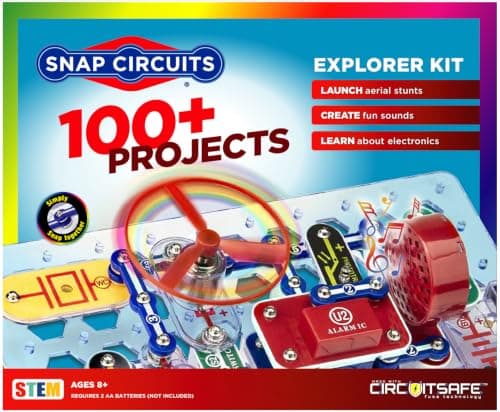
Snap Circuits publishes the Jr. SC-100 for ages 8 and up with over a hundred projects, and it is on this list because of what it removes rather than what it adds. There is no soldering, no wire stripping and no exposed mains anything — components snap onto a plastic grid, so every reason an adult has ever had to say no to an electronics kit is gone. The hundred-plus projects have a real progression, which is why it is months of activity instead of one Saturday: the child who builds the siren in week one builds the light-activated alarm in week six and understands why it works. Honest limits, and both are real: batteries are required and are not in the box, so check that before wrapping it; and the manual is the product as much as the parts are, so a lost manual nearly kills the kit. If the child will not follow a diagram, this is the wrong gift.
Age grade:
8+
Batteries:
manufacturer does not publish a battery requirement
Noise:
Some noise
Mess:
Contained
Assembly:
manufacturer does not publish an assembly time
Price:
$32.99 as of November 25, 2026
Age grade, battery and assembly wording are quoted from Snap Circuits’s own product listing, read on September 7, 2026. The manufacturer’s exact words: “Ages 8+”. Noise and mess are our reading, not a measurement — we have not played with this.
What it gets right
+Over a hundred projects with a real progression, so it is months of activity rather than an afternoon
+No soldering, no exposed wiring — the design removes every reason an adult would say no
+Published 8+ grade, and the projects teach actual circuit concepts rather than dressing them up
What it doesn’t
−Batteries required and not included; check the manual before wrapping it
−The manual is essential, and a lost manual makes the kit nearly useless
How loud
Some projects build a siren or an alarm, and those are as loud as you would expect. Most are silent. No decibel figure is published.
How much mess
Modular parts on a grid base, all of which fit in the tray. The base is the workspace.
Skip this if…
…the child will not follow a diagram. Snap Circuits is a build-from-instructions kit, and freestyling it produces nothing that works.
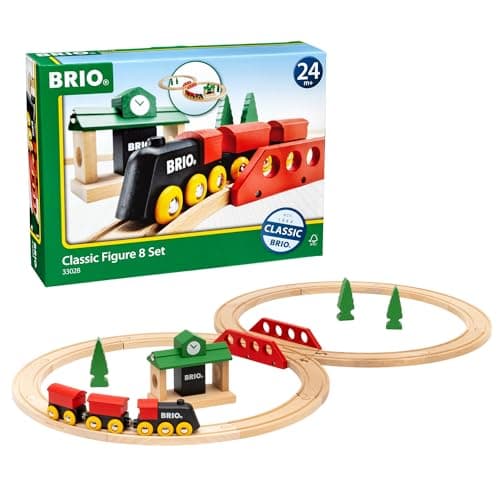
BRIO publishes this 22-piece Classic Figure 8 set for ages 2 and up, in FSC-certified beech, compatible with every other wooden rail system ever made. Wooden railway earns its place on a best-of-the-year list by being the rare toy whose useful life is measured in years rather than months: a two-year-old pushes one train around one loop, a four-year-old builds the layout first and plays second, and a six-year-old is still adding track. The compatibility is the real point — this is the opening of a collection rather than a closed box, and the expansion track that fits it does not have to be BRIO. No batteries, no motor, no app; the train goes when the child pushes it. Honest limits: it is expensive per piece against the unbranded track that fits it exactly, and 22 pieces is one loop, so anything ambitious needs a second set.
Age grade:
2+
Batteries:
manufacturer does not publish a battery requirement
Noise:
Quiet
Mess:
Contained
Assembly:
manufacturer does not publish an assembly time
Price:
$54.32 as of November 25, 2026
Age grade, battery and assembly wording are quoted from BRIO’s own product listing, read on September 7, 2026. The manufacturer’s exact words: “Fun Play for Kids Ages 2 & Up”. Noise and mess are our reading, not a measurement — we have not played with this.
What it gets right
+Compatible with every other wooden rail system, so it is the start of a collection rather than a closed box
+FSC-certified wood and a published 2+ grade — appropriate for a toddler who is still mouthing things less often
+No batteries, no motor, no app. The train goes when the child pushes it
What it doesn’t
−Expensive per piece against the unbranded wooden track that fits it exactly
−Twenty-two pieces is one loop. Anything more ambitious needs a second set
How loud
Wooden wheels on wooden track. Genuinely pleasant, which is not a sentence you get to write often.
How much mess
Track pieces are large and stay in the room they were built in.
Skip this if…
…you want a big layout on day one. This is a starter loop at a premium price, and an unbranded expansion pack will double the track for a fraction of a second BRIO set.
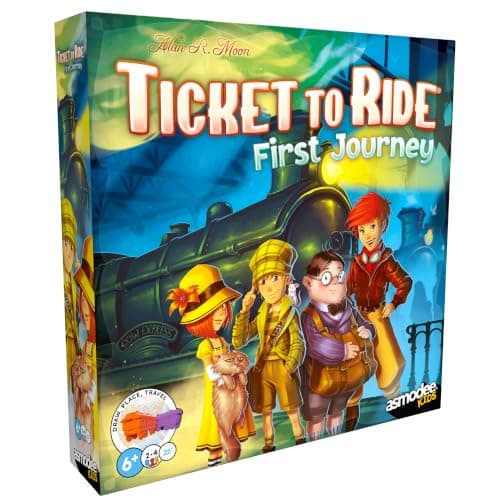
Asmodee publishes Ticket to Ride: First Journey for ages 6 and up — the full game's idea with a simplified map, chunky plastic trains and a round short enough that a six-year-old finishes before losing interest. It makes this list on a test most family games fail: the adults do not have to endure it. A game that a parent quietly dreads gets played twice and then lives in a cupboard, and the reason this one keeps coming out is that claiming routes is genuinely interesting at both ends of the table. It is also a real gateway — a child who likes this plays the full version at nine, which is a rare thing to be able to say about a children's edition. Honest limits: the small train pieces are the parts that go missing and a full set is required to play, and because it is deliberately simpler than the adult game it is outgrown within a couple of years.
Age grade:
6+
Batteries:
manufacturer does not publish a battery requirement
Noise:
Quiet
Mess:
Contained
Assembly:
manufacturer does not publish an assembly time
Price:
$29.99 as of November 25, 2026
Age grade, battery and assembly wording are quoted from Asmodee’s own product listing, read on September 7, 2026. The manufacturer’s exact words: “ages 6+”. Noise and mess are our reading, not a measurement — we have not played with this.
What it gets right
+A genuine gateway game — a child who likes this will play the adult version at nine
+Chunky pieces and a simplified map make the published 6+ grade honest
+Adults do not have to endure it, which is the real test of a family game
What it doesn’t
−Small train pieces at floor level; a full set is required to play
−Shorter and simpler than the full game, so it is outgrown within a couple of years
How loud
Plastic trains on a board. Nothing electronic.
How much mess
Small plastic trains. There are a lot of them and they are the pieces that go missing.
Skip this if…
…the family already owns full Ticket to Ride. First Journey is a stepping stone, and owning both is redundant.
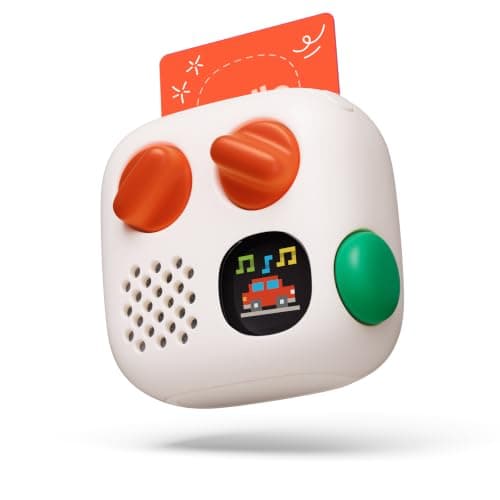
Yoto publishes the Mini 4th Gen as a screen-free audio player for ages 3 and up. A child puts a physical card into a slot and a story plays — no account, no feed, no autoplay, no recommendation engine and nothing to scroll, which is the entire reason it is on a 2026 list rather than a tablet. It is also the pick with the longest runway here: the device does not change, the content does, so it stays useful from three to about eight without becoming a different purchase. Rechargeable and genuinely portable, which matters in a car and at a grandparent's house. Honest limits, and the first one is the real price of ownership: the cards are proprietary and the library adds up fast, so the player is the cheap part. The volume limit is also a setting rather than a hardware ceiling, and children find settings.
Age grade:
3+
Batteries:
manufacturer does not publish a battery requirement
Noise:
Loud
Mess:
Contained
Assembly:
manufacturer does not publish an assembly time
Price:
$109.99 as of November 25, 2026
Age grade, battery and assembly wording are quoted from YOTO’s own product listing, read on September 7, 2026. The manufacturer’s exact words: “Age 3+”. Noise and mess are our reading, not a measurement — we have not played with this.
What it gets right
+Screen-free by design, with a physical card for each story — no feed, no autoplay, no algorithm
+Published 3+ and it keeps earning its place for years, because the content changes rather than the device
+Rechargeable and portable, so it works in a car and at a grandparent's house
What it doesn’t
−Cards are proprietary and the library adds up fast — the player is the cheap part
−The volume limit is a setting, not a hardware limit, and children find settings
How loud
It is a speaker, so it is exactly as loud as the child sets it. There is a volume limit, and headphone output, which together are why it is here rather than on the loud-toys list.
How much mess
The player is one object. The cards are the small pieces, and they need a box.
Skip this if…
…nobody will buy cards. The player alone is a nice-looking speaker with very little on it, and the ongoing card cost is the real price of ownership.
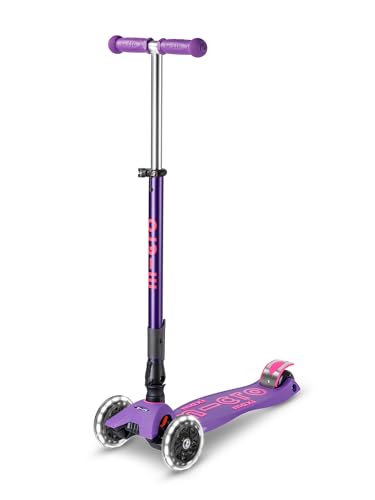
Micro publishes the Kickboard Maxi for ages 5 to 12 with a 110 lb limit and states the LED front wheels need no batteries. It is roughly three times the price of a supermarket scooter and it is the one still being ridden in three years, which is the only arithmetic that matters on a gift this size: a scooter replaced annually costs more than this one does. Polyurethane wheels are noticeably quieter and smoother than hard plastic, the deck is wide enough for a child who is still learning to lean, and it folds — which is the feature you appreciate on the walk home carrying it. Honest limits: it is expensive enough that losing it to a school bike rack genuinely hurts, and replacement parts are proprietary and priced accordingly. If the child will grow out of scootering within a year, the value case does not work.
Age grade:
5–12
Batteries:
No batteries required
Noise:
Quiet
Mess:
No mess
Assembly:
manufacturer does not publish an assembly time
Price:
$149.99 as of November 25, 2026
Age grade, battery and assembly wording are quoted from Micro’s own product listing, read on September 7, 2026. The manufacturer’s exact words: “Ages 5-12”. Noise and mess are our reading, not a measurement — we have not played with this.
What it gets right
+Published 5 to 12 range with a 110 lb limit — this genuinely lasts to secondary school
+LED wheels with no batteries, stated by the manufacturer
+Folds for storage and for carrying, which is the thing you appreciate on the walk home
What it doesn’t
−Expensive enough that losing it to a school bike rack genuinely hurts
−Replacement parts are proprietary and priced accordingly
How loud
Polyurethane wheels are notably quieter than hard plastic. No electronics — the LEDs are driven by the wheels.
How much mess
Folds, so it can live in a hall cupboard rather than against a wall.
Skip this if…
…the child is going to grow out of scootering in a year. The whole value case is longevity, and it does not work over a short horizon.
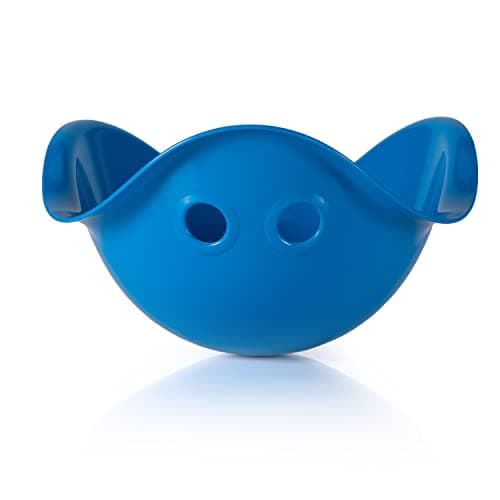
Fat Brain Toys publishes the Bilibo by Moluk for ages 2 to 4 — one piece of high-density polyethylene with two holes in it, which is a seat, a helmet, a bucket, a spinning top, a stepping stone or a hat depending entirely on the day. It is here because a best-of-the-year list that is all construction sets and board games misses the category that actually survives a house move: the object with no instructions. There is nothing to lose, nothing to break in normal use, and nothing to pick up, which after a year of small-parts toys is its own kind of luxury. Honest limits, and they are not small: it looks like nothing in the box, so a child expecting a toy that does something will be visibly unmoved on the day; and it is bulky to store because it nests into nothing. It needs a child who invents.
Age grade:
2–4
Batteries:
manufacturer does not publish a battery requirement
Noise:
Quiet
Mess:
No mess
Assembly:
manufacturer does not publish an assembly time
Price:
$32.95 as of November 25, 2026
Age grade, battery and assembly wording are quoted from Fat Brain Toys’s own product listing, read on September 7, 2026. The manufacturer’s exact words: “Ages 2-4”. Noise and mess are our reading, not a measurement — we have not played with this.
What it gets right
+One object, no parts, nothing to lose — which after a year of small-parts toys is its own kind of luxury
+The manufacturer states high-density polyethylene, and the shape is essentially unbreakable in normal use
+Genuinely open-ended, so what it is changes as the child does
What it doesn’t
−Looks like nothing in the box, and a child who wanted a thing that does something will be unmoved
−Bulky to store — it does not nest into anything
How loud
High-density polyethylene on a floor. Silent unless a child is spinning in it, which is the intended use.
How much mess
It is one piece. There is nothing to lose and nothing to pick up.
Skip this if…
…you need the gift to be self-explanatory. Bilibo needs a child who invents; handed to one who waits to be told what a toy does, it will sit in a corner.
Best toy for a one-year-old, graded 12 months to 3 years
Hape Pound & Tap Bench with Xylophone
Hape
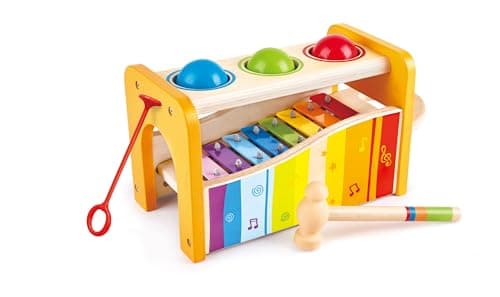
Hape publishes this Pound & Tap bench with a slide-out xylophone for ages 12 months to 3 years, and it is the lowest published grade on this page. It covers two developmental jobs in one object: pounding balls through the holes is force and hand-eye work for a new walker, and the xylophone underneath is real pitch rather than an electronic sound effect — it slides out and becomes a proper instrument on its own. Wood, no batteries, nothing to charge, nothing to replace, which is the standard we hold anything aimed at a one-year-old to. The published range to three means it is not a six-week toy. Honest limits, and the first is honest rather than diplomatic: it is loud, because hitting things with a mallet is the entire point; and the balls roll under furniture permanently, which a household with hard floors discovers in week one.
Age grade:
12 months–3 years
Batteries:
manufacturer does not publish a battery requirement
Noise:
Loud
Mess:
Contained
Assembly:
manufacturer does not publish an assembly time
Price:
$21.99 as of November 25, 2026
Age grade, battery and assembly wording are quoted from Hape’s own product listing, read on September 7, 2026. The manufacturer’s exact words: “For ages 12 months - 3 years”. Noise and mess are our reading, not a measurement — we have not played with this.
What it gets right
+Two toys in one — the xylophone slides out and works on its own
+Wooden and solidly built; Hape's benches survive being hit for a living
+Published 12 months to 3 years, which is honest about how long it lasts
What it doesn’t
−Balls roll away and a bench with one ball missing is noticeably worse
−Loud in the specific way only a toddler with a hammer is loud
How loud
A xylophone being hit with a wooden hammer by a one-year-old. It is tuneful in principle and percussive in practice, and there is no volume control on a xylophone.
How much mess
Three balls and a hammer, all of which roll under furniture eventually.
Skip this if…
…you live in an apartment with neighbors below. Hammering is the toy, and there is no quiet version of it.
Budget pick — the cheapest thing here and it still gets played, graded 6+
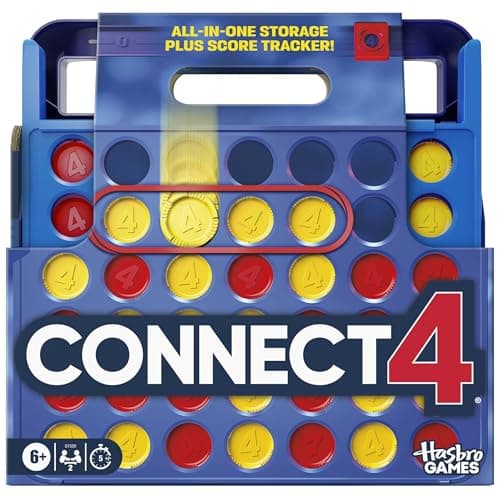
Connect 4 (2025 Edition)
Hasbro Gaming
Hasbro publishes the 2025 edition of Connect 4 for ages 6 and up, two players, with the grid, disc tray and score trackers folding into one carrying case. It is by a wide margin the cheapest pick on this page, and it earns the slot rather than merely undercutting everything because of a quality the expensive toys here cannot buy: the rules take one sentence, so it actually gets played. A round runs about five minutes, which makes it the right thing for the ten minutes before bed, and it is one of the very few games where an adult can lose to a child without pretending — there is a solved first move and a six-year-old will find it unprompted. Honest limits: two players only, always, and no house rule fixes that; and now that the case folds, a failed hinge takes the whole game rather than one leg.
Age grade:
6+
Batteries:
manufacturer does not publish a battery requirement
Noise:
Some noise
Mess:
Contained
Assembly:
manufacturer does not publish an assembly time
Price:
$5.00 as of November 25, 2026
Age grade, battery and assembly wording are quoted from Hasbro Gaming’s own product listing, read on September 7, 2026. The manufacturer’s exact words: “Ages 6+”. Noise and mess are our reading, not a measurement — we have not played with this.
What it gets right
+Rules explained in one sentence, which means it actually gets played
+Hasbro puts a round at five minutes, which makes it the right thing for the ten minutes before bedtime
+Genuinely strategic — there is a solved first move and a child will find it themselves
What it doesn’t
−Two players only, always
−Grid, tray and score trackers are now one folding case, so a failed hinge takes the whole game rather than one leg
How loud
Discs dropping into a plastic grid, and then the whole lot released into the storage tray at once. That second sound is the loud one.
How much mess
Forty-two discs and a grid. The discs are still the losable part, but this edition gives them a tray to drop into rather than a carpet.
Skip this if…
…you need a game for three or more. Connect 4 is strictly two-player and no house rule fixes that.
Every one of these carries its manufacturer’s published age grade and a live Amazon price, read November 25, 2026. Full rankings live in the roundups linked above.
If the gift is the one big thing and the child is one to four
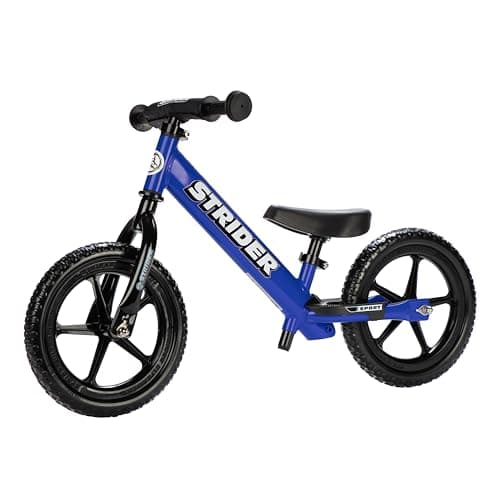
Strider 12 Sport Balance Bike
Age grade 1–4
Strider publishes the 12 Sport for ages 1 to 4 with an adjustable seat and handlebar covering that whole range. A balance bike skips training wheels entirely, and children who learn on one usually go straight to pedals without the intermediate misery. No chain, no brakes to adjust, nothing to service — but it needs somewhere flat and traffic-free to ride.
If magnetic tiles are right but the flagship price is not
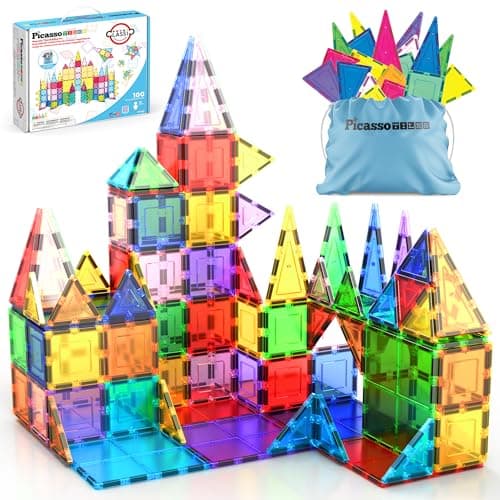
PicassoTiles 100-Piece Clear Magnetic Tiles
Age grade 3+
PicassoTiles publishes this 100-piece clear set for kids 3 and up. The magnets are weaker and there is no lifetime warranty, but piece count is the single biggest determinant of whether tiles get used — a hundred of the value brand beats fifty of the original at the same money, and clear tiles throw colored light on a floor.
If the toy has to hold one child at a table, quietly
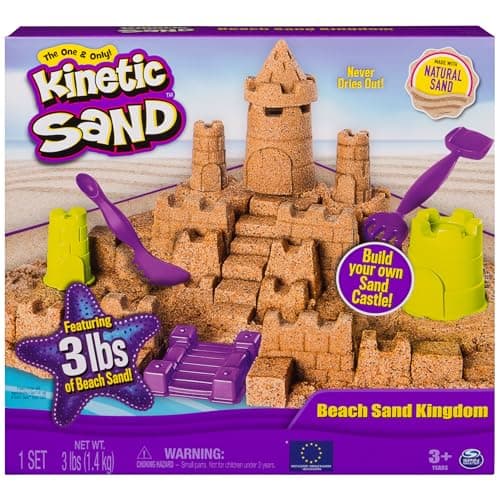
Kinetic Sand Beach Sand Kingdom Playset, 3 lbs
Age grade 3+
Kinetic Sand publishes this 3 lb Beach Sand Kingdom playset for ages 3 and up. It behaves like wet sand while staying dry, which is the small miracle that keeps a child at a table for forty minutes, and it is one of the quietest toys we rank. It needs a tray every single time, and it is a permanent decision on carpet.
If you want one box that works for every age in the room
Jenga Classic
Age grade 6+
Hasbro publishes Jenga for ages 6 and up — 54 hardwood blocks, any number of players, no reading and no language. It survives being dropped several thousand times. The collapse is the punchline and it is genuinely loud, so it is the wrong box for a shared building at 8pm.
#ad · As an Amazon Associate we earn from qualifying purchases. How this works.
How we picked
Toys we claim to have played with: 0
Every toy site tells you they tested forty toys with a focus group of real children. We have not played with any of these, and we say so. Here is what we do instead: we read the manufacturer’s own listing and print its published age grade word for word, we record the battery requirement and the assembly note where the maker publishes one and say plainly when it does not, we pull the price live from Amazon so it is never a number we remembered, and we name one thing on every list we would not buy.
The noise and mess ratings are our judgment from what the listing describes — not measurements. Almost no toy manufacturer publishes a decibel figure, which is itself worth knowing. The full method is published, including what disqualifies a toy.
Questions
Questions people actually ask
What is the best toy of 2026?+
The Magna-Tiles Classic 100-piece set, published for builders aged 3 to 99. It has the widest honest age range of anything we rank, a three-year-old succeeds with it on the first afternoon, and a hundred flat pieces go back in a bin in about two minutes. The drawback is the price per piece, which is roughly four times the copies.
Are these the toys that came out in 2026?+
No, and deliberately not. Amazon listings do not reliably publish a release date, so any claim we made about what launched this year would be a guess. More importantly, novelty is a poor buying signal — the question a gift-giver has is which toy is still being played with in March, which is nearly the opposite question.
What is the best cheap toy on this list?+
Connect 4, graded 6+. It is the cheapest pick here by a wide margin and the one most likely to be played on an ordinary Tuesday, because the rules take one sentence and a round runs about five minutes. It is strictly two-player, which is the one thing no house rule fixes.
How do you choose which toys to rank?+
Five tests: the manufacturer has to publish an age grade we can quote, the toy has to be different on its fiftieth use, it has to survive a year of real handling, it has to carry an honest noise and mess reading, and we have to be able to write a disqualifying reason not to buy it. We have not played with any of these toys and we never claim to have.
We do not run a playroom test lab and we do not pretend to. Age grades, battery requirements and assembly notes are quoted from each manufacturer’s own product listing, read on September 7, 2026; prices come live from Amazon’s API and are stamped with the date they were checked. Where a maker publishes nothing, the page says “manufacturer does not publish this” rather than guessing. Read the full method.