Nine is the year the word toy starts to sting. The gifts that work are the ones that read as equipment, gear or a game -- things a nine-year-old can own in front of their friends without explaining.
We earn a commission if you buy through our links. It does not change the price you pay and it does not decide our picks — our method is published in full, including the part where we say we have not played with these toys. How this works.
#ad · Prices come live from Amazon’s API and were last checked October 17, 2026. Where we have no verified live price we show none — we would rather leave a gap than print a number that has gone stale. Age grades are the manufacturer’s own; noise is our reading, not a measurement.
The short answer
If the child does not already have one, buy the Razor A5 Lux: graded 8+, built on full-size wheels, and used as transport rather than played with, which is why it survives the year a nine-year-old decides toys are for younger children. If a scooter is already in the hallway, buy the Snap Circuits Classic SC-300 -- a real electronics kit that reads as equipment and runs for months rather than an afternoon.
Every pick here carries its manufacturer’s published age grade, and every price comes live from Amazon rather than from our memory. The rest of this page is about which of them to buy for which nine-year-old.
Nine is when “toy” becomes an insult
Somewhere in the ninth year most children start sorting their possessions into things that are theirs and things that are for kids. It is not maturity exactly -- they will still play with the same bricks in private -- but it changes what can be given in public. A present that reads as a toy is received as a misjudgment of who they are now.
The fix is not to buy something older. It is to buy something whose category is adult: a scooter is transport, an electronics kit is equipment, a card game is a card game at any age. All three can be owned at nine without a single word of explanation.
Buy for the hour they actually have
Nine-year-olds have schedules. The presents that get used are the ones that fit a window: no setup, no second player required, no adult needed at the critical step. That is why we rank a card game and a bracelet loom beside a $100 scooter -- the cheap things get picked up more often, and a gift’s value is how many times it is used, not what it cost.
The one thing worth spending money on at this age is something that goes outside. Nine is the last comfortable year to start a wheeled hobby before self-consciousness makes learning in public hard, and outdoor toys by age has the rest of that list.
If you are buying for somebody else’s nine-year-old
Two rules. Do not buy a kit that needs an adult to run it -- you are giving the parents a job, and the box will sit unopened. And do not buy up: a set graded 10+ or 12+ handed to a nine-year-old is a box that gets opened, found hard, and shelved.
A card game plus something consumable is the most reliable guest present at this age: it is cheap, it is not babyish, and it cannot be the fourth identical one. For the money tier question, best gifts under $50 is where most nine-year-old presents actually land.
What to skip at nine
Skip anything sold on an activity count. Skip the science kit whose exciting part is a single reaction. Skip app-dependent toys, which date in a year and sometimes stop working entirely. And skip the gift that is really a message about homework -- a nine-year-old reads that accurately, and it is the fastest way to make a good kit unopened. The longer version of that argument is on educational toys vs just-for-fun toys.
Buying for a sibling at the same time? The year up is birthday gifts for a 10-year-old and the year down is birthday gifts for an 8-year-old. The lists barely differ at this end of childhood, which is itself worth knowing: the change between eight and ten is in what a child will admit to liking, not in what they can do.
In detail
Every pick, in full
01
The one most nine-year-olds would choose
Razor A5 Lux Kick Scooter
Razor
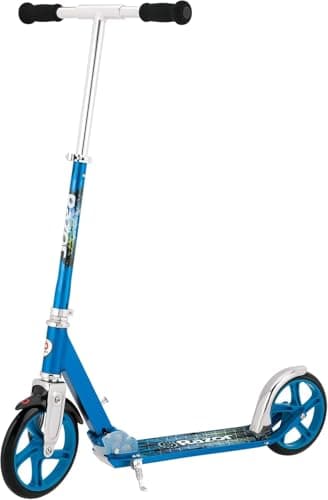
Graded 8+, with large wheels and a taller deck than the children's models -- which is what stops it being outgrown in a year. At nine a scooter is transport rather than a toy, and that reframing is most of why it lands well: it is the gift that gets used on the way to somewhere. Silent, nothing to assemble in the usual sense, and it will live in a hallway for years. Buy a helmet with it.
Age grade:
8+
Batteries:
manufacturer does not publish a battery requirement
Noise:
Quiet
Mess:
No mess
Assembly:
manufacturer does not publish an assembly time
Price:
$89.00 as of October 17, 2026
Age grade, battery and assembly wording are quoted from Razor’s own product listing, read on September 7, 2026. The manufacturer’s exact words: “Ages 8+”. Noise and mess are our reading, not a measurement — we have not played with this.
What it gets right
+8-inch wheels handle real pavement rather than only smooth driveways
+Aluminum frame with an adult weight rating, so it does not get outgrown at eleven
+Folds, which is the difference between a scooter kept in the hall and one kept in the shed
What it doesn’t
−Heavy for a smaller eight-year-old to carry up steps
−Rear fender brake needs a firm foot and takes practice to use well
How loud
Urethane wheels are the quiet ones. Nothing electronic anywhere on it.
How much mess
Folds and leans against a wall.
Skip this if…
…the child is under the published 8+ grade. The deck height and the brake force are both set for a bigger child, and a six-year-old on this scooter is a fall waiting to happen.
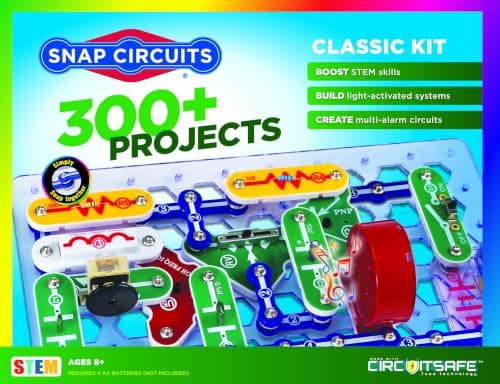
Graded 8+. The SC-300 is the bigger of the two Snap Circuits sets we list, with a project count that turns into months rather than an afternoon: a child builds a circuit, it works or it does not, and the reason it does not is a real reason they can find. It reads as equipment, which at nine matters as much as the content. The manual is load-bearing -- lose it and the kit is close to useless.
Age grade:
8+
Batteries:
manufacturer does not publish a battery requirement
Noise:
Some noise
Mess:
Contained
Assembly:
manufacturer does not publish an assembly time
Price:
$66.98 as of October 17, 2026
Age grade, battery and assembly wording are quoted from Snap Circuits’s own product listing, read on September 7, 2026. The manufacturer’s exact words: “Ages 8+”. Noise and mess are our reading, not a measurement — we have not played with this.
What it gets right
+Three hundred-plus projects is a genuine multi-year kit rather than a Christmas afternoon
+Backwards compatible with the Jr. parts, so the earlier kit is not wasted
+Includes an AM radio build, which is the project children remember
What it doesn’t
−Roughly double the price of the Jr. kit, and the first fifty projects overlap
−Batteries again required and again not supplied
How loud
The project list includes sirens, alarms and an AM radio, so some builds make noise on purpose. No published sound level.
How much mess
More parts than the Jr. kit but the same tray-based storage.
Skip this if…
…you are buying the child's first electronics kit. Start with the Jr. set — if they finish it, this upgrade is earned and welcome.
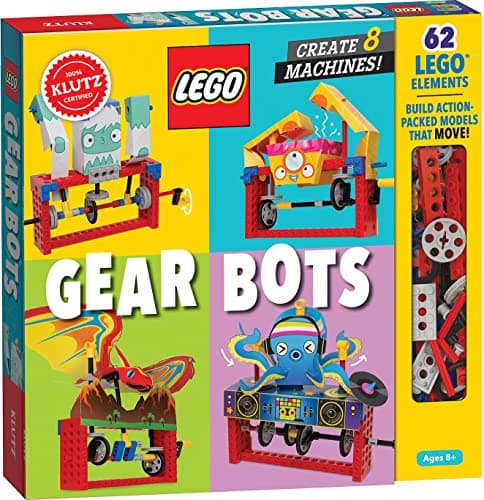
Published for 8 to 12, and it is a book as much as a kit: the LEGO parts build gear-driven mechanisms and the book explains what the gears are doing. That combination is rarer than it should be. The flip side is the disqualifier -- half the value is on the page, so for a child who does not read for pleasure this is an expensive small LEGO set.
Age grade:
8–12
Batteries:
manufacturer does not publish a battery requirement
Noise:
Quiet
Mess:
Contained
Assembly:
manufacturer does not publish an assembly time
Price:
$18.99 as of October 17, 2026
Age grade, battery and assembly wording are quoted from Klutz’s own product listing, read on September 7, 2026. The manufacturer’s exact words: “for 8-12 years”. Noise and mess are our reading, not a measurement — we have not played with this.
What it gets right
+The book explains mechanism rather than just supplying steps, so something is actually learned
+Parts are LEGO-compatible and fold into a collection the child already has
+Published 8 to 12 grade matches the reading level as well as the build difficulty
What it doesn’t
−The projects are finite — once all of them are built, it becomes a small parts bag
−Needs a child who will read the book; skipping it turns the kit into ordinary bricks
How loud
Gears turning. Nothing electronic.
How much mess
Small LEGO-compatible parts, and they belong in the box the kit came in. Easy to keep together if you are firm about it on day one.
Skip this if…
…the child does not read for pleasure. Half the value here is on the page, and a kit-only approach makes it a small and expensive LEGO set.
Adjustable Kids Roller Skates with Light-Up Wheels
Nattork
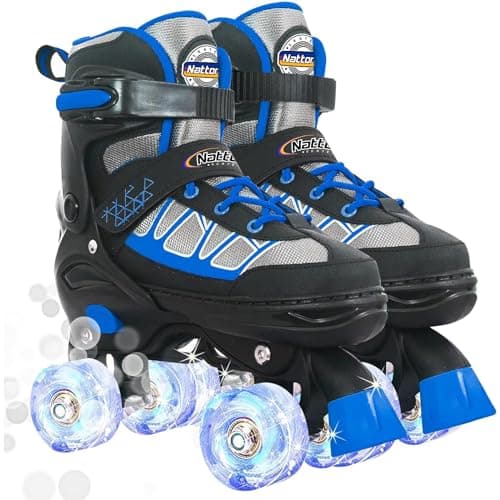
Published for 6 to 12 and adjustable across several sizes, which is the whole argument: skates that fit for three years rather than one season. Nine is a good age to start, because the fear that stops a six-year-old has usually gone. They rattle and the wheels light up, which is a selling point at nine and nothing to do with how well they skate. Pads and a helmet, same order.
Age grade:
6–12
Batteries:
manufacturer does not publish a battery requirement
Noise:
Some noise
Mess:
No mess
Assembly:
manufacturer does not publish an assembly time
Price:
$39.99 as of October 17, 2026
Age grade, battery and assembly wording are quoted from Nattork’s own product listing, read on September 7, 2026. The manufacturer’s exact words: “Ages 6-12”. Noise and mess are our reading, not a measurement — we have not played with this.
What it gets right
+Adjustable sizing means one purchase covers two or three shoe sizes
+Published 6 to 12 range, which is realistic for when skating clicks
+Light-up wheels need no batteries
What it doesn’t
−Protective gear is not included and is genuinely not optional
−Adjustable skates never fit quite as well as fixed-size ones
How loud
Wheels on pavement, plus the noise of a child learning to stop. No electronics — the LEDs are wheel-driven.
How much mess
Two objects and, if you are sensible, a bag of pads.
Skip this if…
…there is no smooth flat surface nearby. Skates on rough pavement or gravel are unusable and the gift dies in the first ten minutes.
Price checked October 17, 2026. Toy prices move constantly, especially in December — Amazon’s price at checkout is the one that counts.
#ad · we may earn a commission from this link to Adjustable Kids Roller Skates with Light-Up Wheels
05
Quiet, portable, and gets given away
Friendship Bracelet Making Kit with Loom
Cmiolacuna
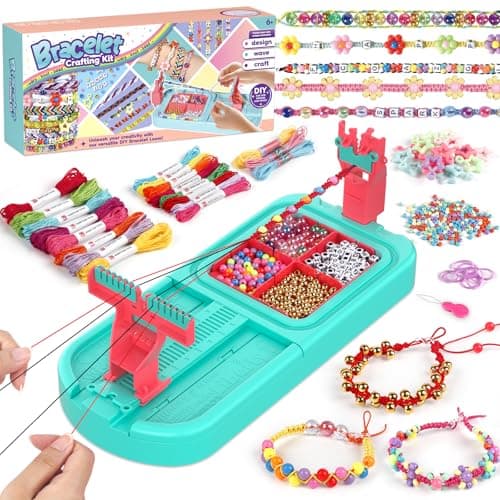
Published for 8 to 12. The loom is the difference between a craft a child finishes and a knot they abandon, and everything made on it is given to somebody else -- which is most of the appeal at nine. Silent and contained, so it works in a car, on a sofa and in a waiting room. It needs twenty minutes of repetition to produce anything, which is either exactly the appeal or the dealbreaker.
Age grade:
8–12
Batteries:
manufacturer does not publish a battery requirement
Noise:
Silent
Mess:
Contained
Assembly:
manufacturer does not publish an assembly time
Price:
$8.49 as of October 17, 2026
Age grade, battery and assembly wording are quoted from Cmiolacuna’s own product listing, read on September 7, 2026. The manufacturer’s exact words: “Ages 8-12”. Noise and mess are our reading, not a measurement — we have not played with this.
What it gets right
+The loom makes a decent bracelet achievable on the first attempt, which is what keeps a child going
+Published 8 to 12 grade, aimed squarely at the age where making things for friends is the point
+Consumable in a good way — a full kit is many evenings
What it doesn’t
−Thread runs out and refills are not always the same quality
−Loose beads and thread ends get everywhere in a shared bedroom
How loud
Nothing.
How much mess
Thread offcuts and small beads. Annoying rather than destructive, and all of it is on the table.
Skip this if…
…the child gives up when something needs twenty minutes of repetition. Bracelet weaving is rhythmic and slow, and that is either the appeal or the dealbreaker.
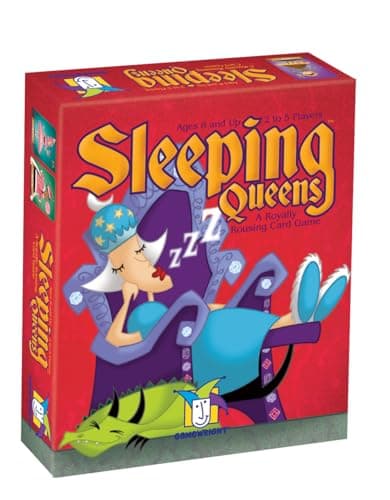
Graded 8+. A card game with a five-minute round is the gift that gets used on a wet Tuesday when nothing else does, and this one is quick, luck-weighted enough that a nine-year-old beats an adult honestly, and cheap enough to be a second present rather than the whole thing. It is slight -- nobody is getting a deep strategy game here -- and that is precisely what makes it the one that comes out again.
Age grade:
8+
Batteries:
manufacturer does not publish a battery requirement
Noise:
Quiet
Mess:
No mess
Assembly:
manufacturer does not publish an assembly time
Price:
$11.99 as of October 17, 2026
Age grade, battery and assembly wording are quoted from Gamewright’s own product listing, read on September 7, 2026. The manufacturer’s exact words: “for Ages 8 and up”. Noise and mess are our reading, not a measurement — we have not played with this.
What it gets right
+Addition and number-matching are load-bearing in the rules, so practice happens without anybody mentioning it
+Short games, so a round fits before school
+The tin travels and the deck is durable enough for a bag
What it doesn’t
−The published 8+ grade is about arithmetic speed, and a six-year-old will need help with it
−Turn order can drag with four or five players
How loud
Cards.
How much mess
A small box of cards, and that is the entire footprint.
Skip this if…
…the child struggles with mental addition. The maths is not decorative here — it is how you play, and it will feel like homework.
Every toy site tells you they tested forty toys with a focus group of real children. We have not played with any of these, and we say so. Here is what we do instead: we read the manufacturer’s own listing and print its published age grade word for word, we record the battery requirement and the assembly note where the maker publishes one and say plainly when it does not, we pull the price live from Amazon so it is never a number we remembered, and we name one thing on every list we would not buy.
The noise and mess ratings are our judgment from what the listing describes — not measurements. Almost no toy manufacturer publishes a decibel figure, which is itself worth knowing. The full method is published, including what disqualifies a toy.
Questions
Questions people actually ask
What should I get a 9-year-old for their birthday?+
Something from an adult category: a scooter or skates, a real electronics or mechanics kit, or a card game with a short round. All three can be owned at nine without reading as a toy for younger children.
What is a good birthday gift for a 9-year-old boy or girl who has everything?+
Something consumable or something with a running output -- a bracelet loom, a bead kit, a print camera -- because the problem with a child who has everything is storage, not choice. We have a whole page on it: gifts for the kid who has everything.
How much do people spend on a 9-year-old's birthday present?+
For a school friend, $20 to $30. For your own child, the honest answer is that the number matters less than whether the thing gets used twice -- a $15 card game beats a $60 kit that needs an adult every time.
Are electronics kits actually any good at this age?+
The good ones are. The test is whether the child builds something that either works or does not, with a findable reason -- not whether the box advertises a hundred experiments. Nine is about the earliest age a kit works without an adult sitting there.
What do 9-year-olds actually play with?+
Wheels, games with friends, kits with a real result, and anything that produces objects they can hand over. Most of it happens in short windows, alone or with one other child.
We do not run a playroom test lab and we do not pretend to. Age grades, battery requirements and assembly notes are quoted from each manufacturer’s own product listing, read on September 7, 2026; prices come live from Amazon’s API and are stamped with the date they were checked. Where a maker publishes nothing, the page says “manufacturer does not publish this” rather than guessing. Read the full method.