What still works at eleven and twelve
Every present on this page had to pass the same four tests, and they are the tests this particular age imposes rather than ones we invented:
- Does it read as real? Equipment, instruments, transport and mechanisms survive; anything that reads as a toy is received as a comment about how old you think they are.
- Is it social, or does it make something? At this age those are the two categories with a future. A gift that is used with other people, or that produces an object, keeps being used. A gift that is played with alone in a bedroom mostly does not.
- Does it survive being opened in front of cousins? This is the specifically Christmas test, and it eliminates presents that would be fine in private on a birthday.
- Is the published grade at or below the child? Above three it stops being a safety line and becomes a difficulty line, but it is still the only number on the box that means anything — see what age grades actually mean.
The week between Christmas and New Year is the real opportunity
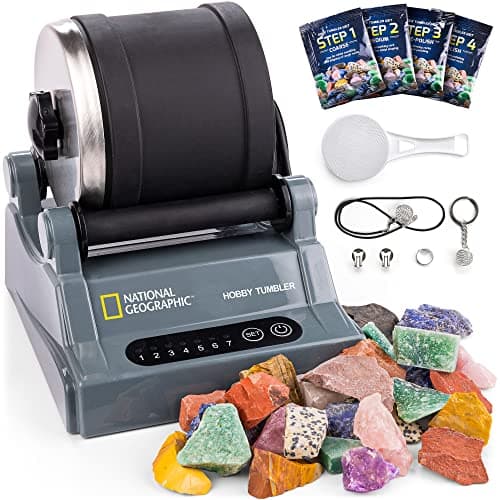
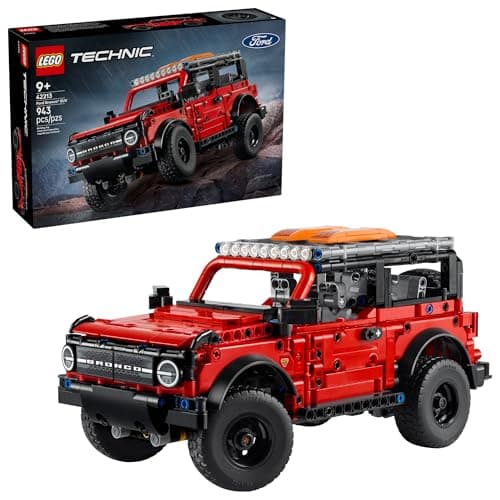
It is the longest unstructured stretch of the year: no school, bad weather, and a child with nothing scheduled. That window rewards a specific kind of gift — one that takes several sessions rather than one afternoon. A Technic build is the obvious version. A tumbler is the stranger and better one, because the machine does the waiting for you: it is loaded on Christmas Day and it is still running when the holiday ends.
The corollary is that a gift finished in twenty minutes on Christmas morning is the wrong shape for this age, however good it is. At six that does not matter, because a six-year-old will do the same thing forty times. At twelve it does.
December is the one month astronomy fits a school night
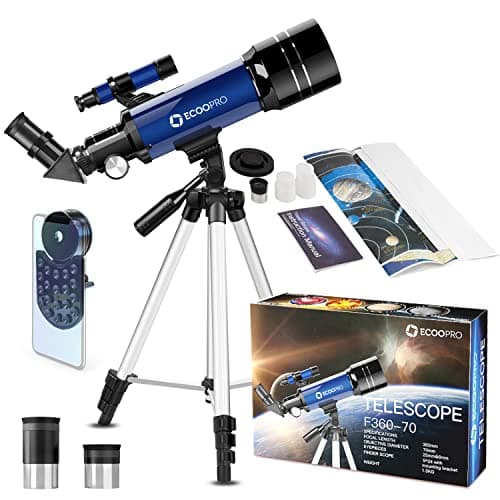
A telescope given in June needs a child awake at eleven at night. The same telescope given at Christmas can be outside at seven in the evening, which is the difference between a hobby and a cupboard item. It is the single best seasonal argument on this page.
The honest limits belong in the same paragraph: aperture is the specification that matters, not magnification, and the large magnification numbers printed on beginner telescope boxes are marketing. The Moon is the target that makes one worth owning. Planets are points of light, and saying so before it is unwrapped is the difference between a good Christmas and a disappointing one.
Games are better presents at Christmas than at any other time
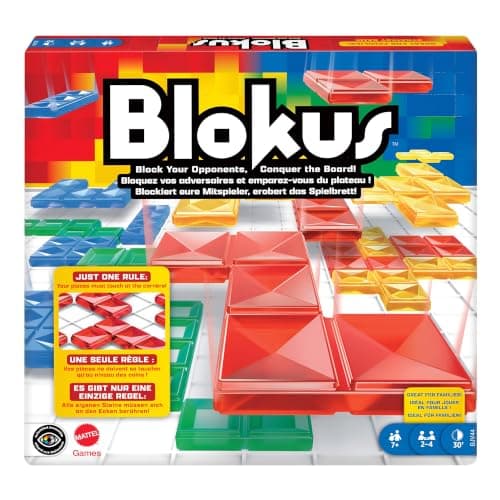
On most days of the year a board game for an eleven-year-old is a present that waits for an occasion. At Christmas the occasion is already happening: there are cousins in the house, nobody has a plan for the afternoon, and the rules have to be teachable to a newcomer in about a minute. Two of the seven picks are here for that reason alone.
What matters at this age is that the game is genuinely winnable against an adult. Anything that feels designed for younger children gets declined in front of an audience, whatever the box says. Our board game comparison sorts the rest by what the child actually has to be able to do.
Where the money goes at this age
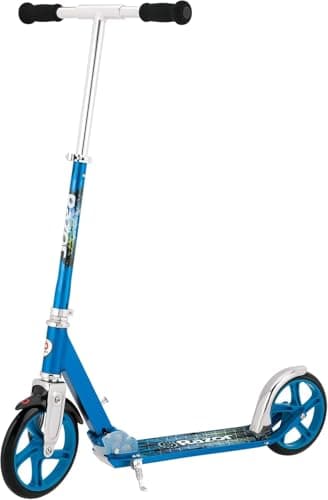
The price brackets shift at eleven. The cheap tier — card games and craft sets — is still genuinely good, and it is where two of these picks sit. What disappears is the middle: a mid-priced toy at this age is usually a toy, and it fails the first test on this page. Above that, the money buys equipment with a published limit on it: a rider weight rating, an aperture, a real mechanism. That is a different kind of purchase and it lasts past the holiday.
Every price on this page is read live from Amazon and dated, because we do not type prices into pages. If you want the conventions rather than the products, how much to spend on a child’s gift works through what people actually spend by relationship, and toys worth the money covers whether a higher price is buying anything at all.
The “is this a toy?” test, applied honestly
Hold the box up and ask who the photography is for. If the packaging shows a delighted eight-year-old, an eleven-year-old will notice before they notice what is inside it. This is not vanity and it is not something to correct them out of — it is a reasonable reaction to being handed a thing designed for somebody three years younger.
The practical consequence: prefer products whose own listing describes an age range topping out at twelve or above, and prefer anything a listing describes as being for adults as well. A tumbler sold to “kids and adults” and a telescope sold the same way both clear the bar by construction.
What we would skip
The licensed construction set. At eleven the appeal of bricks is mechanism rather than character, so a themed set at this price competes badly with a Technic build that actually does something. Skip the novelty electronics too — the desk gadget that does one trick — for the reason on the skip list: a one-trick object has exactly one interesting day in it, and at this age the child knows that in advance.
And skip the gift that has to live in their bedroom and makes a noise. That includes one on this page if your house has no garage: the tumbler is an excellent present in the wrong room and an ongoing argument in the right one. Our loud toys page names the categories worth checking before you buy anything that hums, sings or announces things.
If they are nearly thirteen
The year either side of thirteen is the fastest-moving stretch in this whole guide, and a present that lands at eleven can miss at thirteen by a wide margin. Gifts for teenagers picks up where this page stops, and it is the better starting point for a child who has already mentioned a hobby, a sport or a subject — buying into an existing interest beats trying to start a new one at almost any age, and it beats it decisively at thirteen.
Going the other way, Christmas gifts for a 10-year-old is a year down, where the interesting kits have just become age-appropriate and nothing yet has to prove it is not a toy.
Batteries and assembly, briefly
Both matter much less at this age than they do at four, and for a nice reason: an eleven-year-old can read an instruction booklet and fit a battery themselves. Two things are still worth doing. Check whether the thing needs batteries at all and buy them in the same order if it does — the annual Christmas-morning failure is a present that cannot be switched on. And if a gift needs charging, charge it before you wrap it. The rest of the detail is on battery reality and how much assembly is waiting for you.